
Relationship Communication Tips: A Practical Guide for Birmingham Couples
It is 7:00 PM on a Tuesday evening in Harborne, and what started as a simple question about dinner has spiralled into a familiar, cold silence. You might find yourself staring at the TV while the tension in the room feels heavy enough to touch. It's a lonely feeling when your home stops being a sanctuary and starts feeling like a place where you have to watch every word you say. We know that taking the first step to change these patterns is often the hardest part of the journey.
Most couples we support in Birmingham already know that something needs to change, but they just don't have the right tools to start. You deserve to feel understood and respected rather than constantly on the defensive. In this guide, we'll share practical relationship communication tips that cut through the jargon to help you rebuild that essential team feeling. You will discover how to lower the volume on shouting matches and replace the silent treatment with genuine connection. We are going to walk through three actionable techniques you can start using tonight to transform your conversations and strengthen your bond.
Key Takeaways
- Discover practical relationship communication tips to help you navigate local Birmingham stressors and build a more resilient bond with your partner.
- Learn how simple, jargon-free language changes can reduce defensiveness and help you master the art of active listening.
- Find out how to recognise the physical signs of emotional overwhelm and use the "Time-Out" rule to pause heated arguments safely.
- Explore easy-to-follow daily rituals and weekly check-ins that keep your connection strong and move your conversations beyond basic logistics.
- Identify the right time to take the first step toward professional support and how local guidance can help you find a way forward together.
Why Healthy Communication is the Foundation of Birmingham Relationships
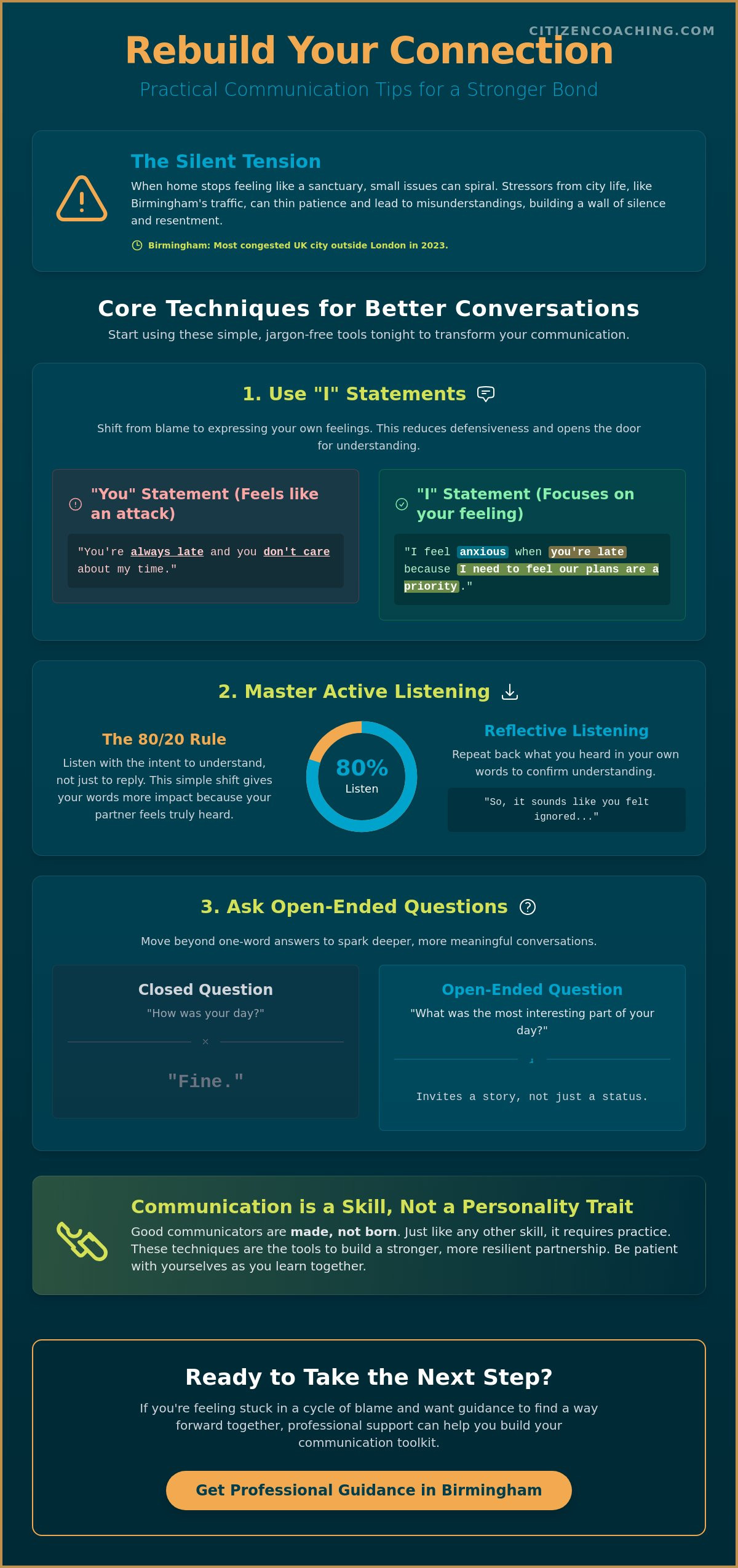
At its heart, relationship communication is the successful sharing of your needs, feelings, and thoughts in a way that your partner truly understands. It sounds simple, yet for many couples in Birmingham, the reality of city life often gets in the way. External stressors can easily leak into your private conversations. Birmingham was ranked as the most congested UK city outside of London in 2023, adding an average of 9 minutes to every 10km trip. When you're both exhausted after a long commute on the M6 or a busy day in the Colmore Business District, patience often runs thin.
We believe in using jargon-free language. You don't need to be an expert in therapy speak to improve your bond. Using clinical terms often creates a distance between partners rather than closing the gap. Understanding the basic principles of interpersonal communication helps you realize that it isn't just about what you say, but how it's received. There's a massive difference between just talking at someone and actually being heard. Being heard means your partner acknowledges your perspective, even if they don't agree with every word. This connection is what keeps a relationship resilient against the pressures of city-centre living.
The High Cost of Poor Communication
Small misunderstandings often snowball into chronic resentment if they aren't addressed. When you stop sharing the small things, the big things become impossible to discuss. This often leads to the silent treatment, which acts as a barrier to emotional intimacy and leaves both people feeling isolated. Emotional safety is the steady feeling that you can be vulnerable with your partner without fear of judgment, rejection, or attack. Without this safety, couples often find themselves trapped in a cycle of blame that's hard to break without help.
Communication as a Skill, Not a Personality Trait
Good communicators are made, not born. It's a skill you can learn, much like driving or cooking. We know that taking the first step to change long-standing habits feels daunting. It's normal to feel vulnerable when you try a new approach. By building a communication toolkit for your home, you can start to replace old arguments with productive conversations. These relationship communication tips are designed to be practical tools you can use tonight, not just theories for a classroom. Learning these relationship communication tips is an investment in your future together, helping you navigate life's challenges as a united team.
Core Techniques for Better Conversations Today
Improving how you speak to each other doesn't require a degree in psychology. It starts with small, intentional changes in your daily routine. These relationship communication tips focus on reducing friction and building a foundation of mutual respect during your time together in Birmingham.
Using "I" Statements Effectively
When emotions run high, it's easy to point fingers. "You" statements often feel like an attack, which makes your partner shut down or become defensive. Instead, use this simple template to express your feelings clearly: "I feel [emotion] when [action] because [need]."
For example, instead of saying, "You're always late and you don't care about my time," try saying, "I feel anxious when you're late because I need to feel that our plans are a priority." This shift takes the pressure off your partner and focuses on your internal experience. Practise this with low-stakes topics first, such as deciding what to watch on TV, before moving on to more sensitive subjects.
Active Listening: The 80/20 Rule
Most people listen with the intent to reply, not to understand. The 80/20 rule suggests you should listen 80% of the time and speak only 20% of the time. This gives you more influence because your partner feels truly heard. Use communication techniques for healthy relationships like reflective listening to stay present. This involves repeating back what you heard in your own words.
You might say, "It sounds like you're saying you felt ignored at the party. Is that right?" This prevents the common trap of simply waiting for your turn to speak while your partner is still talking. By reflecting their words, you ensure you're both on the same page before you offer your own perspective.
Asking Open-Ended Questions
If you ask "How was your day?", you'll likely get a one-word answer like "fine" or "okay." To move beyond surface-level talk, ask questions that require more than a yes or no. Try these alternatives:
- "What was the most challenging part of your morning?"
- "How can I support you with that project this week?"
- "What made you feel most appreciated today?"
Picking the Right Time and Place
Timing is everything. Avoid the "hallway ambush" where you bring up a heavy topic while your partner is walking out the door for work or just getting home. The Gottman Institute found in 2016 that 69% of relationship conflicts are perpetual issues, so choosing a calm moment to discuss them is vital. Set a "check-in" time once a week when you both feel relaxed and ready to talk. If you find that your conversations often turn into arguments, our team at Citizen Coaching can guide you through more effective ways to connect.
Managing Anger and High-Heat Moments
Arguments are a normal part of life for Birmingham couples, but they quickly spiral if you don't recognise the physical signs of "flooding." Flooding happens when your body perceives a psychological threat during a conflict. Your heart rate might spike above 100 beats per minute, your palms sweat, and your breathing becomes shallow. At this point, your brain's logical centre effectively goes offline. You can't use effective relationship communication tips when your body is in a state of high alert.
Shouting is often a desperate attempt to be heard, but it actually acts as a barrier. When you raise your voice, your partner’s brain switches to a defensive "fight or flight" mode. They stop listening to your words and start reacting to your tone. It's vital to distinguish between healthy frustration about a specific event and chronic anger issues that feel like a constant cloud over your home. Learning to pause is a sign of emotional strength, not a sign of giving up on the discussion.
The 20-Minute Cooling Off Period
Science shows that it takes at least 20 minutes for your body to metabolise stress hormones like cortisol and return to a calm state. If you try to talk before this happens, you'll likely end up in a circular argument. Establish a neutral "safe word" or a hand signal to indicate you need a break. This isn't an excuse to walk away and ignore the problem; it's a commitment to come back when you're both capable of logic. During this break, don't ruminate on what your partner said. Go for a short walk or listen to music to help your nervous system reset.
Moving from Blame to Problem-Solving
Shift your focus from "Me vs. You" to "Us vs. The Problem." This simple change in perspective helps you identify the unmet need behind the anger. Often, a row about the household chores is actually about a need for appreciation or support. If you find that every conversation turns into a battle despite your best efforts, it might be helpful to look at signs you need couples therapy. Professional guidance can help you implement relationship communication tips that break these cycles of blame and lead to genuine resolution.
Daily Habits and Rituals for Long-Term Connection
Strong relationships aren't built on grand gestures alone. They're sustained through small, repeatable actions that happen every single day. Integrating simple relationship communication tips into your routine helps prevent small misunderstandings from turning into deep-seated resentment. It's about creating a safe space where both partners feel seen and heard without the pressure of a formal "therapy session" environment.
Implementing the 10-Minute Check-In
The 10-minute check-in is a foundational tool for busy couples. It's designed to help you reconnect after a long day at work or managing the household. To make this work, you need to follow a few simple ground rules:
- Put away the screens: Phones should be in another room or face down on silent.
- No logistics: Don't talk about the school run, the mortgage, or the broken boiler.
- No kids: Find a time when the children are asleep or occupied so you won't be interrupted.
Instead of the usual "How was your day?", try asking, "How are you feeling about us today?" or "What's one thing I can do to support you tomorrow?". Consistency beats intensity in communication because regular, brief moments of connection build a much stronger emotional foundation than a single three-hour conversation once a month.
Beyond these daily moments, consider a weekly "State of the Union" meeting. This is a longer 30-minute slot where you can discuss the health of your relationship more broadly. It's a proactive way to address any friction points before they escalate into an argument.
The Birmingham "Walk and Talk"
Sometimes, sitting face-to-face across a kitchen table feels too intense. This is where the "walk and talk" becomes a powerful tool. Birmingham offers incredible green spaces like Cannon Hill Park, Sutton Park, or the Lickey Hills that are perfect for this. Walking side-by-side is often less threatening than face-to-face communication because it removes the pressure of constant eye contact, which can sometimes trigger a defensive response during difficult conversations.
To keep these walks productive, try these tips:
- Choose a familiar route so you don't have to focus on navigation.
- Keep your pace steady and relaxed to help regulate your heart rate and stay calm.
- If the conversation gets heated, focus on your breathing and the scenery for a moment before responding.
Moving your body helps process stress hormones like cortisol. This makes it much easier to stay level-headed when discussing sensitive topics. These walks turn a potentially stressful talk into a shared activity that benefits your physical and emotional health.
Don't forget the power of non-verbal cues. A simple hand on a shoulder or maintaining soft eye contact during a conversation can communicate more than words ever could. Physical touch releases oxytocin, which naturally lowers anxiety and fosters a sense of security between you both.
If you feel like your daily habits have slipped and you're struggling to find your way back to each other, we can help. Take the first step toward a stronger bond by booking a session for relationship coaching in Birmingham today.
When to Seek Professional Guidance in Birmingham
Even the most effective relationship communication tips can reach a limit. Sometimes, cycles of conflict or silence become so deeply rooted that you need an outside perspective to help untangle them. Recognizing this moment isn't a sign of weakness. It shows you're committed to making things work. In the UK, many couples wait years before seeking professional help, but addressing issues early can prevent a lot of unnecessary heartache. If you find that the same arguments keep happening without any resolution, it might be time to look for expert support.
Citizen Coaching is a local social enterprise dedicated to making support accessible and human. We don't believe in cold, clinical environments. Instead, we provide a jargon-free space where you can speak honestly. Our focus is on practical progress rather than complex psychological theory. We help you move from a place of frustration to a place of understanding by giving you the tools to rebuild your connection. We've helped thousands of people in Birmingham find a better way to relate to those they love.
Professional Support Options
It's important to choose the right type of support for your specific situation. We offer individual anger coaching for those who find their temper gets in the way of their happiness. We also provide couples therapy, which focuses on the "we" instead of the "I". You can access our services at our Birmingham location or through our online platform if that fits your schedule better. Before your first session, it's helpful to look at our guide on couples therapy preparation to ensure you're both on the same page.
- Individual Coaching: Best if one partner struggles with emotional regulation or specific triggers that impact the home.
- Couples Therapy: Ideal for improving relationship communication tips in practice and resolving shared conflicts.
- Flexible Access: Choose between face-to-face meetings in the city centre or private video calls from your own home.
Your First Step with Citizen Coaching
The first step is always the hardest part of the process. It requires vulnerability to admit things aren't perfect. We make this transition as easy as possible with a friendly, non-judgmental approach. Our practitioners don't sit there to "diagnose" you with a disorder; they act as a guide to help you find your own way forward. We believe that every couple has the potential to change their dynamic if they have the right support and the right tools.
You don't have to carry the weight of a struggling relationship alone. Our team is here to listen and provide a steady hand as you navigate these challenges. By choosing to work with a Birmingham-based social enterprise, you're getting expert care that understands the local community. It's a rewarding investment in your future together. Reach out today and let us help you turn things around.
Start Your Journey Toward a Happier Partnership
Improving how you speak and listen to each other isn't about achieving perfection overnight. It's about showing up for one another every single day. You've seen how healthy communication acts as the bedrock for local couples, and you now have the tools to handle high-heat moments with calm. These relationship communication tips are most effective when they become part of your daily rituals. Small, consistent changes in your routine lead to significant shifts in how you connect and grow together over time.
Sometimes, navigating these changes feels overwhelming, and that's where we can help. Citizen Coaching and Counselling has provided friendly, professional guidance to the community since 2005. We are a Birmingham-based social enterprise that reinvests in local health, ensuring our jargon-free support is tailored to your real-life experiences. You don't have to face these challenges alone. We're ready to help you find a clearer path forward.
Take the first step toward better communication with our Birmingham-based couples counselling. It's often the bravest move you can make for your future together, and we'll be there to guide you every step of the way.
Frequently Asked Questions
How do I tell my partner I am unhappy without starting a fight?
You can share your feelings without conflict by using "I" statements that focus on your own emotions rather than your partner's flaws. For example, say "I feel lonely when we don't spend time together" instead of "You always ignore me." Research from the Gottman Institute shows that using a softened startup prevents 94% of conversations from turning into a full-scale argument. This approach keeps the focus on finding a solution together.
What are the most common communication barriers in UK relationships?
The most frequent barriers include stonewalling, making assumptions, and the traditional "stiff upper lip" that prevents people from sharing their true feelings. A 2023 study by the charity Relate found that 25% of people in UK relationships feel their partner doesn't listen to them. Using practical relationship communication tips like active listening can help break these habits. These tools ensure both people feel heard and respected during a discussion.
Can relationship communication tips really save a marriage?
Yes, learning new ways to talk and listen can significantly improve the health of a marriage. Statistics show that 70% of couples who seek professional guidance report a noticeable increase in relationship satisfaction. By practicing specific skills, you can stop the cycle of blame and start building a foundation of trust. These techniques provide a roadmap for navigating the inevitable challenges that every long-term couple faces.
How often should couples have deep conversations?
You should aim to have a dedicated 20 minute check-in at least once every week to discuss your relationship. The National Marriage Project found that couples who set aside "couple time" weekly are 3.5 times more likely to be happy in their partnership. While daily chats about chores are necessary, these deeper sessions help you stay connected on an emotional level. It prevents small misunderstandings from growing into major resentment over time.
What should I do if my partner refuses to communicate?
If your partner is reluctant to talk, try suggesting a neutral, low-pressure environment for a short 10 minute chat. It's helpful to explain that you want to understand their perspective rather than point out their mistakes. If they still find it difficult to open up, a 50 minute session with a Birmingham counsellor can provide a safe space to start. Many people stay quiet because they fear a fight, so reassurance is key.
Is it normal to argue every day in a relationship?
While disagreements are a natural part of life, arguing every day is usually a sign of deep-seated distress. Data from the Office for National Statistics indicates that persistent high-conflict environments contribute to chronic stress for 20% of adults in the UK. If you're fighting every 24 hours, your communication has likely broken down into a negative loop. Professional support can help you identify the root cause and learn healthier ways to express your needs.
How can I practice active listening at home?
You can practice active listening by repeating back what your partner has said before you offer your own opinion. This technique, often called mirroring, ensures you've understood them correctly and makes them feel valued. For example, you might say, "It sounds like you're feeling stressed about the budget, is that right?" This is one of the most effective relationship communication tips for de-escalating tension and stopping a simple chat from turning into a row.
When is the best time to bring up a difficult topic?
The best time to talk is when you are both calm, fed, and free from distractions like mobile phones or the television. Avoid starting serious conversations after 9:00 PM, as tiredness makes it much harder to regulate your emotions. Choosing a neutral location, like a walk through Cannon Hill Park, can also make the conversation feel less like a confrontation. This helps both of you stay focused on the issue rather than getting defensive.


