
Why Clinical Supervision Matters: A Guide for Birmingham Practitioners
Imagine finishing a session in your Birmingham practice at 6:00 PM and feeling the heavy weight of a client's trauma still sitting in the room with you. You're alone, wondering if you handled that ethical crossroads correctly, and the isolation of private practice starts to feel like a heavy burden. This sense of solitude is often the first sign of why clinical supervision matters for the 60,000 practitioners currently registered with the BACP. We all know that holding space for others is rewarding, but it's also exhausting without the right support. You aren't alone in this. You likely already believe that your clients deserve the best version of you, yet it's easy to forget that you deserve to be looked after too.
In this guide, you'll discover how clinical supervision protects your well-being, sharpens your professional skills, and ensures the best outcomes for your clients in Birmingham. We'll explore how finding a safe space to offload emotional heavy-lifting can transform your practice from a place of anxiety into one of calm competence. From managing complex ethical dilemmas to meeting BACP or UKCP standards, we're here to guide you through every step of the process.
Key Takeaways
- Understand the difference between clinical oversight and administrative management to ensure you have the right support for your therapeutic work.
- Learn how the three core functions of supervision work together to help you become a more confident and well-rounded practitioner.
- Discover why clinical supervision matters as your best defense against the stress of vicarious trauma and the isolation of private practice.
- Get practical tips on finding a supervisor in Birmingham who offers the right professional chemistry and verified experience for your needs.
- Find out how a jargon-free, human-centered approach to supervision can help you take the next step in your professional journey.
What is Clinical Supervision and Why is it Essential in 2026?
Clinical supervision is a collaborative, reflective relationship between a practitioner and an expert guide. It isn't a form of policing or a test of your skills. Instead, it's a dedicated space where you can step back from your daily work to look at your client interactions with clarity. In this relationship, you and your supervisor work together to ensure you're providing the best possible care while staying healthy and grounded yourself.
You might wonder why clinical supervision matters so much in a modern setting like Birmingham. By 2026, the mental health landscape in the West Midlands has become increasingly complex. Local practitioners are seeing a 15% rise in complex trauma cases compared to five years ago. This pressure makes having a formal support structure vital. While administrative management focuses on your caseload numbers and holiday requests, clinical supervision focuses on the therapeutic work itself. It's the difference between checking that you're doing your job and ensuring you're doing your work safely and ethically.
The British Association for Counselling and Psychotherapy (BACP) mandates supervision for all members because it's a core part of the Ethical Framework. They require a minimum of 1.5 hours of supervision per month for practitioners in balance. This isn't just a hurdle to jump; it's a protective measure. It keeps you accountable and provides a space to process the heavy emotional weight that often comes with helping others in a busy urban environment like Birmingham.
The Difference Between Supervision and Therapy
It's common to confuse these two, but they serve different purposes. Supervision focuses on the dynamic between you and your client. It looks at how you react to a client's story and how that affects the progress of the sessions. It doesn't dive into your personal history or childhood. However, if a supervisor notices that your personal life is beginning to cloud your professional judgment, they might suggest you seek your own therapy. These professional boundaries are what make supervision an effective tool for growth rather than a personal healing session.
Why "Self-Reflection" Isn’t Enough on Its Own
Even the most self-aware therapist has blind spots. You can't always see your own biases or the subtle ways a client might be affecting your mood. Working in isolation often leads to "compassion fatigue," which can impact client safety. A second pair of expert eyes helps you catch these patterns early. Understanding why clinical supervision matters helps you recognize that we all need a guide to help us see what we might be missing. Clinical supervision is the essential safety net for therapeutic practice.
The Three Core Functions of Effective Supervision
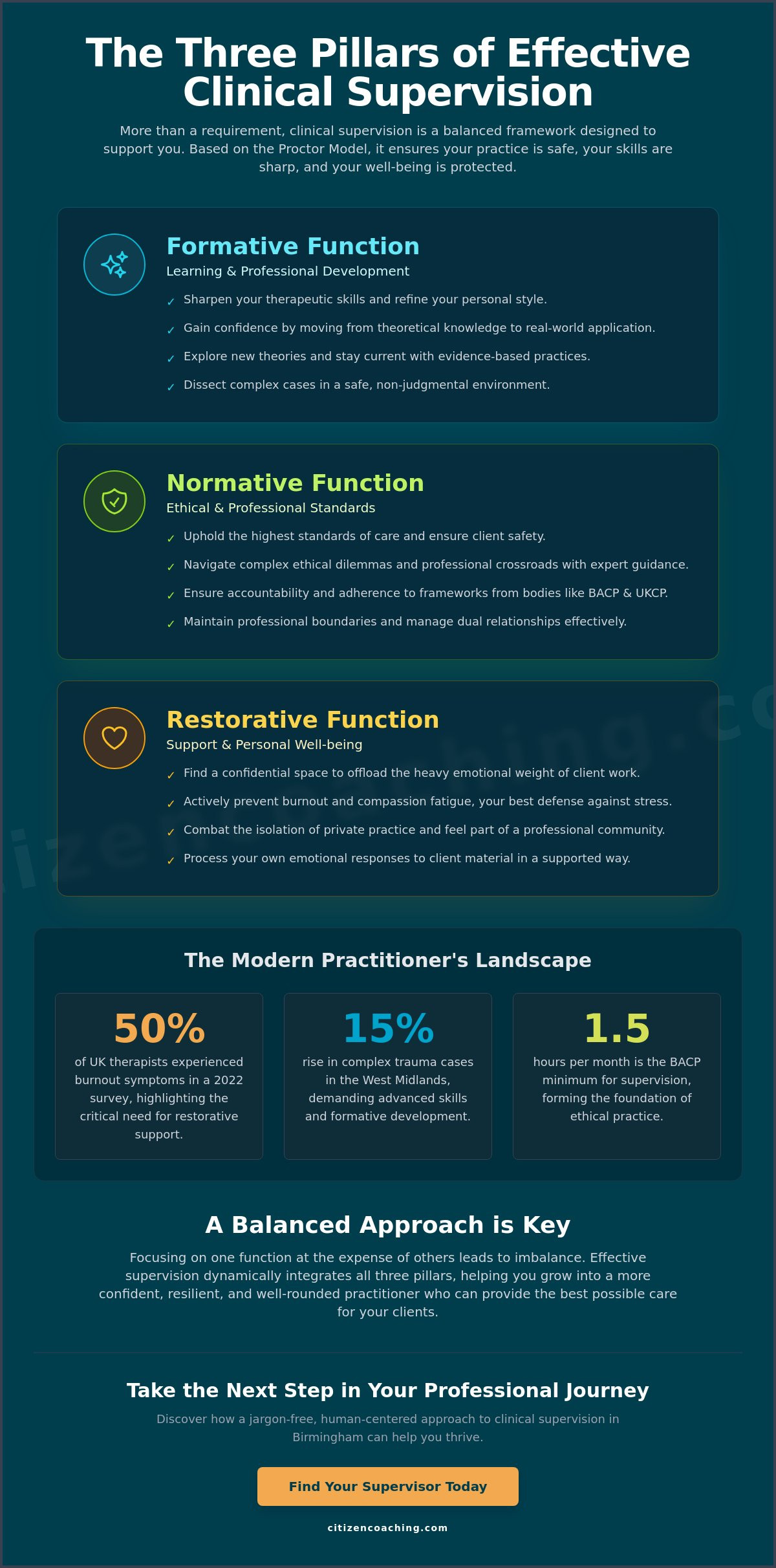
Clinical supervision isn't just a box to tick for your professional body. It’s a supportive framework that keeps your practice safe and your skills sharp. Most supervisors use a classic approach called the Proctor Model. While the name sounds academic, the concept is simple. It breaks supervision down into three essential pillars: learning, standards, and support. This balanced approach is exactly why clinical supervision matters for anyone working in the high-pressure environment of the West Midlands.
A well-rounded practitioner needs all three functions to work in harmony. If you focus only on ethics, you might become rigid. If you only focus on emotional support, you might miss opportunities to sharpen your technique. Your supervisor acts as a guide, helping you pivot between these needs as your caseload changes. For example, a 2022 survey of UK therapists found that nearly 50% experienced symptoms of burnout, highlighting the need for a balanced supervisory relationship that prioritizes well-being alongside professional growth.
The Formative Function: Learning and Development
This function focuses on your growth as a professional. Think of it as a living classroom where you can dissect complex cases without judgment. You’ll explore new theories, refine your therapeutic style, and learn how to apply your training to real-world scenarios. For those just starting out, trainee counsellor supervision is a vital growth phase. It’s where you move from "knowing" the textbooks to "doing" the work with confidence. This development doesn't stop after qualification; even experienced practitioners use this space to stay updated on the latest evidence-based practices.
The Normative Function: Ethics and Standards
The normative function is about accountability. It ensures you’re following the ethical frameworks set out by the BACP or UKCP. Your supervisor acts as a "gatekeeper" for the profession, helping you manage risk and navigate safeguarding requirements specific to Birmingham and the wider region. Consulting an essential guide to clinical supervision can help you understand how these standards protect both you and your clients. This pillar ensures that every session you conduct meets the high professional expectations required in the UK today.
The Restorative Function: Emotional Support
Counselling is heavy work. The restorative function provides a safe space to process the emotional weight of your clients' stories. It’s here that you address compassion fatigue and find ways to recharge. By providing a "pressure valve," this function directly reduces the risk of burnout. In a city as diverse as Birmingham, practitioners often deal with complex social issues and trauma. Having a supportive space to vent and reflect is why clinical supervision matters for your long-term career longevity. It keeps you emotionally fit to help others.
Birmingham practitioners often serve communities with vastly different needs. Balancing these three functions allows you to stay flexible. Whether you’re working in a busy city centre clinic or a community hub in Solihull, you need a supervisor who understands these local dynamics. If you feel your current support is lacking, you might consider looking into our professional supervision services to find a better fit for your practice.
Why Supervision is the Best Defence Against Therapist Burnout
Burnout isn't a sign of weakness. It's a predictable risk of the job. When you spend your day helping people through intense anger or deep trauma, you naturally absorb some of that emotional weight. This is known as vicarious trauma. Without a dedicated space to process these feelings, you might find yourself feeling drained, cynical, or physically tired. This is exactly why clinical supervision matters; it acts as a safety valve for your mental health. It stops the pressure from building up until it becomes a critical issue.
Isolation is a major factor in professional exhaustion, especially if you work in private practice. You don't have a staff room to vent in after a difficult session. A supervisor becomes your most important professional ally. They help you identify the subtle red flags of burnout, such as a lack of empathy or feeling anxious before certain appointments. Supervisors provide what researchers call the "restorative domain," which is one of the essential functions of effective supervision. It moves your practice from being a chore to a sustainable form of professional self-care.
Managing High-Intensity Cases in Birmingham
Birmingham is a vibrant, diverse city, but urban mental health work brings unique pressures. You might be dealing with complex cases involving local community issues, housing stress, or the specific economic challenges facing the West Midlands in 2024. A local supervisor understands the Birmingham context and the specific resources available in our city. They help you develop clear boundaries so you can leave work at the door. This means you can enjoy your time at home without carrying your clients' problems with you.
Building Long-Term Career Resilience
Consistency is the key to a long and successful career in counselling. Therapists who engage in regular supervision stay in the profession much longer because they aren't trying to carry the emotional load alone. When you have a mentor to guide you, your confidence in your own skills grows. Research indicates that a supported therapist provides 40% more effective care for their clients compared to those who work without regular oversight. Understanding why clinical supervision matters is the difference between a practitioner who burns out in two years and one who thrives for twenty.
- Spotting red flags: Supervisors notice changes in your mood or practice before you do.
- Reducing isolation: You gain a partner to help navigate the toughest "anger management" cases.
- Sustaining passion: Regular support reminds you why you started this work in the first place.
Finding the Right Clinical Supervisor in Birmingham
Choosing a supervisor is one of the most important decisions you'll make for your practice. It's a relationship built on trust, and the "chemistry" between you is just as vital as the therapy itself. If you don't feel comfortable being honest about your mistakes, you won't grow. This connection is why clinical supervision matters; it creates a secure base where you can explore your work without fear of judgment. In a busy city like Birmingham, finding someone who understands the local culture and the specific pressures of our community makes a huge difference.
Before you commit to a first session, take the time to verify credentials. Most professional supervisors in the UK are registered with bodies like the BACP or UKCP. Don't be afraid to ask for proof of their insurance or their specific supervisor training. If your work focuses on a niche like anger management or youth counselling, you need a guide who speaks that language. A supervisor who lacks experience in your specific field might miss the subtle risks or ethical nuances that matter most to your clients.
Logistics are another practical hurdle to clear. Birmingham offers great spaces for face-to-face sessions in areas like the Jewellery Quarter or Edgbaston. However, many practitioners now opt for online sessions to save on travel time across the city. Think about what helps you feel most supported. Some find the physical distance of a screen helpful for objectivity, while others need the presence of a shared room to feel truly heard.
Questions to Ask a Potential Supervisor
Treat the first meeting like an interview. You're looking for a partner in your professional development, so it's okay to be thorough. Use these questions to get a feel for their approach:
- "What is your therapeutic background and supervisory model?"
- "How do you handle ethical dilemmas or safeguarding emergencies between sessions?"
- "Do you have experience with the specific client groups I am currently seeing?"
Supervision for Different Stages of Your Career
Your needs will change as you move through your career. Students usually require more structured guidance and reassurance as they find their feet. If you're newly qualified, you might focus more on the practicalities of building a private practice and managing a growing caseload. For those with 15 or 20 years of experience, supervision often shifts toward preventing burnout and maintaining professional curiosity.
You might also consider whether one-to-one or group supervision fits you best. Group sessions are excellent for peer learning and offer a broader range of perspectives. This collaborative approach is another reason why clinical supervision matters, as it reminds you that you aren't alone in your challenges. To support your wider team, workplace wellbeing training birmingham can complement your clinical oversight by creating a healthier environment for everyone.
Ready to find a supervisor who understands your journey? Contact Citizen Coaching today to see how our experienced team can support your practice.
Professional Support at Citizen Coaching: Your Next Step
Citizen Coaching is a Birmingham-based social enterprise. We're dedicated to helping therapists and counsellors grow in their practice. We know that the work you do is demanding. That's why we offer a supportive space where you can reflect on your caseload without the pressure of clinical jargon. Our approach focuses on the human connection between supervisor and practitioner. We believe that when you feel supported, your clients receive better care.
We provide both individual and group supervision options tailored to the needs of local practitioners. Understanding why clinical supervision matters is the first step toward a more sustainable career. It's not just about ticking a box for your professional body; it's about protecting your mental health and ensuring your clients stay safe. By choosing a supervisor who lives and works in the Birmingham area, you benefit from a mentor who understands the specific challenges and diversity of our local community.
- Individual sessions for personalized, deep-dive reflection.
- Group supervision to learn from the experiences of fellow Birmingham therapists.
- A social enterprise model that reinvests in local mental health resources.
- Flexible scheduling to fit around your private practice or agency work.
Expert Guidance for Birmingham Therapists
Our team brings years of experience in specialized areas like anger management and general counselling oversight. We've guided hundreds of practitioners through complex ethical dilemmas and high-pressure cases. We pride ourselves on creating a friendly, professional, and non-judgmental environment. You won't find cold, clinical attitudes here. Instead, you'll find a team of real people who understand that being a therapist is hard work. If you're ready to enhance your practice, you can take the first step today by booking an initial chat with our team to see if we're the right fit for you.
Supporting the Next Generation of Counsellors
Trainees often find the path to accreditation overwhelming. We offer specific programmes designed to help students and newly qualified therapists meet their hours while building confidence. Because we operate as a social enterprise, we're committed to making professional support accessible. We work hard to lower the barrier to expert guidance so that the next generation of Birmingham counsellors can thrive. We know that the first step is often the hardest one to take. We're here to make that transition easier. You don't have to manage the weight of your practice alone; we're ready to help you navigate why clinical supervision matters for your long-term success and wellbeing.
Invest in Your Future as a Birmingham Practitioner
Clinical supervision isn't just a requirement for your professional body. It's the most effective way to protect your mental health while providing excellent care for your clients. As we look toward the healthcare landscape of 2026, the need for resilient, well-supported therapists in the West Midlands is higher than ever. Working with a BACP-registered supervisor gives you a dedicated space to process complex cases and prevent the exhaustion that leads to burnout. This is why clinical supervision matters for every practitioner committed to a long-term career in help-giving.
At Citizen Coaching, we're a Birmingham-based social enterprise specializing in anger management and community mental health. Our supervisors are experienced practitioners who understand the unique challenges of working within our local community. We focus on providing jargon-free, practical guidance that helps you feel confident in your role. Taking the first step towards new supervision might feel like a big move, but it's the best way to ensure you can continue helping others without losing yourself in the process.
Find out more about our Clinical Supervision in Birmingham
We're ready to help you thrive in your professional practice.
Frequently Asked Questions
Is clinical supervision a legal requirement for UK counsellors?
Clinical supervision isn't a legal requirement set by the UK government, but it's mandatory if you want to belong to a professional body. Organizations like the BACP require all members to have regular supervision to practice safely. Without it, you can't maintain your professional accreditation or insurance. It's a core part of why clinical supervision matters for keeping your practice ethical and safe for every client you see.
How many hours of clinical supervision do I need each month?
Most practitioners follow the BACP guideline of 1.5 hours of supervision every month. This applies regardless of whether you work full-time or part-time. If you're a student or working toward accreditation, your specific course or the UKCP might require a higher ratio, such as one hour of supervision for every eight hours of client work. Always check your specific professional body's handbook to stay compliant with their latest standards.
Can I have more than one clinical supervisor?
You can certainly have more than one clinical supervisor, and many Birmingham practitioners choose this path. This is helpful if you work in different settings, like a private practice and a local charity. You might have one supervisor for your general adult work and another specialist for your work with children. Just ensure you have a clear contract with each person and that they're aware of your total caseload across all roles.
What happens if I disagree with my clinical supervisor’s advice?
If you disagree with your supervisor, the first step is to discuss your concerns openly during your session. Supervision is a collaborative relationship where your professional judgment counts. However, if the disagreement involves a serious ethical breach or a safeguarding risk, you must follow the formal grievance procedure of your professional body. Most practitioners find that a respectful conversation resolves 90% of these professional differences without needing further escalation.
Does clinical supervision count as Continuing Professional Development (CPD)?
Clinical supervision doesn't count toward your annual CPD hours under BACP or UKCP rules. CPD is about learning new skills or theories through workshops and courses. Supervision focuses on your current client work and your personal well-being as a therapist. While you'll learn a lot from your supervisor, professional bodies require you to log these two activities separately to maintain your registration each year. It's important to keep distinct logs for both.
Is clinical supervision confidential?
Supervision is confidential, but it's not an absolute secret. Your supervisor protects the identity of your clients by using initials or case numbers. They only break confidentiality if there's a serious risk of harm to a client, a child, or if a court orders it. This is a standard safety measure across the UK. It ensures that you have a safe space to talk while keeping the public protected from harm.
How much does clinical supervision typically cost in Birmingham?
Clinical supervision in Birmingham typically costs between £40 and £80 per hour. According to data from the Counselling Directory for the West Midlands, most experienced supervisors charge around £50 for a standard session. Some local organizations offer lower rates for student counsellors or those working for charities. We recommend finding a supervisor who fits your budget while also providing the specialized guidance your specific practice needs to thrive.
What is the difference between peer supervision and clinical supervision?
Clinical supervision involves working with a more experienced professional who has specific training in supervising others. It provides a clear hierarchy of accountability and expert guidance. Peer supervision is a meeting between therapists of similar experience levels to support each other. While peer groups are great for networking, they don't replace the formal clinical supervision required by professional bodies. Understanding these differences helps explain why clinical supervision matters for your professional growth.
Disclaimer
The information provided on this blog is for general informational purposes only and is not intended to be a substitute for professional medical or mental health advice, diagnosis, or treatment. Reading this content does not create a therapist-client relationship.


