
Why Am I So Easily Triggered? Understanding Your Anger
What if your sudden outbursts of anger aren't a sign of a character flaw, but actually your brain's way of trying to protect you? It's exhausting to constantly wonder, "why am I so easily triggered," especially when you feel like you're in a state of high alert. You might feel out of control or worry that your reactions are damaging your relationships. You aren't "crazy." According to the Gallup Global Emotions Report (2024), 23% of adults reported feeling "a lot of anger" the previous day, so you are certainly not alone in this experience.
We promise to help you uncover the psychological roots of these emotional triggers without using technical jargon. As a team of real people ready to help, we'll provide practical, everyday strategies to help you handle your feelings and regain a sense of calm competence. We will look at why your mind reacts the way it does and offer simple tools to stop a reaction in the moment. By the end, you'll have a clear path forward to manage your anger and protect your peace of mind as you start this new journey.
Key Takeaways
- Learn to identify emotional triggers by recognizing physical warning signs like a racing heart or a sudden feeling of heat in your body.
- Understand the science behind the question "why am I so easily triggered" by exploring how your brain’s internal alarm system reacts to everyday stress.
- Discover simple grounding techniques that bring your mind back to the present moment and help you stop a reaction before it feels out of control.
- Find out how working with a supportive guide can help you expand your window of tolerance and find a lasting sense of calm.
What Does It Mean to Be 'Triggered'?
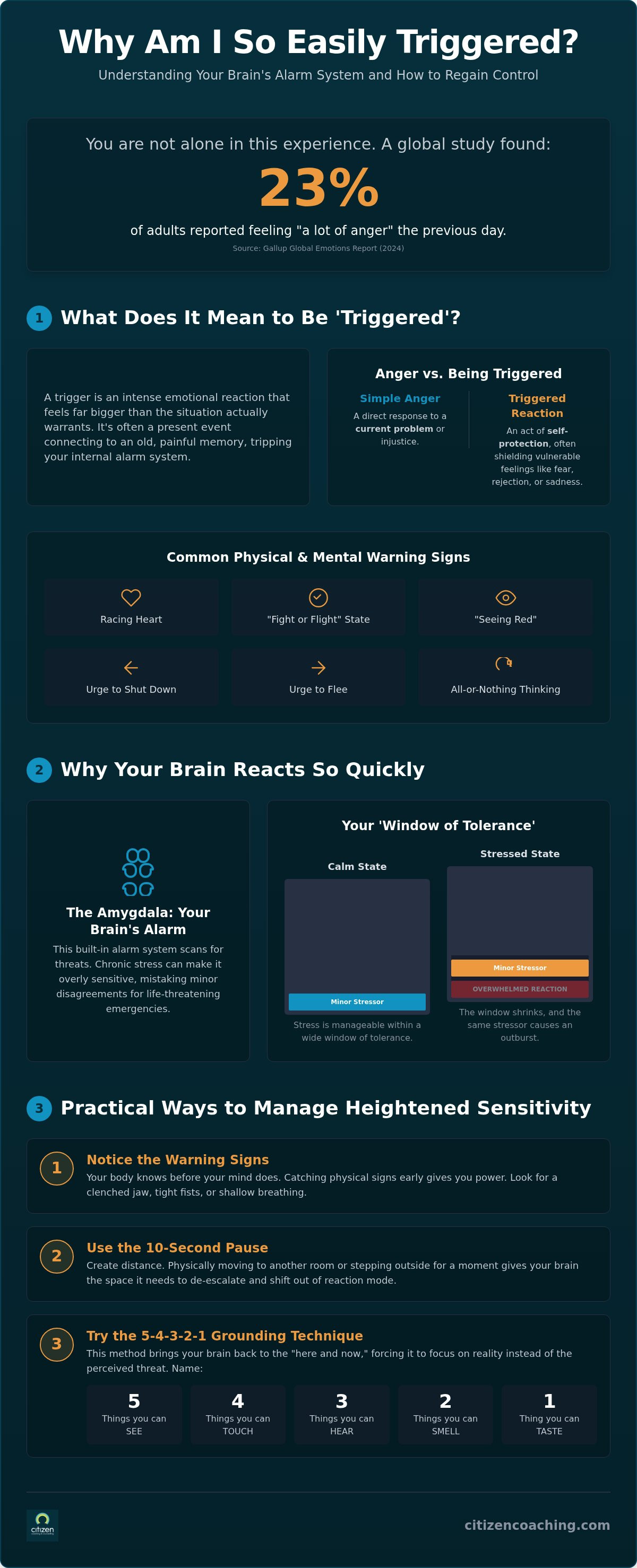
A trigger is an intense emotional reaction that feels far bigger than the situation actually warrants. If a minor comment or a small change in plans causes an explosion of emotion, you're likely experiencing a trigger. It's often a psychological stimulus that connects a present event to an old, painful memory. This is exactly why you might ask, "why am I so easily triggered," while others around you remain unbothered. Your body reacts instantly. You might notice a racing heart, a tight chest, or a sudden wave of heat through your limbs. These physical signs tell you that your internal alarm system has been tripped. It's very common to feel a heavy sense of shame after these outbursts, but these reactions are usually linked to past experiences rather than who you are today.
Common Signs You Are Feeling Triggered
When you're triggered, your brain enters a "fight or flight" state. In everyday life, this looks like "seeing red" or feeling a desperate urge to "shut down" and hide. Your thoughts often shift into "all-or-nothing" patterns. You might think "everyone is against me" or "this always happens to me." This mental shift happens because your brain is prioritising survival over logic. It's hard to think clearly when your body feels like it's under attack.
The Difference Between Anger and Being Triggered
It's vital to know that anger and being triggered aren't the same thing. Simple anger is a response to a current problem. Being easily triggered is almost always about self-protection. If you often wonder why am I so easily triggered, remember that anger is frequently a secondary emotion; it acts like a shield to cover up more vulnerable feelings like fear, rejection, or sadness. This isn't "bad behaviour." It's an outdated way your brain tries to keep you safe. Recognising this is the first part of your journey toward regaining control.
Why Your Brain Reacts So Quickly to Small Things
Your brain has a built-in alarm system called the amygdala. Its job is to keep you safe by scanning for threats. When you're asking "why am I so easily triggered," it's often because this alarm has become overly sensitive. It reacts to a minor disagreement as if it's a life-threatening emergency. This leads to "emotional echoes," where a current event feels much more dangerous because it reminds your brain of a past hurt. Your "Window of Tolerance" also plays a huge role. This is the mental space where you can handle stress effectively without feeling overwhelmed. On days when you're burnt out or haven't slept, this window shrinks. Suddenly, a tiny inconvenience feels like the end of the world because your brain has no room left to process it.
Past Experiences and Emotional Memories
Your brain stores difficult moments as "blueprints" to help you avoid future pain. These don't have to be major life events to leave a mark. Even a series of small, negative experiences can teach your brain to stay on high alert. When something happens that matches an old blueprint, your brain skips logic and goes straight to a reaction. Understanding these patterns is a great way to start finding a supportive path forward with someone who understands these cycles. It's about retraining your brain to see that the present is different from the past.
The Role of Chronic Stress
Living in a constant state of high stress significantly lowers your trigger point. In fast-paced environments, like those we see here in Birmingham, the pressure to perform can keep your body in a state of tension. This chronic stress means you're already starting your day near the top of your Window of Tolerance. This is why you might wonder why am I so easily triggered during a busy work week compared to a relaxed weekend. It doesn't take much to push you over the edge. When your system is already overloaded, your brain loses the ability to distinguish between a genuine threat and a simple mistake.
Practical Ways to Manage Heightened Sensitivity
Understanding the "why" is vital, but managing the "what" in the moment is what changes your day-to-day life. If you've been asking "why am I so easily triggered," the first step is to catch the physical warning signs. Your body knows before your mind does. Catch these signs. You might notice clenched fists, a tight jaw, or shallow breathing. Catching these early allows you to use the 10-second pause. Physically moving to another room or stepping outside creates the distance your brain needs to de-escalate. Often, there's a hidden need behind the trigger. This might be a desire for respect, safety, or simply to be heard.
Grounding Techniques for the Heat of the Moment
Grounding brings your brain back to the "here and now." Try the 5-4-3-2-1 technique using your surroundings. If you're near the Library of Birmingham or walking through the Jewellery Quarter, name five things you see. Name four things you can touch, three sounds like distant traffic, two things you can smell, and one thing you can taste. This forces your mind to focus on reality instead of the perceived threat. You can also try box breathing. Breathe in for four seconds, hold for four, out for four, and hold for four. It's a simple way to physically signal your nervous system to calm down.
Identifying Your Personal 'Trigger Map'
Creating a "trigger map" helps you find patterns in your reactions. Keep a simple diary of when you feel reactive. You might notice specific people, times of day, or places that lower your threshold. Recognising why am I so easily triggered by certain situations allows you to prepare in advance. Identifying these signs of anger issues turns a random outburst into a manageable challenge. You don't have to face these patterns alone.
Taking the Next Step Toward Emotional Balance
Knowing why am I so easily triggered is a vital first step, but it's only the start of your journey. Moving from understanding your past to changing your future often requires a steady hand to guide you. While venting to friends might feel good in the moment, it rarely solves the underlying sensitivity. Working with a professional anger management therapist Birmingham offers a structured path that builds real-world resilience. This isn't about being "broken" or needing a medical fix. It's about learning to navigate your emotions with a sense of calm competence. Seeking support is an act of strength that helps you show up better for yourself and the people you love.
How Citizen Coaching Supports You in Birmingham
Since 2005, Citizen Coaching has served as a community hub for those seeking a supportive way forward. We provide Anger Management Birmingham through both individual coaching and group sessions, allowing you to choose the environment where you feel most comfortable. For those who prefer a remote option, our Online Anger Management Course UK delivers practical, accessible tools directly to you. We focus on your personal development, ensuring our support feels like a conversation with a trusted mentor rather than a daunting intervention.
Starting Your Journey Today
Starting your journey shouldn't feel overwhelming. We've removed the barriers by ensuring our services are non-medical and completely free of technical jargon. You don't need a doctor's referral to get started. We use everyday language that resonates with your daily life. Please feel free to contact the team for a friendly, no-pressure chat about your needs. We're real people ready to help you navigate this transition and find the emotional balance you deserve.
Finding Your Path to Lasting Calm
You now understand that your triggers are an outdated alarm system trying to keep you safe. If you've spent years asking why am I so easily triggered, know that the answer isn't a character flaw. It's a sign your brain is stuck in a protective loop. By recognizing warning signs and using grounding tools, you can expand your window of tolerance and regain control.
Citizen Coaching has been a trusted Birmingham provider since 2005. As a Social Enterprise of the Year nominee, we offer a jargon-free, non-clinical approach that prioritizes your comfort. You don't have to navigate these feelings alone. Our team is here to offer the wise guidance you need to move from high alert to calm competence.
It's never too late to begin. We're ready to help you find the peace you deserve.
Frequently Asked Questions
Is being easily triggered a sign of a mental health disorder?
Being easily triggered isn't always a sign of a disorder, though it's often linked to how your brain processes past stress. While conditions like Intermittent Explosive Disorder exist, many people find that their reactions are simply a learned survival mechanism. We focus on personal development rather than medical labels. If you wonder "why am I so easily triggered," it's usually because your internal alarm system is set to a high sensitivity level.
Can I ever stop being triggered entirely?
You likely won't stop having emotional responses entirely, as your brain is designed to protect you. However, you can significantly reduce the intensity of your reactions. Through structured support, you learn to widen your window of tolerance. This means you'll still notice the spark of a trigger, but you'll have the tools to prevent it from becoming a full-blown fire. Retraining your brain takes time but leads to lasting emotional balance.
How do I explain my triggers to my partner or family?
Start by explaining that your reaction is an involuntary physical response, not a choice to be difficult. Use "I" statements to describe how you feel, such as "I feel overwhelmed when voices are raised because my brain sees it as a threat." This helps them understand that your outburst is about your internal state, not their behavior. Clear communication lowers the tension and allows your family to support your journey toward calmer living.
Why do I get triggered by people I love the most?
You often feel more triggered by loved ones because the emotional stakes are much higher. Vulnerability can feel like a threat to your brain's alarm system, leading you to ask "why am I so easily triggered" at home. Additionally, you might subconsciously feel safe enough with family to release pent-up tension that you've held in all day at work. Understanding this dynamic is a key part of our Birmingham-based coaching programmes.
What is the difference between counselling and anger management coaching?
Counselling often explores the deep-rooted why behind your feelings to help you heal from past experiences. In contrast, anger management coaching is more action-oriented and focuses on providing practical tools for the future. At Citizen Coaching, we offer both individual counselling and structured group programmes in Birmingham. This allows you to choose between reflecting on your emotional history or learning specific strategies to manage your reactions in the here and now.

Article by
Martin Hogg
Counselling and Anger Management in Birmingham. Articles by Martin Hogg, counsellor MBACP (Reg.) and Founder and CEO of Citizen Coaching and Counselling, a social enterprise based in Birmingham, UK. Martin also helps counsellors struggling to set up and grow their Private Practice to gain clarity and confidence in their marketing and systems.
Disclaimer
The information provided on this blog is for general informational purposes only and is not intended to be a substitute for professional medical or mental health advice, diagnosis, or treatment. Reading this content does not create a therapist-client relationship.


