What is Play Therapy? Birmingham Child Counselling Guide
Imagine watching your child struggle at school or lash out at home, knowing something is wrong but being unable to reach them. You ask what happened, but they just shrug or shut down because their big feelings are simply too heavy for adult words. You might be wondering, what is play therapy, and could it really help my child when talking hasn't worked?
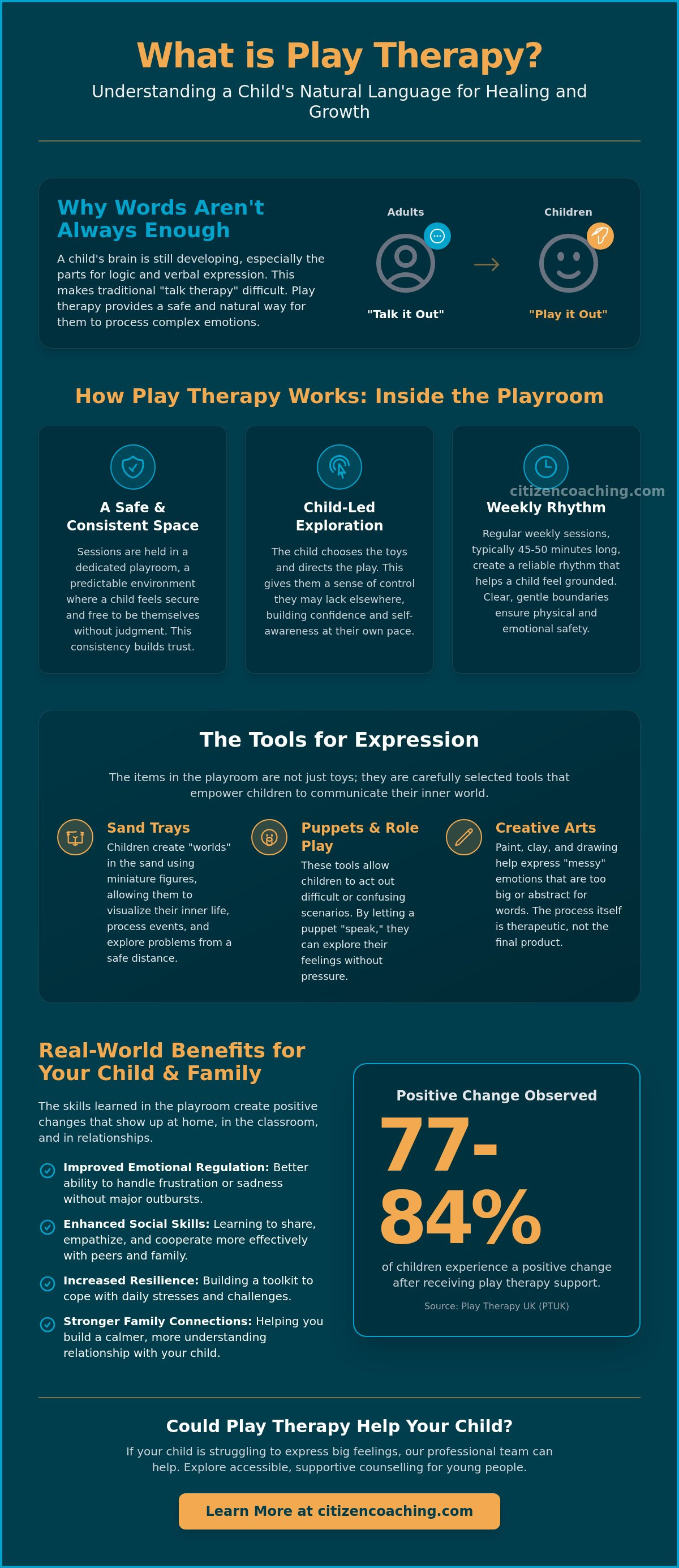
It is completely normal to feel helpless when your child is hurting. You want them to be happy and settled, yet the idea of clinical counselling often feels too intimidating for someone so small. We understand that starting this journey feels like a big step for any family. This guide will show you how play therapy uses a child’s natural language to help them process emotions and improve their behavior. Data from Play Therapy UK (PTUK) indicates that between 77% and 84% of children experience a positive change after receiving this type of support. We will explore how these sessions work, the ways they support emotional growth, and how they can help you build a stronger, calmer relationship with your child.
Key Takeaways
- Understand how play serves as a natural language for children to express heavy emotions they cannot yet put into words.
- Discover the answer to "What is play therapy?" and how it creates a safe, child-led space for healing and growth.
- Learn how regular sessions help your child manage big feelings, leading to improved behavior at school and home.
- Explore the social benefits of play-based support, such as better empathy and stronger connections with others.
- Find out how to access accessible, professional support for young people through a trusted Birmingham social enterprise.
What is Play Therapy? Understanding the Language of Children
Play therapy is a structured, evidence-based approach to counselling where a trained therapist uses play as the primary way of communicating with a child. While adults use words to share their worries, children express themselves through toys, drawings, and stories. So, what is play therapy exactly? It's a way for a child to "play out" their thoughts and feelings, just as an adult might "talk out" their problems. This method recognizes that for a young person, toys are their words and play is their language.
Children often lack the emotional vocabulary to describe complex feelings like anxiety, grief, or anger. They might feel a heavy weight in their chest but won't have the words to explain it. Therapeutic play is different from the recreational play your child does at home. While home play is for fun, sessions in a playroom are intentional and observed. The therapist provides a specific set of tools that help the child process their experiences. This method is usually for children aged 3 to 12, though the creative principles are often used when supporting older young people too.
Why Words Aren’t Always Enough
A child's brain is still growing. The areas responsible for logic and verbal communication aren't yet fully developed, making traditional talking therapy difficult. Play provides a safe distance from scary or confusing topics. For example, a child might use a puppet to act out a difficult situation at school. By letting the puppet speak, the child can explore their feelings without feeling directly under a spotlight. It takes the pressure off and makes healing feel like a natural part of their day.
The Role of the Trained Play Therapist
In the playroom, the therapist acts as a wise guide. They aren't there to be a teacher, a parent, or a doctor. Instead, they focus on building a strong therapeutic alliance. This is a special bond based on trust and safety. When a child feels truly seen and accepted, they begin to feel confident enough to tackle their big feelings. The therapist doesn't lead the play; they follow the child's lead, offering support and reflection as the child finds their own way forward.
How Play Therapy Works: Inside the Playroom
To truly understand what is play therapy, you have to look at the environment where it happens. Step inside a dedicated playroom and you'll find a space that feels very different from a classroom or a doctor's office. This is a consistent, predictable environment where your child is the leader. Most sessions last between 45 and 50 minutes and happen once a week. This steady rhythm helps a child feel grounded and safe. In this space, there are no "wrong" ways to feel. Whether they're happy, frustrated, or quiet, the room is a safe place to just be themselves.
A central part of understanding what is play therapy involves the child-centred approach. Instead of the therapist telling the child what to do, the child chooses the toys and the stories. This gives them a sense of control that they might lack in other parts of their life. By making their own choices, they build confidence and start to make sense of their own world at their own pace. The therapist is there to witness and support this process without judgment.
Common Tools and Their Purpose
The toys in the room aren't just for fun; they are tools for expression. The Association for Play Therapy explains that these items help children communicate what is happening inside them. Common tools include:
- Sand Trays: Children use miniature figures to create "worlds" in the sand. This helps them visualize their inner life and see their problems from a new perspective.
- Puppets and Role Play: These allow children to act out difficult scenarios they face at school or home. It provides a safe way to practice how to handle tough moments.
- Creative Arts: Using paint, clay, or drawing helps express messy emotions. These are the feelings that are often too big or confusing for words.
Setting Boundaries for Safety
While the child leads the play, the therapist provides a sense of structure. We call this "containment." Clear, gentle boundaries are set to ensure the child and the therapist remain safe. These limits help a child feel secure because they know exactly what to expect. Learning to work within these boundaries is a helpful step toward building self-control and resilience. If you feel your child could benefit from this structured support, exploring counselling for young people can be a great way to start their journey.
The Real-World Benefits: How Play Therapy Helps Your Family
Seeing your child thrive is every parent's goal. While the work happens in the playroom, the real results show up at the dinner table and in the classroom. When you understand what is play therapy, you see it isn't just about having fun; it's about building a toolkit for life. Children who attend regular sessions often show a marked improvement in emotional regulation. This means they can handle big feelings like frustration or sadness without it turning into a major outburst. By learning to manage these emotions in a safe space, they become more resilient when faced with the stresses of daily life.
They also learn how to cooperate better with others. By practicing interactions with a therapist, children often find it easier to share, empathise, and play with their peers at school. This boost in social confidence often leads to higher self-esteem. A child who feels truly heard and understood in the playroom feels more capable and confident in the outside world. It also helps you as a parent. When you learn to understand your child's "play language," your bond grows stronger and your home feels calmer.
Addressing Specific Challenges
Play therapy is incredibly effective for children facing big life changes. Whether it's the pain of bereavement or the confusion of a divorce, the playroom offers a space to process these events safely. For children struggling with anger, research from Play Therapy UK (PTUK) involving over 12,000 cases shows that between 77% and 84% of children experience a positive change when standards are met. By providing a creative outlet for tension, play therapy significantly reduces the symptoms of anxiety and helps children feel more settled in their environment.
What Parents See at Home
You might notice a gradual shift from frequent meltdowns to better communication. However, the journey isn't always linear. It's common for children to be quite tired or unusually quiet after a session. They've been doing deep emotional work, and they need time to process it. If you're ready to see these changes in your own family, we offer specialized counselling for young people to help your child find their voice and build a brighter future.
Taking the First Step: Play Therapy in Birmingham
Deciding to seek support for your child is a significant moment. It often feels like the heaviest part of the journey. Please know that reaching out isn't a sign that you've failed as a parent. In fact, it's a sign of immense strength and a deep commitment to your child's well-being. At Citizen Coaching and Counselling, we provide specialized Counselling for Young People designed to meet children where they are. We focus on creating a space where they feel safe enough to share what's on their mind without the pressure of finding the right words.
We operate as a Birmingham-based Social Enterprise (CIC). This means we're deeply rooted in our local community and focused on making professional support accessible to our neighbors. Our approach ensures that what is play therapy feels like a practical, helpful tool for your family rather than a daunting medical intervention. We aren't a distant institution; we're a team of real people dedicated to helping Birmingham families find their way back to calmer days.
Accessible Support for Birmingham Families
We intentionally remove the "clinical" feel that often makes traditional therapy feel intimidating. Our rooms are designed to be warm and welcoming, helping to de-escalate the stress that often comes with seeking mental health support. Because we understand the specific needs of the Birmingham community, we can offer guidance that feels relevant and grounded in your reality. We prioritize your comfort and work to remove any obstacles that might stand in the way of your child getting the help they deserve.
How to Get Started
The process of starting therapy is simple and steady. It begins with an initial enquiry where you can share your concerns. From there, we'll have a brief conversation to understand your child's needs and arrange an assessment. This ensures our approach is the right fit for your family before the first child session begins. We also recognize that parents often need support too. We offer Private Counselling Birmingham for adults who may be struggling with their own big feelings alongside their child's journey.
Taking that first step can feel like a lot, but you don't have to do it alone. Start your family’s journey toward calmer days here.
Supporting Your Child's Emotional Journey
We've explored how play serves as the bridge between a child's inner world and their outer behavior. By understanding what is play therapy?, you can begin to see your child's struggles through a new lens of hope and possibility. This approach moves beyond simply managing outbursts; it builds the emotional resilience your child needs to navigate life's challenges with confidence. Seeing your child find their voice in the playroom is often the turning point for the whole family.
Citizen Coaching and Counselling has been a trusted part of the Birmingham community since 2005. As a Social Enterprise (CIC), we reinvest our resources back into local mental health services to ensure everyone has access to high-quality care. Our team consists of qualified practitioners who specialize in working with young people, providing the calm competence required to support your child's growth. We prioritize your family's comfort by offering a professional yet warm environment that removes the stress of seeking help.
Book a friendly, jargon-free chat with our Birmingham team today to discuss how we can help. Taking this step is a powerful way to invest in your child's future and bring peace back to your home.
Frequently Asked Questions
Is play therapy just for children with serious mental health issues?
No, it is a helpful tool for children facing a wide range of life challenges. While it supports those with significant needs, it is also effective for children dealing with common issues like bullying, low self-esteem, or the arrival of a new sibling. Any child who finds it difficult to manage their big feelings can benefit from the safe, creative environment of the playroom.
How long does play therapy usually take to show results?
Every child's journey is unique, but many families begin to see a positive shift within 12 to 20 weekly sessions. We focus on steady, lasting progress rather than quick fixes. Your therapist will meet with you regularly to discuss how your child is doing and how the work in the sessions is starting to help them at home and school.
Can I be in the room with my child during the sessions?
Usually, children attend their sessions on their own. This gives them a private space where they don't have to worry about how their feelings might affect you. It's important for them to feel they can express anything without judgment. However, your therapist will stay in close contact with you to share general progress and offer practical tips for supporting your child at home.
What is the difference between play therapy and just playing at home?
The main difference is the presence of a trained professional and the intentional use of therapeutic tools. When parents ask what is play therapy, they often learn it is a structured clinical support. Unlike recreational play, these sessions are observed by a therapist who helps the child make sense of their internal world. The toys are chosen specifically to help children "speak" about things they cannot yet put into words.
How do I know if my child actually needs play therapy?
You might consider support if you notice persistent changes in your child's mood, behavior, or school life that last more than a few weeks. Signs can include sudden outbursts of anger, withdrawing from friends, or a change in sleeping habits. If you feel like you've hit a wall and don't know how to help them, an initial assessment is a gentle way to see if this approach is right for your family.
Disclaimer
The information provided on this blog is for general informational purposes only and is not intended to be a substitute for professional medical or mental health advice, diagnosis, or treatment. Reading this content does not create a therapist-client relationship.


