
What Happens in an Anger Management Session? A Step-by-Step Guide
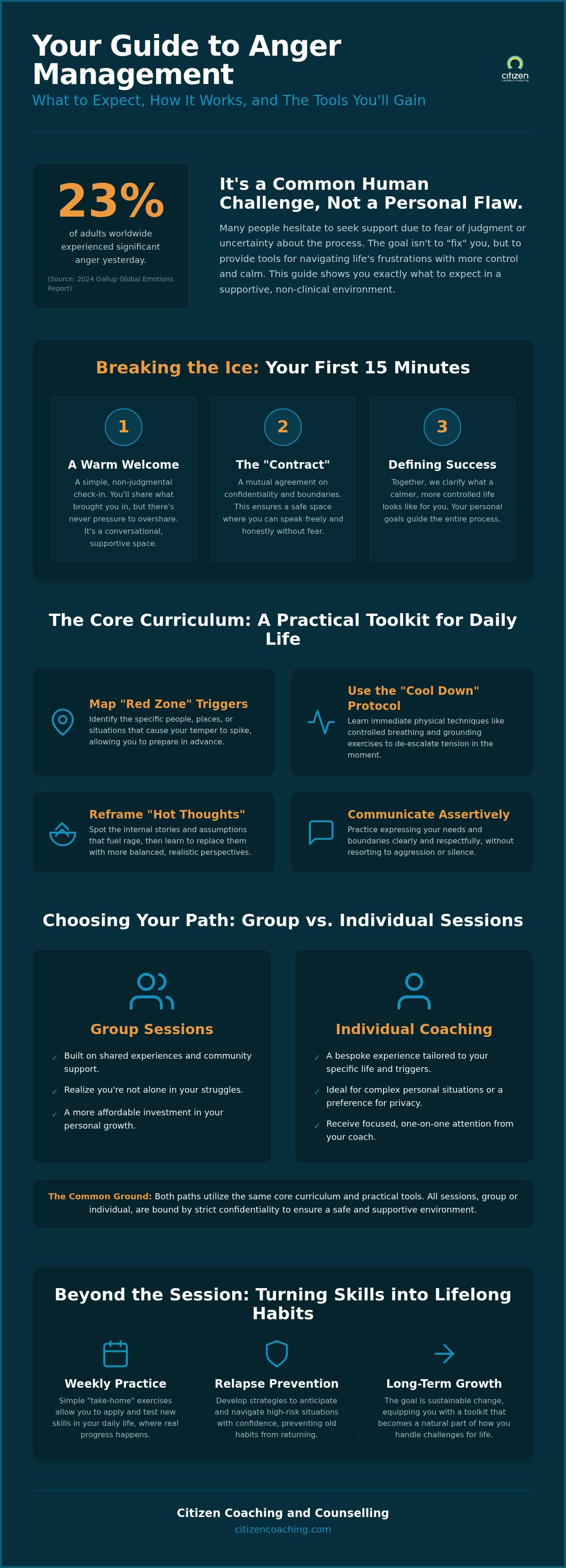
What if the goal of anger management isn't to "fix" who you are, but to give you the tools to handle life's frustrations with more ease? Many people hesitate to reach out because they fear being judged as a "bad person" or labeled with a medical diagnosis. You might feel anxious simply because you don't know what happens in an anger management session or how the process actually works. According to the 2024 Gallup Global Emotions Report, 23% of adults worldwide experienced significant anger the previous day, which shows that managing these feelings is a common human challenge.
It's natural to feel some uncertainty about starting this journey. We agree that the first step should feel supportive and clear, not overwhelming or clinical. This guide promises to show you exactly what to expect during your first session, from the initial conversation to the practical tools you'll take home. We'll preview the difference between coaching and traditional therapy, giving you a clear look at the next steps toward a calmer, more controlled life.
Key Takeaways
- Understand the welcoming, non-judgmental environment and the "contract" that ensures your sessions remain a safe and confidential space.
- Learn exactly what happens in an anger management session, from mapping your personal "red zone" triggers to practicing physical cool-down techniques.
- Compare the unique benefits of Birmingham-based group sessions with the bespoke focus of individual coaching to find the right path for your lifestyle.
- Discover how to turn new skills into lifelong habits with relapse prevention strategies that help you navigate high-risk situations with confidence.
Breaking the Ice: What Happens in the First 15 Minutes?
Walking through the door for the first time takes courage. We understand that you're likely feeling a mix of nerves and curiosity about what happens in an anger management session. Your coach will greet you warmly; there's no clinical coldness here. The first few minutes are about a simple check-in. You'll share what brought you to us today, but there's never any pressure to overshare. This is a conversational space where your lived experience is the priority.
We'll spend a moment setting the "Contract." This isn't a legal document; it's a mutual agreement on confidentiality and boundaries. It ensures you feel safe to speak freely. Anger management works best when we're on the same page. Together, we'll define what success looks like for you and clarify what happens in an anger management session as you progress. Success might mean staying calm during a difficult work meeting or communicating better with your partner.
Creating a Jargon-Free Environment
We don't use medical labels or complex psychological terms. Our goal is to make personal growth accessible. You'll find that your coach acts more like a trusted mentor than a distant clinician. We focus on your reality, helping you navigate daily life without the weight of a diagnosis. This approach keeps the conversation grounded and practical.
Addressing Your Initial Anxiety
It's common to fear being judged as a "bad person." We're here to de-escalate that stress immediately. If you feel overwhelmed during our first conversation, we can slow down or take a break. Our Birmingham-based team is trained to help you feel grounded and respected. If you're ready to start, you can explore our anger management courses to see which format fits your life best.
The Core Curriculum: Practical Tools and Techniques Learnt
Once the initial check-in is complete, we move into the training phase. You'll find that what happens in an anger management session is focused on building a practical toolkit for daily life. We start by mapping your "red zone" triggers. These are the specific people, places, or situations that cause your temper to spike. By identifying these early, you can prepare yourself before a situation becomes overwhelming.
We then introduce the "Cool Down" protocol. These are immediate physical techniques, like controlled breathing or grounding exercises, designed to de-escalate tension before it boils over. You'll also learn cognitive reframing. This involves spotting "hot thoughts," the internal stories that fuel rage, and replacing them with more balanced perspectives. Finally, we practice assertive communication. This helps you express your needs clearly without resorting to aggression or silence.
The Science of the 'Anger Hijack'
Your brain is wired for survival. When you're triggered, your amygdala can take over, which is often called an "Amygdala Hijack." This physical reaction shuts down your logical thinking. By understanding this, you can learn to regain control faster. It's about recognizing the physical signs of anger early so you can step back before the hijack takes full effect.
Weekly Practice and Homework
The real progress happens in your daily life. We provide simple "take-home" exercises so you can test your new skills safely. You might practice a new response during a minor frustration or track your triggers in a diary. This practical application is a key part of what happens in an anger management session and the weeks that follow. To see how these skills are organized, you can explore our structured anger management courses. If you're unsure which path is right for you, contact our team to discuss your specific needs.
Choosing Your Path: Group vs. Individual Sessions
Deciding how you want to engage with our programme is a personal choice. Both paths offer the same core tools, but the environment changes how you process them. When you look at what happens in an anger management session, you'll see that the focus remains on practical growth, whether you're in a room with others or speaking one-to-one with a coach.
Group sessions are built on shared experiences. Many people feel a sense of relief when they realize they aren't the only ones struggling. It's often a more affordable investment and provides a supportive community. On the other hand, individual coaching provides a bespoke experience tailored to your specific lifestyle and triggers. This format is ideal if you have complex personal situations or simply prefer a private setting. We ensure anonymity in both formats by setting strict confidentiality boundaries from the start.
Is Group Coaching Right for You?
Our Anger Management Birmingham Group sessions are designed to be neighborly and non-judgmental. You'll learn from others' journeys while sharing your own at a pace that feels comfortable. This interactive format is a core part of what happens in an anger management session when you choose the group path. It helps de-escalate the feeling of isolation that often comes with chronic anger.
When to Opt for 1-to-1 Support
Private coaching allows for a deeper, focused dive into your unique situation. You won't have to wait for a group turn to speak; instead, every minute is dedicated to your progress. You can learn more about finding the right professional support in Birmingham to help you decide which path aligns with your goals and your budget. This ensures you find a guide who truly understands your specific needs.
Beyond the Session: Turning Skills into Lifelong Habits
The journey doesn't end when the clock stops. In fact, the most important part of what happens in an anger management session is how those lessons translate to your life at home and work. We measure your growth throughout the programme by looking at real-world changes. Are you sleeping better? Are your arguments shorter or less frequent? These markers show that your new tools are taking root and becoming second nature.
We also focus on relapse prevention. This means planning for "high-risk" situations before they happen. If you know a specific family event or work deadline usually causes stress, we'll create a step-by-step plan to navigate it safely. You might also choose to involve friends or family. Sharing your new communication style with them can build a stronger support network, making it easier to stay on track. If life gets challenging later on, our "Open Door" policy means you can always return for top-up support when you need it most.
Integrating Skills into Your Daily Routine
Keeping your "emotional baseline" low requires small, consistent habits. Five minutes of daily reflection or breathing exercises can make a massive difference in your overall stress levels. For those who want to keep the momentum going, you can use our online anger management course. It's a great way to refresh your skills and access ongoing learning at your own pace.
When the Programme Ends
Graduation isn't just about finishing a course; it's about starting a new chapter with confidence. You'll leave with a clear understanding of your progress and a roadmap for the future. We've seen many people find a sense of relief and hope as they realize they're no longer controlled by their temper. It's a practical shift that changes how you interact with the world. If you're ready to take that first step, contact our Birmingham team to start your journey today.
Taking Your First Step Toward Lasting Calm
You now have a clear picture of what happens in an anger management session, from the initial ice-breaking conversation to the practical tools you'll use in daily life. Whether you choose the shared experience of a group or the bespoke focus of individual coaching, the goal remains the same: giving you back control. Since 2005, we've operated as a Social Enterprise (CIC), focusing on accessible, jargon-free support that meets you exactly where you are.
Our qualified practitioners are here to guide you through trigger mapping and de-escalation techniques without the pressure of medical labels. You've learned how to plan for high-risk situations and turn new skills into lifelong habits. It's about progress, not perfection. We're ready to help you build a future where frustration no longer dictates your day.
You don't have to navigate this journey alone. We're here to provide the steady, professional guidance you need to move forward with confidence.
Frequently Asked Questions
Will I have to talk about my childhood or past trauma in an anger session?
No, you don't have to dwell on the past. Our coaching focuses on the "here and now" and practical tools for your daily life. While we acknowledge that past experiences shape us, our sessions prioritize identifying current triggers and building immediate coping strategies. We avoid deep clinical digging or medical labels, ensuring the conversation stays grounded in your lived experience today.
How many anger management sessions will I typically need to see results?
Most participants see a shift in their reactions within the first few weeks of a structured programme. The total number of sessions depends on whether you choose our Birmingham group sessions or individual coaching. Many people find relief after a few 1-to-1 meetings, while others prefer the steady pace of a multi week course. We focus on steady, measurable progress in every meeting to help you reach your goals.
Is everything I say in an anger management session strictly confidential?
Yes, confidentiality is a cornerstone of what happens in an anger management session. We establish a clear "contract" at the very beginning to ensure you feel safe and respected. Your privacy is protected in both our individual and group settings. This non-judgmental atmosphere is essential for de-escalating stress and building the trust needed to practice new communication skills and emotional regulation techniques effectively.
Can I attend anger management sessions online if I can't make it to Birmingham?
You can absolutely access our support from anywhere through our Online Anger Management Course. This is a great alternative if you can't visit our Birmingham centre or prefer to learn at your own pace. The online format mirrors what happens in an anger management session in person, including trigger mapping and the "Cool Down" protocol. It's designed to be a flexible, jargon-free way to build lifelong habits.
Do I need a referral from my GP to start anger management coaching?
You don't need a referral from your GP to begin our programmes. As a social enterprise (CIC) founded in 2005, we focus on making support accessible and removing traditional barriers to care. You can reach out to us directly to discuss your needs. Whether you're interested in group coaching or 1-to-1 support, our process is designed to be a practical coaching journey rather than a medical intervention.

Article by
Martin Hogg
Counselling and Anger Management in Birmingham. Articles by Martin Hogg, counsellor MBACP (Reg.) and Founder and CEO of Citizen Coaching and Counselling, a social enterprise based in Birmingham, UK. Martin also helps counsellors struggling to set up and grow their Private Practice to gain clarity and confidence in their marketing and systems.
Disclaimer
The information provided on this blog is for general informational purposes only and is not intended to be a substitute for professional medical or mental health advice, diagnosis, or treatment. Reading this content does not create a therapist-client relationship.


