
The Link Between Depression and Anger: Why Low Mood Triggers Outbursts
What if the sudden bursts of irritability you feel aren't proof of a bad temper, but an exhausted mind running on empty? While society often pictures depression as quiet tearfulness, the link between depression and anger is remarkably strong. For many of us, low mood acts less like a heavy blanket and more like armour, turning deep emotional vulnerability into sharp frustration.
If you constantly snap at loved ones only to drown in guilt moments later, you aren't a bad person. It's deeply draining to spend your days suppressing emotional turmoil, especially when you can't understand why you feel so furious when you actually feel hollow inside.
Discover why depression frequently presents as intense anger and learn practical ways to break the cycle before irritation damages your relationships. Ahead, we explore why emotional exhaustion triggers sudden outbursts, how to recognise your warning signs early, and compassionate strategies to calm your nervous system and find lasting relief.
Key Takeaways
- Understanding the link between depression and anger helps reframe sudden irritability as an understandable symptom of emotional overwhelm rather than a personal flaw.
- Discover how prolonged emotional fatigue depletes your brain's capacity to cope, turning minor daily irritations into intense fight-or-flight reactions.
- Identify your personal physical warning signs so you can break the exhausting cycle of snapping, guilt, and worsening low mood before it harms your relationships.
- Learn practical, accessible grounding techniques to calm your nervous system in heated moments and explore supportive paths forward.
How Anger Masks Underlying Depression: The Hidden Connection
The direct link between depression and anger often catches people off guard. We usually picture depression as quiet tears, lethargy, or withdrawal. In reality, persistent irritability and explosive frustration are just as common. While clinical criteria often highlight sadness, standard symptoms of major depression frequently manifest as a short fuse and sudden conflict. Suppressed sadness rarely stays quiet; instead, it boils over into external hostility.
Anger functions as an emotional fortress, shielding us from the unbearable vulnerability of feeling broken, helpless, or deeply hurt.
Internalised Sadness Versus Externalised Hostility
Social conditioning plays a major role in how our distress shows up. Many of us, particularly men, are conditioned to reject sadness or tears as weakness. Frustration feels safer to project. Consequently, despair transforms into outward snapping and sharp remarks. Because routine GP check-ins traditionally look for tearfulness rather than hostility, this irritable presentation often slips under the radar during standard emotional health screenings.
Anger as an Emotional Protective Shield
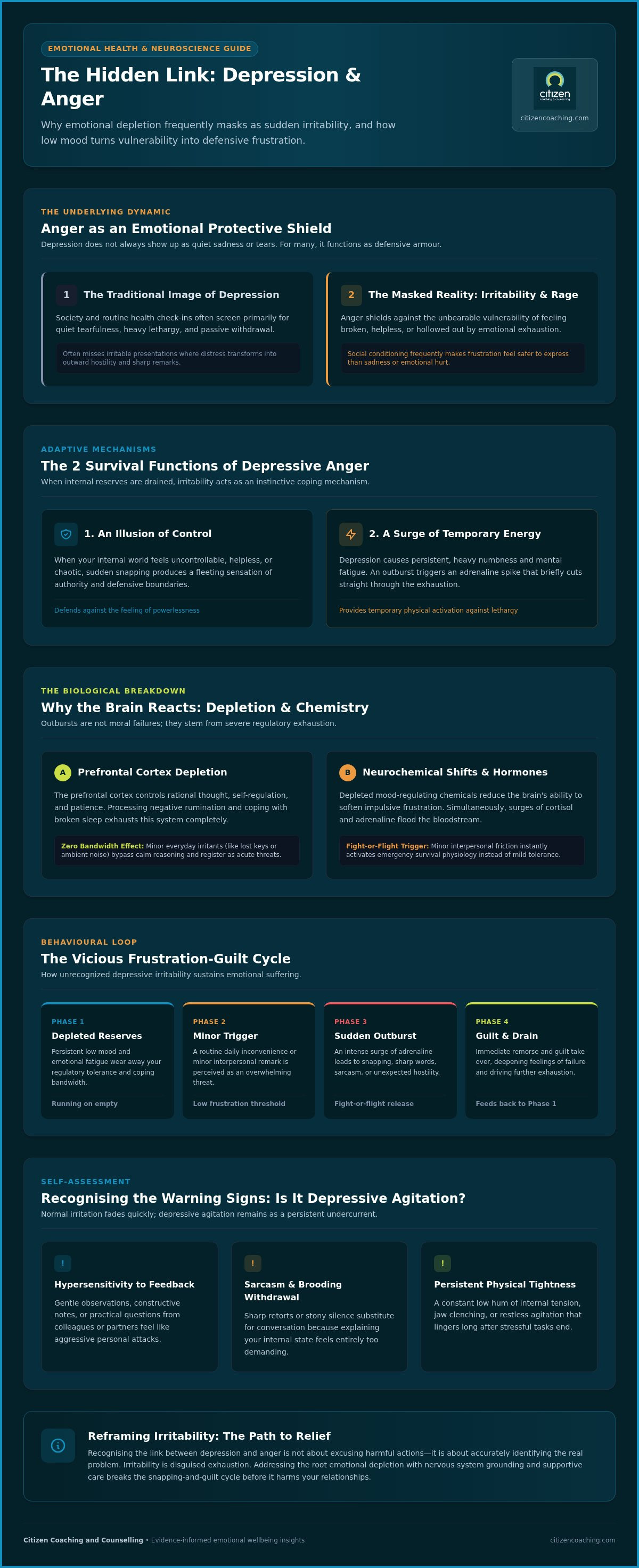
Living with depressive exhaustion leaves your internal reserves completely depleted. When you feel powerless against your own mind, irritation serves two distinct survival functions:
- An illusion of control: Snapping gives a fleeting sensation of authority when everything else feels unmanageable.
- A surge of temporary energy: Anger triggers a burst of adrenaline that cuts straight through heavy, numbing fatigue.
Recognising this link between depression and anger isn't an excuse for harsh behaviour; it's the first step toward honest relief. When you understand that irritability is often disguised exhaustion, you can finally address the root pain instead of just fighting the outbursts.
The Science Behind Low Mood, Irritability, and Emotional Outbursts
Your brain isn't failing; it is simply running on empty. When prolonged low mood takes hold, restless sleep and heavy mental fatigue strip away your natural emotional stamina. Understanding the biological link between depression and anger clarifies why minor everyday irritations suddenly spark intense outbursts instead of mild sighs.
Cognitive Depletion and Low Frustration Tolerance
Processing negative thoughts all day consumes an immense amount of mental energy. This chronic exhaustion drains the prefrontal cortex, the control centre responsible for self-regulation and patience. A misplaced set of keys or a noisy room pushes a tired mind straight past calm reasoning. Research exploring the anger-depression connection reveals how ordinary demands feel like overwhelming personal threats when your brain has zero regulatory bandwidth remaining.
The Role of Neurochemicals and Stress Hormones
Brain chemistry also shifts dramatically during depressive periods. When key mood-regulating neurotransmitters become depleted, your system struggles to dampen impulsive irritability. Meanwhile, surges of stress hormones like cortisol and adrenaline flood your bloodstream during minor conflicts, swiftly hijacking rational thinking and triggering an unnecessary fight-or-flight reaction.
Living in this hyper-reactive state is completely exhausting. If you find yourself constantly battling these intense physical surges, you don't have to carry the load on your own. You can always reach out to our friendly team to explore supportive, non-judgmental ways to calm your nervous system and steady your reactions.
Recognising the Warning Signs: Is Your Anger Actually Depression?
Everyday irritation passes once the traffic clears or a difficult meeting ends. Depressive agitation, however, lingers like a low hum in the background. Because the link between depression and anger isn't widely understood, many people assume they simply have an uncontrollable temper. In truth, your physical body and behaviour offer clear clues that frustration stems from emotional depletion rather than spite.
Behavioural Red Flags in Daily Relationships
When low mood drives your frustration, interactions with colleagues and loved ones take the strain. Common signs include:
- Extreme sensitivity to feedback: Gentle comments or practical suggestions feel like sharp personal attacks.
- Sarcasm and quiet withdrawal: Bitter remarks or silent brooding replace open communication because explaining your feelings feels too demanding.
- Persistent physical tightness: Clenched jaws, headaches, tight shoulders, and restless pacing signal that your nervous system is trapped in overdrive.
The Exhaustion-Outburst-Guilt Cycle
The clearest indicator of the link between depression and anger is the shame cycle that follows a flare-up. It begins with silent depletion, where daily demands slowly outpace your coping reserves. Eventually, a minor inconvenience acts as the final straw, causing a sharp, disproportionate outburst.
Once the adrenaline fades, intense guilt rushes in. You tell yourself you are unkind or difficult to live with, which deepens underlying feelings of worthlessness. This self-blame sinks you further into low mood, priming your mind for the very next trigger. If this pattern sounds familiar, exploring counselling for individuals provides a gentle space to unpack these feelings without judgment.
Breaking the Frustration Cycle: Practical Strategies and Support
Interrupting the link between depression and anger requires practical tools rather than sheer willpower. When your nervous system is flooded, trying to force yourself to feel calm rarely works. You need concrete steps to steady your body first, followed by clear thinking.
Immediate Somatic and Cognitive Calming Steps
Try this three-step sequence the moment you feel tension rising:
- Take two physiological sighs: Inhale deeply through your nose, take a quick second top-up sip of air, then sigh it all out slowly through your mouth. This immediately engages your parasympathetic nervous system, lowering your heart rate.
- Pause and name the feeling: Ask yourself silently, Am I genuinely furious, or am I exhausted and overwhelmed? Naming the hidden vulnerability takes the fuel away from the fire.
- State an honest boundary: Step away before speaking. Say clearly, "I'm running on empty right now. I need ten minutes to clear my head before we talk about this."
Therapeutic and Coaching Pathways to Healing
While quick calming techniques help in heated moments, tackling the root causes requires steady guidance. Standalone anger strategies teach you how to respond to immediate triggers, but exploring the deeper link between depression and anger helps resolve the underlying emotional fatigue.
Attending structured anger management courses or booking individual sessions gives you a structured toolkit to manage reactive habits. If you prefer exploring root causes, person-centred counselling lets you unpack low mood and sadness safely. Founded in 2005 as a Birmingham social enterprise, our team believes mental wellbeing support should be jargon-free and accessible to everyone. Whenever you feel ready to take that first step, you can reach out directly to Citizen Coaching to find the right path forward.
Moving Forward with Clarity and Self-Compassion
Living with constant irritation doesn't mean you have a bad temper or lack self-control. Recognising the real link between depression and anger shows that sudden outbursts are often an exhausted plea for rest, not a personal flaw. When you understand how low mood drains your coping bandwidth, you can finally stop the exhausting cycle of snapping and self-blame.
You don't have to carry this emotional weight alone. Founded in 2005 as a trusted social enterprise dedicated to accessible mental health, Citizen Coaching provides specialised individual and group coaching programmes delivering practical emotional regulation. We offer a supportive, non-clinical environment committed to reducing stigma and helping you rebuild daily emotional resilience.
Reaching out takes courage, but you deserve relationships free from constant tension and a mind that feels calm, steady, and understood.
Frequently Asked Questions
Is anger considered an official symptom of clinical depression?
No, anger isn't listed as a primary diagnostic criterion for adults in standard psychiatric manuals. Official guidelines focus heavily on low mood, numbness, and tearfulness. However, healthcare professionals widely recognise that chronic irritability, sudden hostility, and short tempers frequently accompany depressive disorders, particularly when emotional overwhelm prevents someone from coping with everyday pressures.
Can repressed anger turn inward and trigger depressive episodes?
Yes, swallowing intense frustration often leads directly to low mood. When you bottle up anger because expressing it feels unsafe or unacceptable, that negative energy doesn't simply vanish. It turns inward as harsh self-criticism, guilt, and emotional fatigue. Over time, internalising this constant tension drains your emotional resilience and reinforces the painful link between depression and anger.
How do I know if my anger is caused by depression or just stress?
Situational stress usually fades once a specific problem resolves, such as finishing a difficult project or paying a bill. Depressive anger feels chronic, heavy, and disproportionate to everyday events. If your irritation comes alongside constant fatigue, loss of interest in hobbies, and deep feelings of worthlessness or guilt after snapping, low mood is likely driving your reactions.
What should I do if someone I love expresses depression through aggression?
Prioritise your own emotional safety by setting calm, clear boundaries during heated moments. Avoid arguing while their nervous system is flooded. Instead, wait until they are calm to gently reflect what you see, focusing on their exhaustion rather than blaming their temper. Encourage them to speak with a supportive professional or join a community-based wellbeing programme.
Does anger management therapy also address underlying low mood?
Yes, effective emotional regulation coaching looks beneath surface-level outbursts. At Citizen Coaching and Counselling in Birmingham, our anger management programmes and one-to-one counselling explore the root triggers behind quick tempers. Addressing the link between depression and anger helps clients learn practical calming tools while safely unpacking the exhaustion, low mood, and hidden emotional distress driving their frustration.

Article by
Martin Hogg
Counselling and Anger Management in Birmingham. Articles by Martin Hogg, counsellor MBACP (Reg.) and Founder and CEO of Citizen Coaching and Counselling, a social enterprise based in Birmingham, UK. Martin also helps counsellors struggling to set up and grow their Private Practice to gain clarity and confidence in their marketing and systems.
Disclaimer
The information provided on this blog is for general informational purposes only and is not intended to be a substitute for professional medical or mental health advice, diagnosis, or treatment. Reading this content does not create a therapist-client relationship.


