
Stopping the Cycle of Arguments: Practical Steps to Break the Pattern
What if the way to stop having the same argument isn’t to find the perfect thing to say, but to interrupt the pattern sooner? When a familiar disagreement escalates, it can leave both people feeling unheard, blamed or shut down, while the original issue remains unresolved. If you’re looking for ways of stopping the cycle of arguments, you’re not alone in wanting a calmer way to talk things through.
Changing a recurring pattern takes practice. Pausing a conversation doesn’t mean dismissing the problem; it creates room to return to it with more care. This article will help you spot early signs that an argument is repeating, use a clear pause-and-restart plan, and choose a constructive next step together.
You’ll also learn when guided support may help you practise new ways of communicating. Whether you’re trying to restart a difficult conversation or understand what keeps bringing you back to the same disagreement, small, shared changes can offer a place to begin.
Key Takeaways
- Notice when a familiar concern or response starts pulling the conversation into the same loop.
- Spot your early signs of escalation, such as interrupting, raising your voice or withdrawing.
- For stopping the cycle of arguments, practise pausing, sharing one concern, listening and agreeing on a next step.
- If it feels hard to change the pattern together, consider whether self-guided practice or supported conversations better suit your needs.
Why the Same Arguments Keep Repeating, and What the Pattern Looks Like
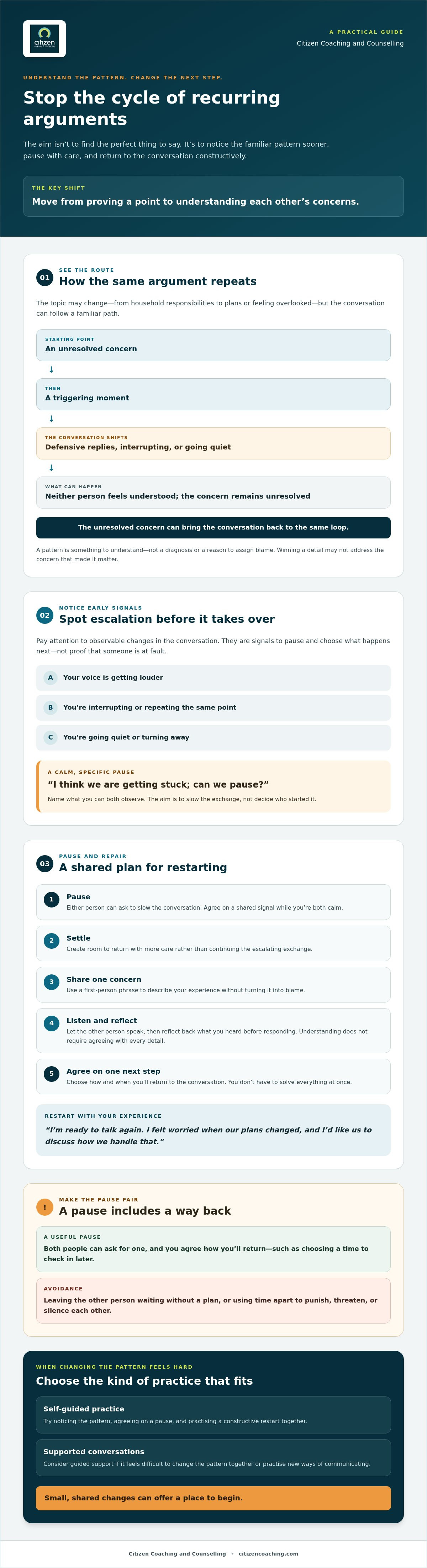
A recurring argument is a familiar disagreement that returns to the same issue or follows the same conversational path. The subject might be household responsibilities, plans or feeling overlooked. The details can change, but the discussion often moves from a concern to a triggering moment, then to defensive replies, with neither person feeling understood.
An argument cycle is a repeated route from an unresolved concern through a triggering moment and defensive responses, back to the same unresolved concern. Recognising that route can help you look at what happens between you without deciding that one person is the problem. A pattern is something to understand, not a diagnosis or a reason to assign blame.
How to recognise your recurring argument pattern
Notice whether the same topics return, whether either of you uses familiar opening lines, and when listening gives way to interrupting, defending or going quiet. After a disagreement, consider asking yourself: “What did I want them to understand?” You might invite the other person to reflect on the same question. Stay curious about each person’s needs without assuming you know their motives.
Why winning the point may not resolve the disagreement
Proving that your version of events is right may settle a detail without addressing the concern that made it matter. For example, you might agree about who changed a plan but still feel uncertain about whether your time is valued. That doesn’t mean every conflict has one hidden cause or an easy fix. It means understanding each other’s concerns can be more useful than building a case against one another.
Seeing the pattern is a first step towards stopping the cycle of arguments. If you want to understand how disagreements can intensify, the overview of conflict escalation offers a broader framework. Next, notice your own early signs before the familiar exchange takes over.
How to Spot Escalation Before an Argument Takes Over
Escalation often shows up in the conversation before either person decides to stop listening. You might notice your voice getting louder, interrupting, repeating the same point, or going quiet and turning away. These are observable changes, not proof that someone is at fault. Noticing them gives you a chance to choose what happens next.
Notice the moment the conversation changes
Think back to what was said or happening just before the tone shifted. Was there a particular comment, a change of subject, or a moment when one of you felt unheard? You don’t need to agree on exactly what caused the shift. Start by naming what you can both observe: “I think we are getting stuck; can we pause?”
A calm, specific phrase is often easier to hear than “You always do this.” Either person can suggest a pause. The aim is to slow the exchange, not to win agreement about who started it.
Agree what a fair pause means
Discuss how you’ll signal a pause when you’re both calm. Agree that either person can ask for one, and decide how you’ll return to the conversation, such as choosing a time to check in later. Be specific about the plan: for example, agree to talk after dinner or at another time that works for both of you. This makes the pause clearer and helps keep the original concern on the table.
A useful pause creates space to return to the issue; avoidance leaves the other person waiting without a plan. Don’t use time apart to punish, threaten or silence each other. If you need support finding a way to talk about these patterns, you can contact Counselling Anger Management Birmingham Citizen Coaching to explore what support may suit you.
Practising this shared signal can be part of stopping the cycle of arguments. The next step is to use the pause constructively, so both people have a chance to express one concern and listen.
A Practical Pause-and-Repair Plan for Stopping the Cycle of Arguments
A pause can help you return to a difficult conversation with more care. Try this sequence: pause, settle, describe one concern, listen, then agree on one next step. You don’t have to solve everything at once. The aim is to make the next exchange more constructive than the last.
What to say when restarting the conversation
Begin by acknowledging the pause and naming one issue you still want to discuss. First-person phrases can help keep the focus on your experience rather than blame:
- “I’m ready to talk again. I felt worried when our plans changed, and I’d like us to discuss how we handle that.”
- “I want to explain what matters to me, and I’d also like to understand your view.”
- “I heard you say that you felt left out. Have I understood you?”
After one person speaks, the other can reflect back what they heard before responding. This isn’t about agreeing with every detail. It’s a way to check that you’ve understood each other. For more communication examples, see 3 Better Ways to Argue. Return to one specific concern rather than bringing every past disagreement into the conversation.
How to end with a clear next step
Before finishing, decide on one manageable action, or agree when you’ll revisit the topic. For example, you might each take responsibility for one part of a shared task, then check in about how it went. Keep the next step clear enough that both of you know what you’ve agreed to.
You may not reach the same conclusion straight away. A respectful conversation can still be useful if you’ve listened, understood the concern more clearly and agreed how to continue. That’s practical progress in stopping the cycle of arguments.
When Support Can Help You Change the Argument Pattern
Trying a pause-and-restart plan together can be a useful place to begin. But if conversations keep returning to blame, silence or the same unresolved issue, it may feel difficult to practise a different response alone. You don’t need to reach a particular breaking point to ask what support is available. Getting help can be a practical way to learn and practise, not a sign that you’ve failed.
Choosing between couples counselling and anger-management support
Couples counselling may suit you if you both want guided support with how you communicate and handle shared disagreements. If you want to focus on your own reactions during conflict, anger-management support may be a better fit. Citizen Coaching and Counselling offers couples counselling and anger-management options, including group, individual and online formats. The right choice depends on your concern and the kind of support you prefer, and no particular outcome can be guaranteed.
If you’re exploring support together, the Couples Counselling Birmingham guide may help you consider what to ask. You can also read about the available anger-management courses. Check directly which formats are currently available and suitable for you.
What to expect when asking about support
Asking about options doesn’t commit you to a particular service. You can explain what keeps happening, what you’ve already tried and whether you’d prefer to work together or focus on your own responses. Then you can ask what support may fit. Citizen Coaching and Counselling provides support in Birmingham and online; confirm current availability and delivery details when you enquire.
Taking a first step towards stopping the cycle of arguments can feel vulnerable. A conversation about support can simply help you understand your choices.
Take a First Step Towards Calmer Conversations
Stopping the cycle of arguments starts with recognising when a familiar disagreement is taking over. Naming the shift without blame can create room to pause, settle and return to one concern at a time. When you restart, focus on what you feel and need, listen to the other person’s perspective, and agree on one manageable next step.
These changes can take practice, especially when the same tension keeps returning. You don’t have to work it out alone. Citizen Coaching and Counselling offers anger-management programmes in group, individual and online formats, as well as counselling for individuals and couples. The right kind of support depends on what you want help with.
A difficult conversation doesn’t have to follow the same route every time. A pause, a fresh start or a conversation about support can be a constructive beginning.
Frequently Asked Questions
Is it normal for couples to have the same argument repeatedly?
A disagreement coming up again doesn’t, by itself, tell you what’s happening in a relationship. It may help to notice which issue returns, what each person hopes the other will understand, and how the discussion unfolds. If the pattern feels upsetting or difficult to change, try a calm conversation when you’re both ready. You could also explore professional support in Birmingham or online.
How do you stop an argument from escalating?
Notice your own early signs, such as raising your voice, interrupting or going quiet. Name the change without blaming your partner, then suggest a pause and agree when to return to the issue. For stopping the cycle of arguments, restart with one concern, listen to the other person’s response, and choose a manageable next step. You don’t have to resolve everything at once.
Can taking a break during an argument help?
Yes, a respectful pause can give both people room to settle before continuing. Agree how either of you can ask for a break and how you’ll return to the conversation, so the issue isn’t left hanging indefinitely. A pause shouldn’t be used to punish or silence someone. If you feel unsafe or pressured, prioritise your safety and seek appropriate support rather than insisting on continuing together.
What if my partner will not talk about our recurring arguments?
You can’t make your partner take part, but you can calmly explain what you’re experiencing and suggest a manageable conversation at a suitable time. Keep to one concern and describe what would help you feel heard. If the pattern continues to affect you, individual counselling may help you consider your needs and next steps. Anger-management support may also suit you if you want to work on your own responses.
When should we seek professional help for recurring arguments?
Consider asking about support if repeated disagreements feel hard to shift, leave lasting distress or make communication difficult. You don’t have to wait for a crisis. Couples counselling may offer guided support with shared communication, while individual counselling or anger-management programmes may suit different needs. Citizen Coaching and Counselling offers support in Birmingham and online; ask about current availability and what each service includes.

Article by
Martin Hogg
Counselling and Anger Management in Birmingham. Articles by Martin Hogg, counsellor MBACP (Reg.) and Founder and CEO of Citizen Coaching and Counselling, a social enterprise based in Birmingham, UK. Martin also helps counsellors struggling to set up and grow their Private Practice to gain clarity and confidence in their marketing and systems.
Disclaimer
The information provided on this blog is for general informational purposes only and is not intended to be a substitute for professional medical or mental health advice, diagnosis, or treatment. Reading this content does not create a therapist-client relationship.


