
I'm Scared I'll Hurt My Child with My Anger: What to Do Now
If you’re thinking, “i’m scared i’ll hurt my child with my anger,” take that concern seriously without facing it alone. It is a reason to pause and get support, not proof that you’re a bad parent. If you feel at immediate risk of harming your child, ask a trusted adult to take over. If anyone is in immediate danger, contact emergency services.
Anger can feel frightening, and shame may make it harder to tell someone what’s happening. Asking for help is a protective step. Start by creating space and keeping your child safe during an escalating moment. Once you’re calmer, you can consider what support would help next.
You can also seek ongoing support through anger management in Birmingham or online. You don’t have to solve everything at once. Focus on the next safe step, then build from there.
Key Takeaways
- If you’re thinking, “i'm scared i'll hurt my child with my anger,” that fear can be a signal to pause and seek support.
- Notice the personal signs and situations that may come before you shout or feel out of control.
- Make a simple plan in advance, including who you can turn to when anger starts to rise.
- Explore group or individual anger management support in Birmingham, or take the online course, as a constructive step towards change.
Scared Your Anger Could Hurt Your Child? Start with Safety
If you’re thinking, “i’m scared i’ll hurt my child with my anger,” you deserve support, not shame. Take the fear seriously and focus first on what will keep your child safe right now. You don’t need to wait until something happens or until you feel completely out of control before asking for help.
What to do in the next few minutes
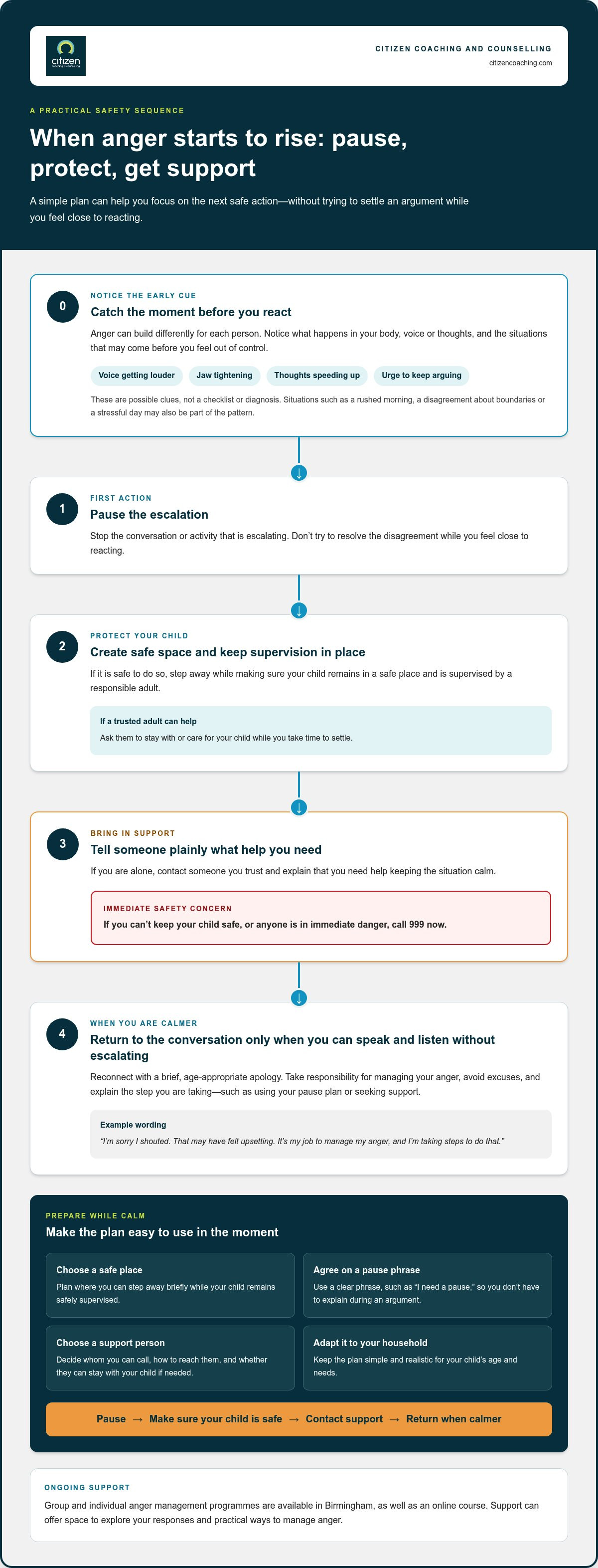
Stop the conversation or activity that’s escalating. If it’s safe to do so, step away while making sure your child remains in a safe place and is supervised by a responsible adult. Don’t try to settle the disagreement while you feel close to reacting. Instead:
- Ask a trusted, safe adult to stay with or care for your child while you take time to settle.
- If you’re alone, contact someone you trust and tell them plainly that you need help keeping the situation calm.
- If you can’t keep your child safe, or anyone is in immediate danger, call 999 now.
If a trusted adult can’t come, keep your child supervised and maintain as much safe space as you can. Seek urgent help if you’re worried you may act. Citizen Coaching and Counselling provides ongoing anger management support in Birmingham and online.
Angry feelings, frightening thoughts, and actions are not the same
Feeling furious or having a frightening thought doesn’t mean you’ve acted on it. But it also can’t guarantee that harm won’t happen. Bring your attention back to the present: where is your child, who can help, and what is the next safe action you can take? You don’t need to judge or label yourself to make a safety plan.
Anger management is a broad approach to understanding anger and responding in less harmful ways. Learning practical ways to manage anger can be a constructive step. When you’re ready to consider ongoing support, explore anger management courses in Birmingham or online.
Notice When Anger Is Building Before You React
Anger can build differently for each person. You might notice your voice getting louder, your jaw tightening, your thoughts speeding up, or an urge to keep arguing. Someone else may feel unusually quiet or restless. These can be useful clues, not a checklist or a diagnosis. If “i’m scared i’ll hurt my child with my anger” is on your mind, noticing what happens before that fear peaks may help you choose a safer response sooner.
Identify your own early warning signs
Think back to a difficult moment when you’re calm. What did you notice in your body, voice or thoughts? Did a particular conversation continue after you wanted to stop? There’s no single right sign to look for. If it feels useful, make a brief note after an episode about what happened beforehand, what you noticed, and what helped afterwards. Focus on learning, not judging yourself.
Look for patterns without blaming yourself or your child
Over time, you may notice that anger tends to rise in certain situations, such as a rushed morning, a disagreement about boundaries or a stressful day. Consider what pressures or unmet needs may be involved, including tiredness, lack of support or needing a pause. A trigger can help explain what was happening, but it doesn’t excuse hurtful behaviour or make your child responsible for an adult’s actions.
Noticing an early cue creates a moment to choose what happens next.
Children can express anger in different ways. Paying attention to how your child responds may help you approach difficult moments with care. If you’d like support exploring your own patterns and ways to respond, Citizen Coaching and Counselling offers counselling and anger management support. You can also explore anger management courses.
Make a Simple Plan for the Next Time Anger Rises
A plan made while you’re calm can make it easier to act when thinking feels difficult. Keep it simple and realistic for your household. If you’re thinking, “i’m scared i’ll hurt my child with my anger,” write the steps somewhere easy to find and tell a trusted adult what kind of help you may need.
Agree on a safe pause and support person
Choose a safe place where you can step away briefly while your child remains safely supervised. Agree on a clear phrase, such as “I need a pause,” so you don’t have to explain in the middle of an argument. Decide in advance which trusted adult you could call, how to reach them, and whether they can stay with your child if needed. Adapt the plan to your child’s age and needs.
Pause, make sure your child is safe, contact your support person, and return to the conversation only when you’re calmer.
- Pause: Stop the argument rather than trying to resolve it while you’re escalating.
- Create space: Move to your planned safe place, keeping your child supervised.
- Contact support: Call or message the trusted adult you chose.
- Return when calmer: Reconnect only when you can speak and listen without escalating.
Reconnect after the moment has passed
Once things are settled, offer a brief, age-appropriate apology. For example: “I’m sorry I shouted. That may have felt upsetting. It’s my job to manage my anger, and I’m taking steps to do that.” Avoid excuses, and don’t ask your child to reassure or comfort you. Rather than promising it will never happen again, explain the action you’re taking, such as using your pause plan or seeking support.
Contact Citizen Coaching and Counselling
Find Ongoing Anger Support in Birmingham or Online
Seeking help is a responsible step, not proof that you’re a bad parent. If you’ve been thinking, “i’m scared i’ll hurt my child with my anger,” start by telling someone what’s been worrying you. You don’t need to arrive with all the answers. Support can give you space to look at how anger affects you and consider safer ways to respond.
Choose a first step that feels manageable
Citizen Coaching and Counselling offers group and individual anger management programmes in Birmingham, as well as an online course. A structured programme gives you space to explore your responses and work on practical ways to manage anger. Some people prefer learning alongside others; others may feel more comfortable with individual support. Explore the anger management course options and consider which feels like a manageable first step.
There’s no need to decide everything at once. You might write down what tends to happen before anger rises, what concerns you, and what kind of support you’re hoping for. This can help you explain your needs. You can also begin with a simple sentence: “I’m worried about my anger at home and want help to respond differently.”
Reach out without needing to have everything figured out
Starting a conversation can feel difficult, especially if guilt or fear has kept you quiet. Share what you feel ready to share and talk about a next step. Support can help you move forward constructively, without shame about asking for help.
Take One Supported Step Forward
If “i’m scared i’ll hurt my child with my anger” still feels difficult to say aloud, begin by writing it down or sharing just one part of what’s worrying you. You don’t need a perfect explanation or a complete plan before you ask for support. A first conversation can help you think through what feels manageable next.
Citizen Coaching and Counselling is a Community Interest Company that reinvests profits into community mental health. Reaching out is a step towards taking responsibility and making room for change, not an admission that you’re beyond help.
You and your child deserve support without shame. Start with one honest step, and let that be enough for today.
Frequently Asked Questions
Does being scared I might hurt my child mean I will?
No. Fear by itself doesn’t tell you what you’ll do. A frightening thought or strong feeling is different from an action, but it can’t guarantee what will happen either. If “i’m scared i’ll hurt my child with my anger” describes how you feel, focus on what’s happening now and take steps that protect your child. Share the concern with a trusted adult or support professional.
What should I do if I have already shouted at or frightened my child?
When you’re calm enough to speak gently, acknowledge what happened without blaming your child or making excuses. You might say, “I’m sorry I shouted. It wasn’t your fault, and I’m getting help to respond differently.” Give your child room to react in their own way. Don’t ask them to reassure you or keep what happened secret. Consider what support could help you change what happens next.
Can I ask someone for help if I have not physically hurt my child?
Yes. You don’t have to wait until anyone is hurt to talk about anger that worries you. You could tell a trusted person, “I’m finding it hard to stay calm with my child, and I need support.” If saying it feels difficult, write it down or send a message first. Asking early can help you consider practical support before another difficult moment arises.
How can I keep my child safe while I calm down?
Make sure your child is in a safe, supervised place, then step away from the argument if you can do so safely. For example, ask another responsible adult in the home to take over while you settle. If you’re alone, call someone you trust for help. If you can’t keep your child safe or anyone is in immediate danger, call 999.
Is anger management support available in Birmingham?
Yes. Citizen Coaching and Counselling provides group and individual anger management programmes in Birmingham, as well as an online course. These offer structured support for people who want to explore their anger and consider different ways to respond. Begin by explaining what’s been happening and what concerns you. You don’t need a complete plan or to know exactly what to ask for.

Article by
Martin Hogg
Counselling and Anger Management in Birmingham. Articles by Martin Hogg, counsellor MBACP (Reg.) and Founder and CEO of Citizen Coaching and Counselling, a social enterprise based in Birmingham, UK. Martin also helps counsellors struggling to set up and grow their Private Practice to gain clarity and confidence in their marketing and systems.
Disclaimer
The information provided on this blog is for general informational purposes only and is not intended to be a substitute for professional medical or mental health advice, diagnosis, or treatment. Reading this content does not create a therapist-client relationship.


