
How to Stop Passive Aggression: A Step-by-Step Guide
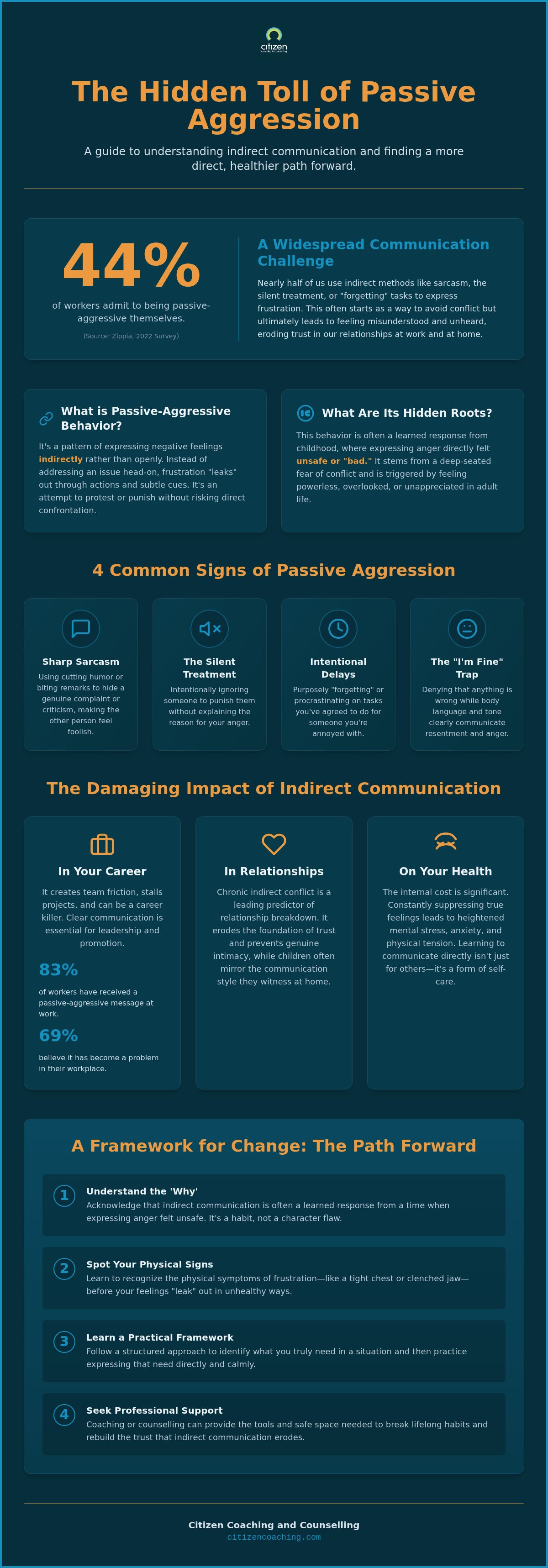
Did you know that 44% of workers admit to being passive-aggressive themselves? According to a 2022 survey by Zippia, nearly half of us struggle with this indirect way of communicating. It often starts as a way to avoid conflict, but it usually ends up leaving us feeling misunderstood and unheard. If you are searching for how to stop being passive aggressive, you've likely noticed the toll it takes on your closest relationships. It's exhausting to bottle up your feelings until they leak out as sarcasm or heavy silence.
We understand that changing these habits feels vulnerable. You want to speak your mind, but the fear of starting a row often keeps you stuck in a cycle of subtle hints and hidden resentment. This guide will help you understand why you use these strategies as a safety net. We'll provide a practical five-step framework to express your needs directly and without guilt. By the end, you'll have the tools to reduce daily tension and feel more in control of your emotional responses. It's time to move toward a more honest and calm way of connecting with others.
Key Takeaways
- Understand that indirect communication is often a learned response from childhood where expressing anger felt unsafe or "bad."
- Discover how to stop being passive aggressive by spotting the physical signs of frustration, such as a tight chest, before your feelings "leak" out.
- Follow a practical five-step framework to help you identify what you truly need and express it directly to bridge the communication gap.
- Learn why professional support or coaching can help you break lifelong habits and rebuild the trust that indirect communication often erodes.
What is Passive-Aggressive Behaviour and Why Does it Happen?
What is passive-aggressive behavior? It's a pattern where you express negative feelings indirectly rather than addressing them openly. Think of it as a side door approach to anger. Instead of saying you're hurt, you might use heavy sighs or "forget" a task. Understanding this root cause is the first step in learning how to stop being passive aggressive. It isn't a character flaw; it's a habit that usually has a very specific origin.
This behaviour often starts in childhood. If direct anger was seen as "bad" or "unsafe" in your home, you found a quieter way to protest. While active aggression is like a sudden explosion, this is a slow leak that erodes trust over time. It was a strategy you used to stay safe when you were small. However, it's likely causing friction in your adult relationships now because it prevents true connection.
The Hidden Roots of Indirect Anger
Most indirect anger comes from a deep fear of conflict. You might feel that being honest will lead to a row you can't handle. Common triggers include feeling powerless, overlooked, or unappreciated by a partner or colleague. When you don't feel you have the authority to speak up, your frustration finds a way to leak out through your actions instead of your words. It feels safer to be "nice" on the surface while staying angry underneath.
Common Signs You Might Be Using Passive-Aggressive Strategies
Recognising these behaviours in yourself can be uncomfortable, but it's necessary for growth. You might notice you use specific tactics to avoid direct confrontation. These include:
- Sharp sarcasm to hide a genuine complaint or criticism.
- The silent treatment to punish someone without explaining why you're upset.
- Intentional procrastination or "forgetting" requests from people you're annoyed with.
- The "fine" trap, where you say "I'm fine" while feeling deep resentment.
If these patterns feel familiar, don't be discouraged. It's a skill you can change with the right support, such as our anger management courses. You can learn to trade the "leak" for honest, healthy communication.
The Real Cost of Indirect Communication in Your Life
Living with indirect anger creates a widening communication gap. When you don't express your needs directly, they rarely get met. This leaves you feeling resentful while the other person remains confused or defensive. Over time, the impact of passive aggression erodes the very foundation of trust. If you say "yes" but your actions say "no," people eventually stop believing your word. This inconsistency makes it impossible for partners or colleagues to feel secure around you.
There is also a heavy internal price to pay. Suppressing your true feelings causes significant mental stress and physical tension. According to a 2022 Zippia survey, 69% of employed adults who witness passive-aggressive behaviours believe it has become a problem in their workplace. For the person using these strategies, the constant "bottling up" often leads to heightened anxiety. Learning how to stop being passive aggressive is not just about being "nice" to others; it's about finding relief for your own mind and body.
Impact on Your Birmingham Career and Workplace
In a professional setting, "leaking" anger through sarcasm or intentional delays can be a career killer. According to the same 2022 research, 83% of workers have received a passive-aggressive message at work. This creates team friction and often leads to being overlooked for promotions. If you want to build a healthier environment for your team, consider exploring anger management courses. Clear communication is a skill that helps you navigate the Birmingham job market with confidence.
The Toll on Family and Long-Term Relationships
At home, the stakes are even higher. Children are like sponges; they often mirror the communication styles they see. If they witness indirect conflict, they may struggle to express their own needs as they grow. Research suggests that chronic indirect conflict is a leading predictor of relationship breakdown because it prevents genuine intimacy. Breaking this cycle and discovering how to stop being passive aggressive is the best gift you can give your family. If you feel stuck, reaching out for a chat can help you start the journey. You can get in touch with our team to discuss how to move forward.
5 Practical Steps to Stop Being Passive Aggressive
Changing a lifelong habit takes time and patience. It's about building "assertive safety" so you can speak your truth without fear. Here is a practical framework to help you change your communication style:
- Step 1: Recognise the 'Leak'. Notice the physical signs of anger, such as a tight chest or jaw clenching, before you speak. These signals tell you that your feelings are about to come out indirectly. Catching these early is vital when learning how to stop being passive aggressive.
- Step 2: Name the Need. Ask yourself: "What am I actually upset about and what do I need right now?" Identifying the root cause helps you address the real issue.
- Step 3: Pause and Reflect. Give yourself five seconds before responding to a request you don't want to do. This prevents the "resentful yes" that often leads to intentional delays.
- Step 4: Use 'I' Statements. Shift your language from "You always..." to "I feel...". This is a core part of learning how to stop being passive aggressive.
- Step 5: Practice Directness in Small Ways. Start with low-stakes situations, like choosing a restaurant or a weekend activity, to build your confidence.
How to Build an Assertive "I" Statement
Using a template makes directness feel less daunting. Try this structure: [Emotion] + [Action] + [Need]. For example: "I feel overwhelmed when the dishes are left out because I need a tidy space to relax. Can we clear them together?" This approach provides clarity without attacking the other person or making them feel defensive.
Overcoming the Fear of Being "Mean"
Many people confuse being assertive with being aggressive. Assertiveness is simply stating your needs clearly, while aggression involves trying to control or hurt others. Directness is actually a form of kindness because it removes the guesswork for your loved ones. It builds a foundation of honesty rather than hidden resentment. You can be firm and warm at the same time.
Speak with a coach about building your assertiveness skills
When to Seek Support for Healthier Communication
Changing a communication style you've relied on since childhood is a significant challenge. It's perfectly normal to find that reading about how to stop being passive aggressive is easier than doing it in the heat of the moment. When these habits are deeply ingrained, having a supportive guide can make all the difference. Professional coaching offers a safe, non-judgmental space where you can practice being direct before you try it out in your most important relationships.
At Counselling Anger Management Birmingham Citizen Coaching, we provide practical, jargon-free support designed for real people. Since 2005, our Birmingham-based team has helped individuals navigate their emotional responses with calm competence. We don't use complex medical terms; we focus on tools you can use the same day. Whether you prefer the privacy of individual sessions or the shared experience of a community, we have a path that fits your life.
Anger Management and Coaching Options in Birmingham
We offer several ways to help you master direct communication. Our Anger Management Birmingham (Group) sessions are ideal if you find strength in hearing from others who face similar struggles. If your schedule is tight or you prefer to learn from home, our Online Anger Management Course provides the same high-quality tools with total flexibility. Both options focus on helping you understand how to stop being passive aggressive while building your confidence.
Taking the First Step Today
Starting this journey is often the most difficult part. It requires vulnerability to admit that your current strategy isn't working anymore. However, the relief of finally saying what you mean is worth the initial discomfort. You deserve relationships built on trust rather than hidden tension. Our team is ready to help you navigate this transition at a pace that feels right for you.
Ready to Build Healthier Connections?
You've taken a significant step by understanding the roots of your indirect communication. By spotting the physical "leaks" of anger and practicing assertive "I" statements, you're already shifting the dynamic in your relationships. Directness isn't about being mean; it's about removing the guesswork for the people you care about. This honesty builds a foundation of trust that sarcasm and silence simply cannot provide.
Learning how to stop being passive aggressive is a journey that doesn't have to be walked alone. Citizen Coaching is a Birmingham-based social enterprise with over 18 years of experience in specialized anger coaching. We offer professional, jargon-free support designed to help you communicate your needs with confidence and calm. You can move from a state of uncertainty toward a life where your voice is heard and your needs are met.
It's time to trade the exhaustion of bottling up your feelings for the clarity of honest connection. You've already started the journey; let's take the next step together.
Frequently Asked Questions
Is passive-aggression a mental health disorder?
Passive-aggression is not classified as a mental health disorder. It is a learned communication style where negative feelings are expressed indirectly. While it can cause significant distress in relationships, it's a behavioural habit rather than a clinical condition. At Citizen Coaching, we focus on providing practical tools to change these patterns. We don't provide medical diagnoses, but we help you navigate these habits through structured coaching and support.
How can I tell if I am being passive-aggressive or just being polite?
Politeness is based on respect and clear boundaries, while passive-aggression is driven by unexpressed anger. If you find yourself saying "yes" while feeling deep resentment, you're likely using an indirect strategy. Polite communication doesn't leave you feeling "bottled up" or lead to sarcasm later. If you are wondering how to stop being passive aggressive, start by noticing if your actions match your words or if there's a hidden leak of frustration.
What should I do if my partner is the one being passive-aggressive?
When dealing with a partner's indirect anger, it's best to address the specific action rather than labelling the person. You might say, "I feel confused when you say you're fine but seem upset. I'd really like to understand what's happening." This avoids making them feel defensive. Encouraging open dialogue in a safe space is key. If the pattern continues, our couples counselling in Birmingham offers a professional environment to practice direct communication together.
Can anger management coaching really help with passive-aggressive habits?
Yes, anger management coaching is highly effective for breaking these indirect habits. It provides a structured environment to learn how to stop being passive aggressive by identifying triggers and practicing assertive communication. Our Birmingham-based group and individual sessions focus on practical skills rather than just theory. You'll learn how to express your needs clearly without the guilt or fear that usually keeps you stuck in old, indirect patterns.
How long does it take to change a passive-aggressive communication style?
Every journey is different, but many people start noticing positive changes within a few weeks of consistent practice. Changing a lifelong habit takes patience and repetition. By using the five-step framework regularly, the process of being direct starts to feel more natural. Whether you choose our online course or local Birmingham coaching, the goal is steady progress. Over time, you'll feel more in control of your emotional responses and much less stressed.

Article by
Martin Hogg
Counselling and Anger Management in Birmingham. Articles by Martin Hogg, counsellor MBACP (Reg.) and Founder and CEO of Citizen Coaching and Counselling, a social enterprise based in Birmingham, UK. Martin also helps counsellors struggling to set up and grow their Private Practice to gain clarity and confidence in their marketing and systems.
Disclaimer
The information provided on this blog is for general informational purposes only and is not intended to be a substitute for professional medical or mental health advice, diagnosis, or treatment. Reading this content does not create a therapist-client relationship.


