
How to Stop Going 0 to 100: Birmingham Anger Support
You're having a calm conversation when a small comment suddenly feels like a personal attack. Before you can even process what happened, you've already shouted something you regret and the room goes cold. It's a frightening feeling to realize your temper has taken the wheel again. You aren't alone in this struggle. According to the Gallup Global Emotions Report (2024), 23% of adults worldwide experienced significant anger the day before. If you feel like your reactions are instant, learning how to stop going from 0 to 100 when angry is the first step toward regaining control.
We understand the guilt that follows these explosions, especially when you fear the consequences at work or with your family. This isn't a character flaw; it's a physiological habit that can be rewired by identifying your "rumblings" before the explosion. In this guide, we'll explain why your anger escalates so quickly and share practical, jargon-free tools to help you stay calm. You'll discover how to spot your triggers and explore how our Birmingham anger support can help you become a calmer version of yourself.
Key Takeaways
- Understand that rapid emotional escalation is a physiological habit rather than a personality flaw, which helps reduce the weight of shame and guilt.
- Learn why your "thinking brain" goes offline during a hijack and discover how to stop going from 0 to 100 when angry by re-engaging your logic.
- Gain practical, jargon-free tools like the "5-Second Gap" and grounding techniques to help you pause before your temper takes control.
- Explore how structured support through Birmingham-based groups or online courses can help you build a longer fuse and improve your relationships.
Understanding the "0 to 100" Anger Experience
When we talk about "0 to 100" anger, we mean a reaction that feels like a switch being flipped. One moment you're fine; the next, you're shouting or slamming doors. It feels like your logic has been bypassed entirely. While everyone feels frustration, this explosive response is different. It isn't just "having a bad day." It is a rapid escalation that leaves you wondering where your calm self went. Clinical terms like Intermittent Explosive Disorder describe this pattern, but for most people, it just feels like losing control.
Many people believe they were just born "hot-headed." That’s a myth. While some of us have a shorter fuse, these reactions are often learned patterns or physiological habits. You aren't a bad person; you've just developed a very fast way of reacting to stress. Learning how to stop going from 0 to 100 when angry starts with realizing this is a skill you can change, not a permanent part of your DNA.
Why Does My Anger Feel So Instant?
It often feels instant because your brain has been primed by past experiences. If you've spent years bottling up daily stresses, a minor event like a messy kitchen becomes the final leak in a dam. Your brain treats small annoyances as major threats because it is already exhausted from holding everything else in. This defensive reaction happens before you even have time to think.
The Impact of Rapid Escalation on Daily Life
The worst part isn't the explosion itself, but the hangover of guilt and shame that follows. You look at the people you love and feel terrible for the way you spoke to them. This cycle can strain relationships and even put your job at risk. If you're noticing these patterns, connecting with an Anger Management Therapist Birmingham can help you break the loop before it causes lasting damage.
The Science of the Hijack: Why Your Brain Skips the Middle Ground
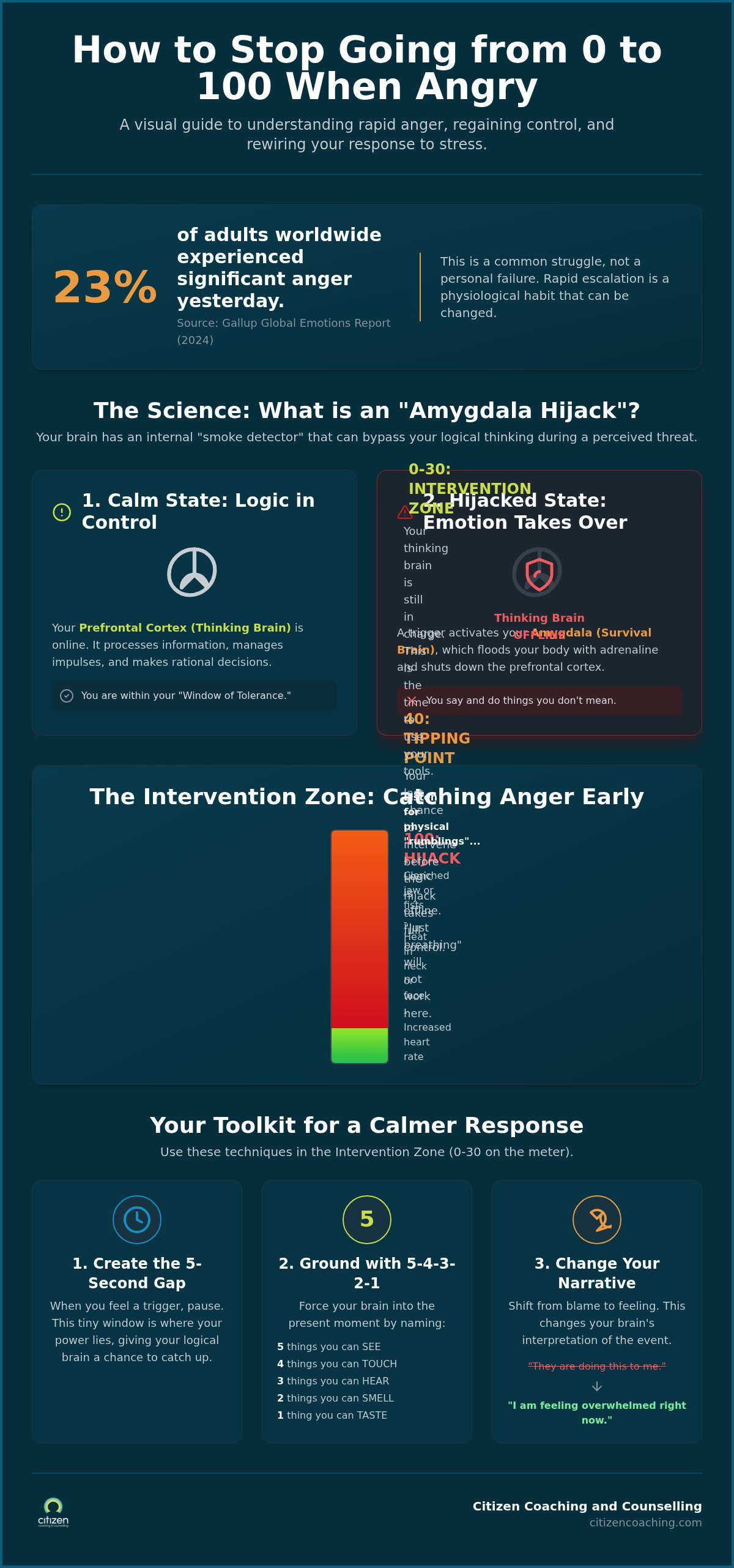
The "0 to 100" experience isn't a choice; it's a biological reaction called an Amygdala Hijack. Think of the amygdala as your brain’s internal smoke detector. Its only job is to spot danger. When it senses a threat, it sends a surge of adrenaline through your body. At the same time, it effectively shuts down your prefrontal cortex. This is the "thinking brain" responsible for logic and impulse control. This is why you say things you don't mean. The part of you that knows better is temporarily locked out of the room. Understanding this biological "off switch" is vital for anyone learning how to stop going from 0 to 100 when angry.
The Window of Tolerance is the zone where you can experience emotions without becoming overwhelmed, allowing you to think clearly and react calmly. When you stay in this window, you can handle a disagreement without exploding. Once you're pushed out of it, your survival instincts take over and logic disappears.
The Physical Red Flags You Might Be Missing
Your body usually knows you're getting angry before your mind does. These "rumblings" often start at level 20 or 30, long before the explosion. You might feel a sudden heat in your neck, a clenching in your jaw, or a slight increase in your heart rate. Learning to "read" these micro-signs is a practical way to manage your fuse. Learning how to stop going from 0 to 100 when angry requires catching this physical tension before it becomes a full-blown hijack. If you wait until you're shouting, you've already missed the window where your brain is still listening to you.
Why "Just Breathing" Doesn’t Work at Level 90
We often hear generic anger management tips that suggest deep breathing. While breathing is a great tool, it is almost impossible to remember when you're at level 90. By then, the hijack is full-blown and your logical brain is offline. You have to intervene much earlier, around level 30 or 40, while your thinking brain is still in charge. If you struggle to catch these early signs, you can reach out to our team to start identifying your specific patterns.
Practical Tools to Slow Down the Escalation
Once you recognize the physical rumblings we discussed earlier, you need a reliable plan. Learning how to stop going from 0 to 100 when angry is about creating a "5-Second Gap" between the trigger and your response. This tiny window of time is where your power lives. If you can pause for just five seconds, you give your logical brain a chance to catch up with your emotions.
Grounding techniques are your best defense during this pause. Try the 5-4-3-2-1 method: name five things you see, four you can touch, three you hear, two you can smell, and one you can taste. This sensory shift forces your mind to focus on the present moment rather than the perceived threat. Changing your internal narrative also helps. Instead of thinking "they are doing this to me," tell yourself "I am feeling overwhelmed right now." According to the American Psychological Association, using these strategies to keep anger at bay can help you stay within your window of tolerance.
Immediate De-escalation Techniques
An "Exit Strategy" is often the safest choice when you feel the heat rising. Agree on a signal or "safe word" with your partner that means "I need a break." When the signal is given, go for a ten-minute "Cool Down" walk. Movement helps your body process the surge of adrenaline. Don't use this time to replay the argument; focus on your surroundings or your breathing until the physical tension drops.
Long-term Rewiring for a Longer Fuse
Preventing an explosion is easier if your "bottle" isn't already full. Practice daily decompression through exercise or quiet reflection to lower your baseline stress. For more structured help, an Online Anger Management Course provides the tools you need to rewire these habits from home. Building a longer fuse takes time, but the peace it brings to your relationships is worth the effort.
Finding the Right Path to a Calmer Future
Deciding to seek support isn't a sign of failure; it's the moment you choose to take back control of your life. When you're struggling with how to stop going from 0 to 100 when angry, doing it alone can feel isolating and exhausting. Many people find that hearing others’ stories in a supportive environment instantly reduces the weight of shame they've been carrying. At Citizen Coaching, we operate as a social enterprise. This means our professional help feels neighborly and jargon-free, focusing on practical skills rather than medical labels.
Anger Management in Birmingham and Beyond
Our Anger Management Birmingham Group provides a safe, local space to learn alongside people who truly understand your experience. These sessions are built on a foundation of confidentiality and respect, ensuring you feel comfortable from the moment you walk in. If you aren't ready for a group setting, we also offer individual coaching. This allows for a more personalized focus on your specific triggers, helping you understand how to stop going from 0 to 100 when angry in a one-on-one environment.
Taking the First Step
Beginning a new journey is often the most difficult part, but we've designed our process to be as simple as possible. When you reach out, you won't face a cold, clinical intake. Instead, you'll talk to a team that prioritizes your comfort and understands the vulnerability involved in asking for help. We'll help you navigate our different programmes to find the one that fits your lifestyle and goals. You don't have to wait for another explosion to start making changes. Contact Citizen Coaching today to discuss which programme is right for you.
Take Control of Your Calm Today
Rapidly losing your temper isn't a sign that you're a "bad" person. It's a physiological habit that can be changed with the right tools. By recognizing your physical red flags early and using techniques like the 5-second gap, you can stay within your window of tolerance. Learning how to stop going from 0 to 100 when angry is a practical journey that leads to better communication and stronger relationships.
Citizen Coaching has served as a trusted Birmingham social enterprise since 2005. We provide support that is entirely free of jargon or medical labels. Whether you prefer the peer support of our Birmingham group sessions or the flexibility of our online courses, we have an option that fits your needs. You've already taken a huge step by reading this guide today.
You deserve to feel in control and at peace. We're ready to help you start this new chapter whenever you're ready to take that first small step toward a calmer future.
Frequently Asked Questions
Is it possible to actually change a "short fuse" personality?
Yes, it is entirely possible to change your reactions because anger is a learned physiological habit rather than a permanent personality trait. Our Birmingham programmes focus on practical skill-building to help you stay calm. By practicing new responses, you can rewire your brain's alarm system. This process helps you understand how to stop going from 0 to 100 when angry by extending your fuse through consistent, everyday practice and professional guidance.
How do I know if I need professional anger management or just more sleep?
While exhaustion makes anyone irritable, you likely need support if your reactions feel out of proportion to the situation or cause you deep guilt afterward. Professional coaching helps when your temper affects your job or strains your relationships with loved ones. If you're constantly searching for how to stop going from 0 to 100 when angry, it's a sign that your current coping mechanisms aren't providing the stability you need to feel in control.
What is the difference between group and individual anger coaching?
Group sessions in Birmingham offer a sense of community that helps reduce the shame and isolation often associated with anger. Hearing that others share your struggles is incredibly powerful. Individual coaching provides a private, targeted space to focus on your specific triggers and personal history. Both paths use our jargon-free approach to give you practical tools. We can help you decide which format feels most comfortable for your current situation.
Can I do an anger management course online if I live outside of Birmingham?
Yes, you can access our Online Anger Management Course from anywhere in the UK. While we are deeply rooted in the Birmingham community, our online programme was designed to offer the same practical, jargon-free support to those who need flexibility. This digital option allows you to work through the material at your own pace. It's a great choice if you cannot attend our face-to-face group or individual sessions in the city.
Will anger management go on my medical record?
Our private coaching and group sessions do not automatically go on your NHS medical record. As a Community Interest Company (CIC), we provide a confidential service that is separate from your GP's files. We prioritize your privacy and aim to lower the barriers to seeking help. This independence from traditional clinical records often makes it easier for people to take the first step toward personal development without worrying about long-term medical documentation.

Article by
Martin Hogg
Counselling and Anger Management in Birmingham. Articles by Martin Hogg, counsellor MBACP (Reg.) and Founder and CEO of Citizen Coaching and Counselling, a social enterprise based in Birmingham, UK. Martin also helps counsellors struggling to set up and grow their Private Practice to gain clarity and confidence in their marketing and systems.
Disclaimer
The information provided on this blog is for general informational purposes only and is not intended to be a substitute for professional medical or mental health advice, diagnosis, or treatment. Reading this content does not create a therapist-client relationship.


