
How Does Talking Therapy Work? A Jargon-Free Guide to the Process
Over a third of UK adults, approximately 37%, have now worked with a therapist to navigate life's hurdles. Even as it becomes more common, the question of how does talking therapy work still feels like a mystery to many. You might worry that it's just venting to a stranger or wonder how a simple conversation can actually lead to lasting change. It's completely natural to feel anxious about opening up to someone you don't know, especially when the science behind the process isn't immediately clear.
We understand that starting this journey takes real courage, and it's okay to want a clear map before you begin. You deserve to know that there is a supportive, professional structure beneath every conversation. In this guide, we'll demystify the mechanics of emotional growth and show you how these sessions create a safe space for progress. We will explore different types of support to help you identify what fits your life best, ensuring you feel calm and prepared for your very first session.
Key Takeaways
- Learn how naming and exploring your emotions with a professional helps you regain control and reduce the power of overwhelming feelings.
- Discover exactly how does talking therapy work by moving beyond simple venting to identifying the hidden patterns that influence your daily life.
- Gain confidence for your first session by understanding the step-by-step journey from the initial assessment through to navigating deeper conversations.
- Identify the right path for your needs, from individual and couples counselling to accessible community-focused NHS Talking therapies.
What is Talking Therapy and Why Does it Matter?
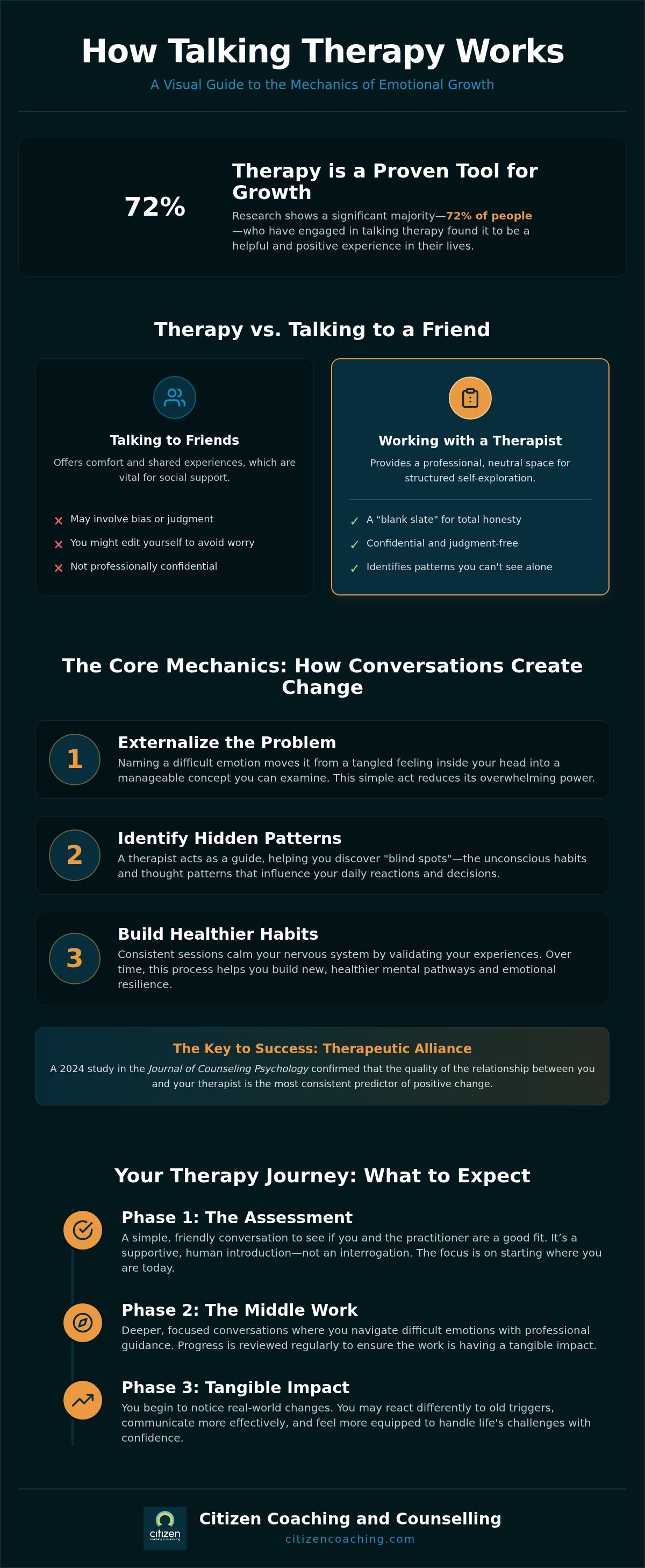
Talking therapy is a professional partnership where you and a trained practitioner explore your thoughts, feelings, and behaviours together. Many people feel uncertain and ask, What is Talking Therapy and how does it actually help? It's much more than just "venting" or having a casual chat. It's a focused, structured process designed to help you understand yourself better. If you're wondering how does talking therapy work, it helps to see it as a collaborative tool for personal growth. According to research findings from 2026, 72% of people who have used therapy found it helpful. You don't need to be in a total crisis to start your journey. Whether you're feeling slightly stuck or facing a major life shift, professional support is for everyone.
Common Reasons People Start Talking Therapy
People often seek support for a wide variety of reasons. You might be struggling with daily stress that feels increasingly heavy, or perhaps you want to improve how you communicate and build trust in your relationships. It's also common to seek help for specific emotional patterns, such as managing a short fuse or coping with a persistent low mood. Taking this step is about giving yourself the tools to move through life with more ease and confidence.
The Difference Between Therapy and Talking to Friends
While friends are a great support, a therapist provides a "blank slate" that a loved one cannot. This professional neutrality means you can say exactly what's on your mind without worrying about hurting someone’s feelings or being judged. When you look at how does talking therapy work, you see it isn't just about the words said; it's about the trust built in a confidential space. This environment allows you to be completely vulnerable, knowing there are no social consequences for your honesty. It's a unique chance to untangle complex thoughts you might usually keep hidden.
The Core Mechanics: How Professional Conversations Create Change
The core of how does talking therapy work lies in the "untangling" process. When you name a difficult emotion, it often loses its overwhelming power. Your therapist acts as a trusted mentor, helping you identify "blind spots" in your behaviour that you might not see yourself. This isn't about being told what to do; it's about gaining a clearer view of your own mental landscape. A significant part of this success comes from the therapeutic alliance. A 2024 study published in the Journal of Counseling Psychology reaffirmed that the quality of the relationship between a client and their therapist is the most consistent predictor of positive change, regardless of the specific type of therapy used.
Turning Thoughts into Manageable Actions
By "externalising" a problem, you move it from inside your head to the space between you and your counsellor, making it much easier to solve. You'll move from simply understanding why you feel a certain way to learning how to cope in the moment. This shift from emotional distress to practical regulation strategies is a vital part of The Therapy Journey: What to Expect in Your Sessions. It turns abstract worries into a concrete plan for your daily life.
Why 'Just Talking' Changes the Brain
Consistent sessions do more than provide a listening ear; they actually help calm your nervous system. When a professional validates your experience, it lowers your stress response. Over time, these regular conversations help you build new, healthier mental habits. If you're ready to start spotting your own patterns, you can reach out to our team to begin your journey. These small, steady shifts in how you process thoughts eventually lead to lasting emotional resilience. Understanding how does talking therapy work is the first step toward making those shifts a reality.
The Therapy Journey: What to Expect in Your Sessions
Your journey starts with a simple, friendly assessment. This isn't an interrogation; it's a chance to see if the chemistry feels right between you and your practitioner. We focus on a narrative hook, which means starting exactly where you are today rather than forcing you to recap your entire life story immediately. Understanding how does talking therapy work in a real-world setting helps lower that initial anxiety. There’s no clinical jargon here; it’s just a supportive, human introduction to the process of change. Learning how talk therapy works through this first step ensures you feel like a partner in your own care from day one.
As you move into the middle work, the conversations might become more focused. This is where you'll navigate difficult emotions with professional guidance. You and your therapist will review your progress regularly to ensure the work is having a tangible impact on your life. You might notice you’re reacting differently to old triggers or feeling more grounded during stressful weeks. This phase is about turning those early insights into lasting habits that stick. It’s a steady process of reflection and practice that builds your emotional strength.
Individual vs. Group Support
Choosing the right format is an essential part of your journey. 1-to-1 sessions offer a deep, private focus for personal growth, allowing you to move at your own pace. Conversely, group environments like Anger Management Birmingham provide unique peer validation that you can't get elsewhere. Hearing others share similar struggles reminds you that your feelings are valid and that you aren't alone. Both paths demonstrate how does talking therapy work by fostering connection and building a stronger sense of self-awareness.
Eventually, your sessions will come to a natural conclusion. The goal isn't to stay in therapy forever but to end the journey with a practical toolkit for the future. You'll leave with strategies to handle life's ups and downs independently, knowing you have the skills to maintain your well-being long after the sessions end.
Taking the Next Step: Accessible Support in Birmingham
Choosing where to start your journey is just as important as the decision to begin. As a Birmingham-based social enterprise founded in 2005, we focus on making support feel like a community resource rather than a cold, clinical institution. This community-focused model ensures that when you ask how does talking therapy work, the answer includes accessibility and a warm, human touch. We work hard to remove common obstacles to care, providing a safe space for individuals, couples, and young people alike.
Whether you need specialized Anger Management Birmingham (Group or Individual) or general Counselling for Individuals, the support is tailored to your specific life experience. We don't believe in one-size-fits-all solutions. Instead, we offer various paths, including NHS Talking therapies, to ensure everyone can find the right fit for their situation. Our goal is to act as a trusted mentor, guiding you through the process of emotional growth.
Finding a Therapist Near You
Our deep roots in Birmingham mean we understand the local landscape and the specific pressures our community faces. This local identity helps you feel grounded and understood from your very first interaction. If you're ready to explore your options, you can contact a professional to discuss your needs without any pressure or obligation. We're here to help you move from uncertainty toward a clear path forward.
Next Steps for Personal Growth
- Look for qualifications and registration with professional bodies like the BACP to ensure clinical reliability.
- Prioritize empathy and a sense of "fit" during your initial assessment session.
- Ensure the service is accessible and fits into your daily routine to maintain consistency.
Taking that first step is often the most difficult part of the process, but you don't have to do it alone. Investing in your emotional wellbeing is a practical tool for a better life. Understanding how does talking therapy work is the foundation for a journey that leads to lasting, positive change.
Start Your Path to Lasting Change
Understanding how does talking therapy work is the first step toward reclaiming your emotional well-being. We've explored how professional conversations move beyond simple venting to help you identify blind spots and build practical life skills. Whether you choose individual sessions or specialist anger management, the focus remains on a supportive, jargon-free partnership that respects your unique journey.
Since 2005, our social enterprise has been dedicated to providing accessible mental health support through qualified, Birmingham-based practitioners. We're committed to removing the barriers to care so you can focus on your growth in a safe, non-judgmental environment. You deserve a space where your vulnerability is met with calm competence and genuine care.
Taking the initiative to seek help is a brave and powerful choice. Remember that progress is a steady process, and every small step brings you closer to the life you want to lead.
Frequently Asked Questions
Is talking therapy the same as counselling?
Talking therapy is a broad term that includes counselling, psychotherapy, and cognitive behavioural therapy. At Citizen Coaching, we use it to describe the professional partnership we build with you. Whether you choose individual counselling or a group programme, the goal is the same: to explore your feelings in a safe space. It's about finding the specific type of support that fits your needs, such as our specialized anger management courses.
How many sessions of talking therapy will I need?
The number of sessions depends on your personal goals and the challenges you're navigating. Some people find that six to twelve sessions provide a solid foundation for change, while others prefer longer-term support. During your initial assessment in Birmingham, we'll discuss a pace that feels right for you. We review your progress regularly to ensure the work remains helpful and reflects the emotional growth you want to achieve.
What if I don't know what to talk about in my first session?
It's completely normal to feel unsure when you first ask how does talking therapy work in a real session. Your practitioner is a trusted mentor who will guide the conversation and help you find a starting point. You don't need a prepared script or a "big" problem to begin. We'll help you untangle your thoughts at a pace that feels comfortable, starting exactly where you are today.
Can I get talking therapy on the NHS in Birmingham?
Yes, you can access NHS Talking therapies right here in Birmingham. As a local social enterprise, we are proud to offer these accessible services to our community. In England, you can even refer yourself directly without a GP appointment. According to NHS Digital data from July 2026, over 160,313 new referrals were made in that month alone, showing that many people are choosing this path to improve their wellbeing.
Is everything I say in therapy confidential?
Confidentiality is a fundamental part of how does talking therapy work at our centre. Everything you share stays between you and your practitioner, allowing you to be completely honest in a non-judgmental space. There are very rare legal exceptions, such as a serious risk of harm, which we'll explain clearly before you start. This professional boundary is designed to protect your privacy and build a deep foundation of trust.

Article by
Martin Hogg
Counselling and Anger Management in Birmingham. Articles by Martin Hogg, counsellor MBACP (Reg.) and Founder and CEO of Citizen Coaching and Counselling, a social enterprise based in Birmingham, UK. Martin also helps counsellors struggling to set up and grow their Private Practice to gain clarity and confidence in their marketing and systems.
Disclaimer
The information provided on this blog is for general informational purposes only and is not intended to be a substitute for professional medical or mental health advice, diagnosis, or treatment. Reading this content does not create a therapist-client relationship.


