
Dealing with Frustration and Anger: Practical Steps to Respond Calmly
What if frustration could be a cue to pause, rather than a signal that you’re about to lose your temper? Dealing with frustration and anger can feel especially difficult when the feeling builds before you’ve found the words to explain what’s wrong. A sharp reply may come out quickly, then leave you wishing you’d responded differently.
If that sounds familiar, you’re not alone in finding these moments difficult. Feeling angry doesn’t make you a bad person, and learning to respond differently doesn’t have to happen all at once. Small, practical steps can help you notice what’s changing and make room for a calmer choice.
This article explains how to recognise your early signs of frustration, pause in the heat of the moment, and choose a response that better reflects what matters to you. You’ll also find ways to practise new habits and consider when structured support, such as group, individual or online anger management, could help.
Key Takeaways
- Notice early signs, such as tense muscles, racing thoughts or a quicker voice, so you can respond before frustration builds.
- When anger rises, pause, create space if it’s safe, and try slower breathing or grounding before choosing what to say.
- After a difficult reaction, reflect on what happened, its impact and what you might try next time, without judging yourself by one moment.
- Dealing with frustration and anger takes practice. If regret or relationship strain keeps returning, structured support in Birmingham or online can help you work on different habits.
How to recognise frustration before it becomes anger
Frustration is a common response when something gets in the way of what you’re trying to do or you feel misunderstood. Noticing it isn’t about judging yourself or preventing every difficult emotion. It gives you a chance to choose how you respond. Early signs might include:
- In your body: tense shoulders, a clenched jaw or tight hands.
- In your voice: speaking more quickly or sharply than you intended.
- In your thoughts: replaying the problem or noticing your thoughts race.
- In your actions: wanting to interrupt, walk away or insist on being heard straight away.
Try to notice which signs tend to appear first for you. Recognising one early cue can make it easier to pause before frustration grows.
What can frustration feel like in the moment?
Frustration can show up in your body, emotions or thoughts. You might feel hot, restless or tense, become impatient, or catch yourself thinking, “Why is this happening again?” Your signs may differ from someone else’s, and they can change depending on the situation. A single cue doesn’t define you or explain everything that’s going on. For a general overview of how frustration can arise and relate to other feelings, see Understanding Frustration.
As you practise dealing with frustration and anger, notice your signs without criticising yourself. If it helps, make a brief note after a tense moment: what you noticed first, what was happening and what you did next.
What tends to make frustration build?
There may not be one clear cause. Consider what was happening, what you expected, whether you were tired, or whether you felt unheard. A small delay, for example, may feel harder to manage when you’re already under pressure. Treat these as possibilities to explore, not reasons to blame yourself or anyone else.
After a difficult moment, ask yourself: What happened? What did I feel? What did I need? Your answers may help you notice a pattern, such as needing clearer communication or a moment to collect your thoughts. You don’t need a perfect explanation. Start with what you observed.
How to calm anger and create a pause before responding
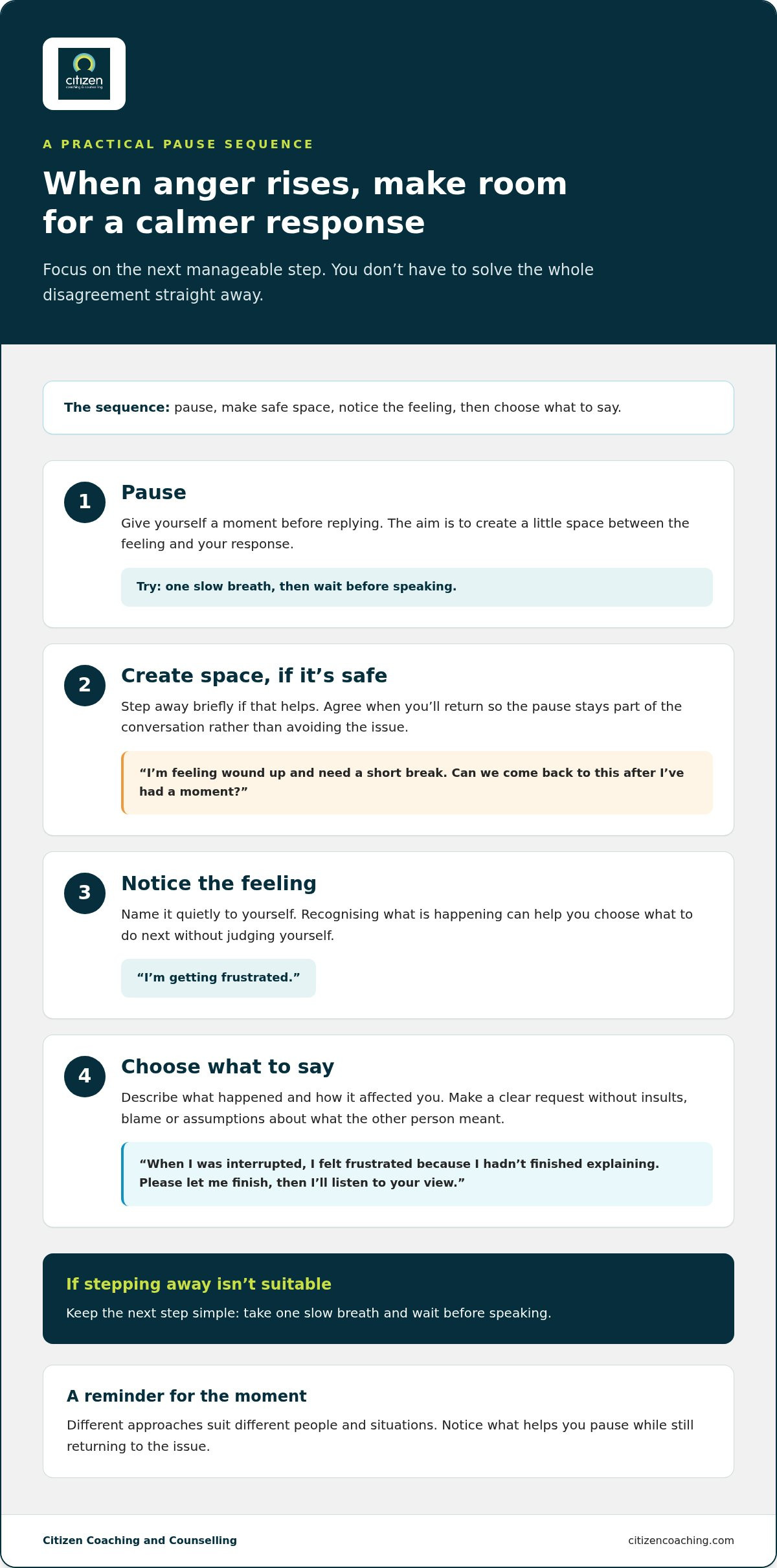
When you notice anger rising, focus on the next manageable step rather than trying to solve the whole disagreement straight away. Try this sequence and adapt it to what feels safe and useful:
- 1. Pause. Give yourself a moment before replying.
- 2. Create space if it’s safe. Step away briefly if that helps, and agree when you’ll return to the conversation.
- 3. Notice the feeling. Name it quietly to yourself, such as “I’m getting frustrated”.
- 4. Choose what to say. Explain what’s bothering you without attacking the other person.
You might breathe more slowly, focus on what you can see and hear, or take a brief break. Different approaches suit different people and situations, so notice what helps you pause without avoiding the issue. The American Psychological Association shares more Strategies for Anger Management, including relaxation and communication ideas.
What can I do when anger rises quickly?
Keep your next step simple. If it’s safe and appropriate to step away, you could say, “I’m feeling wound up and need a short break. Can we come back to this after I’ve had a moment?” Agreeing to return helps make the pause part of the conversation rather than a way to avoid it. If leaving isn’t suitable, take one slow breath and wait before speaking.
How can I express what is bothering me?
Describe what happened and how it affected you, without insults, blame or assumptions about what the other person meant. For example: “When I was interrupted, I felt frustrated because I hadn’t finished explaining. Please let me finish, then I’ll listen to your view.” A clear request can help keep the conversation focused. If you’d like support with dealing with frustration and anger, you can get in touch about support.
How to respond after an argument and practise a different pattern
It can be painful to look back on a reaction you regret, but it doesn’t define your whole character. Reflection isn’t about punishing yourself. It’s a way to understand what happened and prepare for a different response.
When you feel ready, consider these questions:
- What happened? Describe the situation as clearly as you can.
- What was the impact? Think about how your words or actions affected you and the other person.
- What could I try next time? Choose one realistic response, such as asking for a pause.
How can I repair a conversation after losing my temper?
Take responsibility for the specific behaviour without adding excuses or asking to be forgiven straight away. You might say, “I’m sorry I raised my voice and spoke over you. I can see that made it harder for us to talk. I’d like to listen if you’re ready.” Then give the other person room to respond. They may need time. Listening means letting them share their view without rushing to defend yourself.
How can I make new responses easier to practise?
Choose a situation that tends to repeat, such as feeling interrupted or under pressure. Prepare one phrase or boundary in advance: “I want to talk this through, but I need a moment to gather my thoughts.” Try that small change, then reflect on what helped or made it harder. Dealing with frustration and anger is a process of learning, not a demand to get every moment right. For more on building skills, explore the online anger-management course guide.
When ongoing frustration may call for support in Birmingham or online
Self-help can be a useful place to begin, but putting new responses into practice can be difficult on your own. You might often regret what you say in the heat of the moment, notice frustration putting strain on your relationships, or find that the strategies you’ve tried aren’t helping. These are reasons to consider support, not labels or a diagnosis.
Counselling Anger Management Birmingham Citizen Coaching provides group and individual anger-management programmes in Birmingham, as well as an online anger management course. Structured support gives you a space to explore situations that tend to trigger frustration and practise different ways to respond. You can choose an approach that suits you, whether that’s learning with a group, working individually or using the online course.
What can anger-management support help me work on?
With professional coaching, you can explore recurring situations, what happens for you in those moments, and which responses you’d like to practise. Counselling Anger Management Birmingham Citizen Coaching offers group and individual anger-management support in Birmingham, alongside an online course. Read more about the anger-management courses and learning options.
What is a manageable first step towards support?
Before getting in touch, identify one thing you’d like to change. Perhaps you want to pause before replying, feel more able to explain what’s bothering you, or reduce arguments with someone close to you. You don’t need to have the whole story worked out. You can share what feels comfortable as you explore support.
If dealing with frustration and anger feels difficult to manage on your own, get in touch to explore anger-management support.
Take the next step towards calmer responses
Dealing with frustration and anger starts with noticing what’s happening, then making space to choose a response. If a conversation doesn’t go as you hoped, reflecting on its impact can help you decide what to practise next, without letting one difficult moment define you.
Progress can begin with one small change, such as recognising a familiar pattern or trying a prepared pause phrase. Citizen Coaching and Counselling offers group and individual anger-management support in Birmingham, as well as an online anger management course. As a Community Interest Company, it reinvests profits into community mental health.
You don’t have to have everything figured out before you begin. A calmer way forward can start with one manageable step.
Frequently Asked Questions
How can I calm down when I feel angry?
Start by noticing your first cue, such as a tense jaw or a quicker voice, then pause before replying. Try one slow breath or bring your attention to what you can see and hear around you. If it’s safe and practical, take a short break and return to the issue when you feel ready. The aim of dealing with frustration and anger this way isn’t to force the feeling away, but to make room for a choice.
Why do I get frustrated and angry so easily?
Frustration can arise in different situations, including unmet expectations or feeling unheard, but there isn’t one explanation that fits everyone. Notice whether similar circumstances or interactions tend to bring the feeling up, without blaming yourself for having it. If recurring patterns are affecting daily life, support can help you explore them and practise different responses. You don’t need a complete explanation before asking for support.
What should I do after shouting at someone?
Wait until the conversation feels calmer, then acknowledge what you did and its impact. For example, you could say, “I’m sorry I shouted and interrupted you. I can see it made it harder to talk.” Listen to the other person without demanding immediate forgiveness or rushing them to respond. Repair takes time and doesn’t erase what happened, but reflecting on one change to try next time can help you move forward.
When should I seek help for managing anger?
Consider support if anger repeatedly affects your relationships or daily life, or if it feels difficult to use strategies on your own. Asking for help is a practical step, not a label. Citizen Coaching and Counselling provides group and individual anger-management support in Birmingham, as well as an online anger management course. You can explore recurring patterns and practise different responses with support, without needing to have everything worked out before you begin.

Article by
Martin Hogg
Counselling and Anger Management in Birmingham. Articles by Martin Hogg, counsellor MBACP (Reg.) and Founder and CEO of Citizen Coaching and Counselling, a social enterprise based in Birmingham, UK. Martin also helps counsellors struggling to set up and grow their Private Practice to gain clarity and confidence in their marketing and systems.
Disclaimer
The information provided on this blog is for general informational purposes only and is not intended to be a substitute for professional medical or mental health advice, diagnosis, or treatment. Reading this content does not create a therapist-client relationship.


