
Dealing with Exam Stress and Anger: Practical Steps to Feel More in Control
What if the anger that flares up during revision is a sign you’re under too much pressure, not that you’re failing? When deadlines feel close and the exam outcome is uncertain, it can be harder to stay patient with yourself and the people around you. Dealing with exam stress and anger starts with noticing that connection, without judging yourself for feeling frustrated.
You can’t always remove exam pressure, but practical steps can help you pause before snapping and return to your work with a clearer next step. This article explains how stress can show up as anger, how to spot your early warning signs and what to try before, during and after a difficult study moment. It also covers when it may help to talk to someone you trust or seek support in Birmingham.
Key Takeaways
- Stress-related anger doesn’t define your character. Recognising your early cues can help you respond with more choice.
- When dealing with exam stress and anger, try a simple pause: notice what’s happening, create space, settle yourself, then choose what to do next.
- A manageable revision routine starts with one realistic next step, includes breaks and leaves room to adjust your plan.
- If stress or anger keeps disrupting daily life, consider talking with someone you trust or exploring counselling support.
Why exam stress can show up as anger, and what to notice first
Feeling irritable or snapping under exam pressure doesn’t mean you’re a bad person. Difficult feelings can arise when you’re carrying a lot. Recognising what’s happening is a useful first step towards responding differently.
Exam-related anger means frustration or irritability connected with exams, revision or the pressure around them. It describes an experience, not a diagnosis. People respond to pressure in different ways, and anger may be one response.
How might exam pressure affect your reactions?
Revision demands, approaching deadlines and uncertainty about an exam can feel hard to manage, especially when you’re tired or struggling to concentrate. You might get annoyed by interruptions, feel frustrated when a topic doesn’t make sense, or speak more sharply than you intended. Treat these reactions as a cue to pause and consider what’s adding to the pressure, rather than as proof that you’re failing.
Exam stress may also come with changes in how you feel physically or emotionally. The overview of Test anxiety describes possible symptoms linked with worry around tests. Your experience may be different, so use information like this as a prompt for reflection, not a label.
How can you spot your early warning signs?
Notice what happens just before frustration rises. You might feel tension in your shoulders or jaw, become impatient, raise your voice or lose your place while studying. Pay attention to your thoughts too. Perhaps you’re telling yourself you’ll never finish, or that one difficult question means you can’t do the subject.
Look for patterns in situations and interactions. Does irritation tend to show up after a long revision session, when plans change or during conversations about exams? If it helps, briefly note what was happening, what you noticed and how you responded. Keep the exercise curious and non-judgemental. These observations can show you which situations tend to raise the pressure and help you decide where to make a change.
How to pause when exam stress is turning into anger
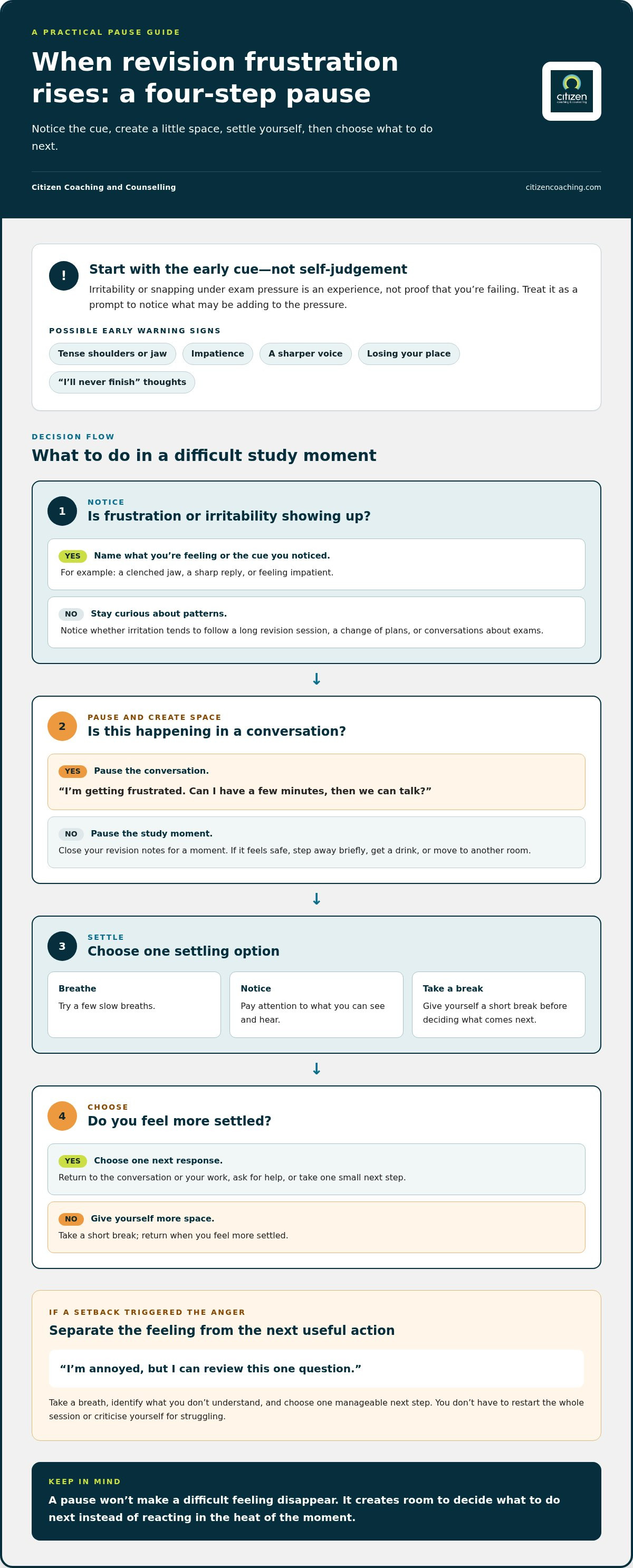
A pause won’t make a difficult feeling disappear, and it doesn’t mean you have to ignore it. It creates a little room to decide what to do next instead of reacting in the heat of the moment.
Quick reminder: Notice the cue, pause, create space, settle yourself, then choose your response.
- Notice: Name what you’re feeling or spot a cue, such as a clenched jaw or a sharp reply.
- Pause and create space: Stop the conversation or close your revision notes for a moment.
- Settle: Try a few slow breaths, notice what you can see and hear, or take a short break.
- Choose: Decide whether to return, ask for help or take another small step.
These are options, not rules. A practical guide to coping with exam pressure also describes strategies such as deep breathing and planning revision.
What can you do during a heated study moment?
If it feels safe, step away briefly. Get a drink or move to another room, then return when you feel more settled. If someone wants to keep talking, try: “I’m getting frustrated. Can I have a few minutes, then we can talk?” This gives you space to calm down while making clear that you’re willing to return to the conversation.
What if a setback triggers anger?
A difficult question or disappointing practice result can feel discouraging. Separate the feeling from the next useful action. You might say, “I’m annoyed, but I can review this one question.” Take a breath, identify what you don’t understand and choose one manageable next step. You don’t have to restart the whole session or criticise yourself for struggling.
If dealing with exam stress and anger feels difficult to manage alone, talking it through can be a constructive step. Discuss support with our team when you feel ready.
How to reduce exam pressure with a realistic study routine
A study plan can make revision feel more approachable, but it doesn’t need to cover every subject perfectly. Aim for a clear next step and a simple structure, with space for rest and changes to your day.
How can you make revision feel more manageable?
List the subjects or topics on your mind. Choose what needs attention first, then break a large task into smaller actions you can see and complete. Instead of “revise biology”, write “review cell structure notes” or “try a practice question on cell structure”. If the list still feels overwhelming, pick one useful next step and begin there.
Plan breaks as part of your routine, not as a reward you have to earn by getting everything right. Leave room in your day for meals, sleep and time away from revision. If you miss a task or need longer than expected, adjust the plan rather than treating it as a failure. A flexible routine is more realistic than one that only works on a perfect day.
How can you handle conflict around exams?
Revision can affect the people around you, especially if you need quiet or feel interrupted. Make a clear, specific request: “I’m finding it hard to concentrate. Could I have some quiet while I finish this topic, then I’ll come and talk?” You could also agree on a study plan with a classmate or let a friend know when you’re available.
If a conversation becomes tense, suggest returning to it after you’ve both had time to settle. Explain what would help without blaming the other person. Small, clear agreements can reduce misunderstandings and leave you with more room to focus on revision and managing your reactions.
When to seek support for exam stress and anger
Consider talking to someone if stress or anger keeps returning, disrupts revision or sleep, affects your relationships, or feels difficult to manage on your own. You don’t need to wait until things feel unbearable. A trusted adult, school or university support service, or counselling service can be a starting point. Asking for help is a constructive step, not a sign of failure.
If you’re unsure how to explain what’s happening, start with one example: “I’ve been snapping at people when I’m trying to revise, and I’m finding it hard to settle afterwards.” You can also describe what you’ve tried and what kind of support might feel helpful.
Could anger-management support help with exam-related reactions?
Anger-management support can give you space to explore situations that trigger frustration and practise different ways of responding. Counselling Anger Management Birmingham Citizen Coaching provides group and individual anger management in Birmingham, as well as an online anger management course. It also offers counselling. These services are not about being judged or promising a particular result. They provide a setting to better understand your reactions and consider ways forward. Read about anger management courses to learn more.
What if there is an immediate safety concern?
If someone’s safety is at immediate risk or the situation is life-threatening, call 999 or go to A&E. For urgent mental health help in England, NHS guidance advises calling 111 and selecting the mental health option. See the NHS advice on urgent mental health help. Counselling Anger Management Birmingham Citizen Coaching provides ongoing anger-management and counselling support, not emergency crisis care.
Take a steadier next step through exam season
Exam-related anger can be a signal that pressure is building, not a judgement on who you are. Notice your early cues, pause before reacting and choose one manageable next step instead of expecting yourself to fix everything at once.
A realistic revision routine can include smaller tasks, planned breaks and room to adapt. If stress or anger keeps affecting your day or relationships, reaching out to someone you trust or seeking counselling support can be a constructive way forward. Dealing with exam stress and anger doesn’t have to be something you manage alone.
Citizen Coaching and Counselling provides group and individual anger-management programmes in Birmingham, alongside an online course. Its counselling services support individuals, couples and young people. If you’re looking for structured support with managing anger, you can explore the group, individual and online options.
You can begin with one small step. Be patient with yourself as you find what helps.
Frequently Asked Questions
Can exam stress make you feel angry?
Yes, exam pressure can coincide with frustration or irritability, although people respond to stress differently. Deadlines, uncertainty, tiredness or difficulty with revision may leave you feeling less patient than usual. Anger doesn’t define your character. It can be a cue to notice what’s adding to the pressure and consider what might help you respond more calmly.
How can I calm down when I feel angry while studying?
Pause before reacting. If it feels safe, step away from your desk or the conversation for a short time. Try breathing slowly or focusing on what you can see and hear around you. Once you feel more settled, choose one small next action, such as returning to a single question. Dealing with exam stress and anger can begin with making room for that choice.
What should I do if exam stress is affecting my relationships?
Tell the other person what’s happening and what would help, using a clear request such as, “I’m finding it hard to concentrate. Could I have some quiet while I finish this task?” If you’ve snapped, you can acknowledge it and explain that you’d like to talk when you’re both calmer. A trusted adult, school or university support team may also help you work through the strain.
Can anger-management support help with exam stress?
Anger-management support can give you space to explore what tends to trigger frustration and practise different ways of responding. Citizen Coaching and Counselling offers group and individual anger-management support in Birmingham, along with an online course and counselling. These options may suit people who want support with understanding their reactions. Find out more about anger management courses.
When should I seek help for exam stress and anger?
Consider reaching out if stress or anger feels persistent, disrupts daily life or relationships, or is difficult to manage alone. You could speak with someone you trust, a school or university support service, your GP or a counsellor. If there’s an immediate risk to someone’s safety, contact emergency services. For urgent mental health help in England, see NHS guidance on urgent mental health support.

Article by
Martin Hogg
Counselling and Anger Management in Birmingham. Articles by Martin Hogg, counsellor MBACP (Reg.) and Founder and CEO of Citizen Coaching and Counselling, a social enterprise based in Birmingham, UK. Martin also helps counsellors struggling to set up and grow their Private Practice to gain clarity and confidence in their marketing and systems.
Disclaimer
The information provided on this blog is for general informational purposes only and is not intended to be a substitute for professional medical or mental health advice, diagnosis, or treatment. Reading this content does not create a therapist-client relationship.


