Anger Management Practice: A Simple Guide to Staying Calm in 2026
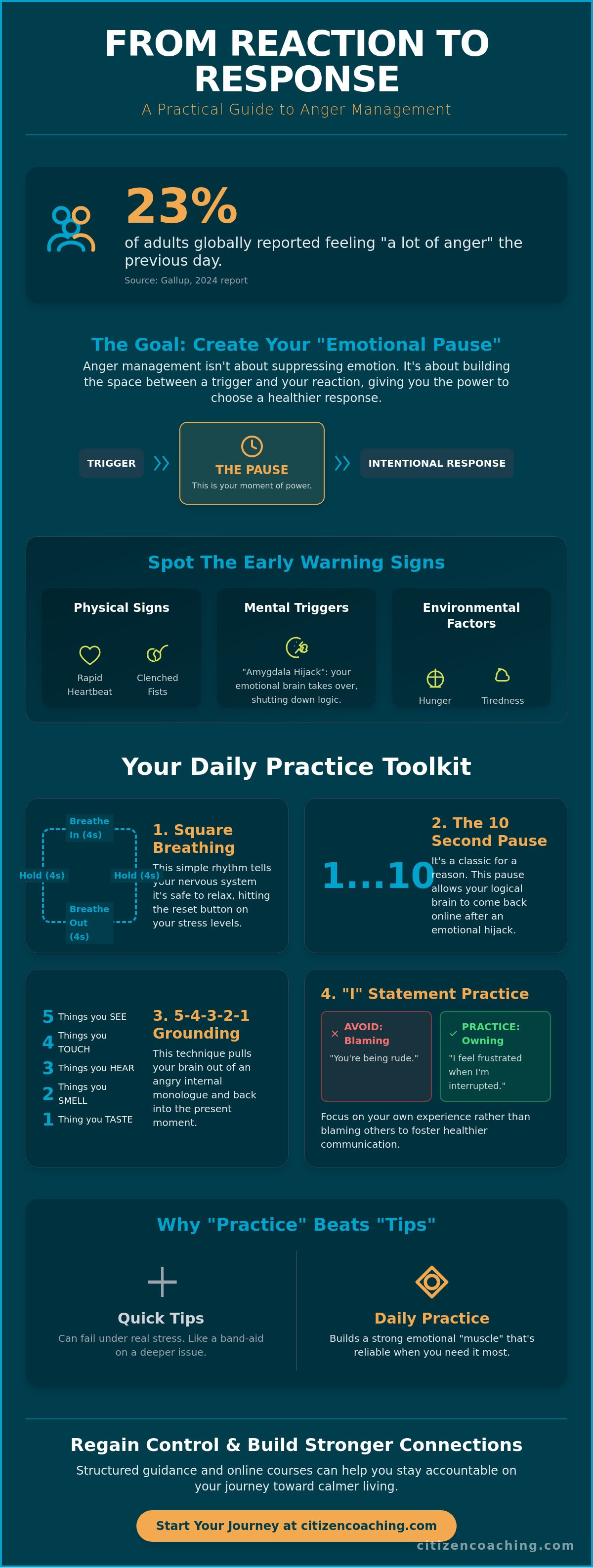
According to a 2024 Gallup report, 23% of adults globally reported feeling "a lot of anger" the previous day. You aren't alone if you've felt that heat rise in your chest during a minor disagreement or felt the immediate sting of regret after shouting at someone you love. It's exhausting to live in a state of constant tension, wondering when the next outburst might happen. You likely want to be the person who stays calm and collected, but in the heat of the moment, it often feels like your emotions have already taken the wheel.
Developing a consistent anger management practice isn't about deleting your feelings or never getting frustrated again. Instead, it's about building the emotional fitness to find the pause between a trigger and your reaction. We're here to help you learn practical, everyday techniques to manage your temper and regain control over your emotional responses. This guide explores how you can move from reactive shouting to clear communication, helping you lower your daily stress and build stronger connections with your family.
Key Takeaways
- Understand that while anger is a natural emotion, you can learn to manage your responses through intentional skill-building.
- Identify physical early warning signs, such as a tight chest or clenched fists, to stop an outburst before it starts.
- Master simple daily techniques like "Square Breathing" to help your brain stay calm when you feel triggered.
- Develop a consistent anger management practice that helps you move from reactive shouting to healthy, clear communication.
- Explore how structured guidance and online courses can help you stay accountable on your journey toward calmer living.
What is Anger Management Practice?
Many people believe that Anger management is about erasing the feeling of anger entirely. This is a common misunderstanding. In reality, a consistent anger management practice is the intentional development of emotional regulation skills. It's about learning how to stay in the driver's seat when your emotions start to rev up. Instead of trying to stop the feeling, we focus on how you choose to act when that feeling arrives.
It helps to think of anger as a normal, human emotion. It's often a signal that a boundary has been crossed or that you feel unheard. The emotion itself isn't "bad," but the behavior that follows can be destructive. We don't practice to stop being human; we practice to manage our reactions. This shifts you from a "reactive" life, where you're at the mercy of your triggers, to a "proactive" life where you remain in control of your choices.
The core goal of this work is to create what we call the "Emotional Pause." This is that tiny split second between a trigger and your response. In that moment, you have the power to choose a different path. Without a regular anger management practice, that pause is almost non-existent. With it, you gain the space to breathe and respond with intention rather than reacting with regret.
Why "Practice" Matters More Than "Tips"
Quick tips can be helpful in a pinch, but they often fail when you're truly stressed. Emotional control works like a muscle. You can't expect it to be strong in a crisis if you haven't trained it during your calmer moments. Repetition is what builds new habits in the brain. Mastering your moods is a foundational part of this journey. It requires showing up for yourself every day, not just when things go wrong. By practicing when you're calm, you ensure the tools are ready when you actually need them.
Identifying Your Personal Triggers and Warning Signs
Anger rarely arrives without a warning. Most of the time, your body and mind send out signals long before you lose control. Part of a successful anger management practice involves becoming a student of your own reactions. When you understand your specific triggers, you can use strategies to keep anger at bay before the situation escalates. It's much easier to blow out a candle than it is to put out a forest fire.
One of the biggest hurdles is what experts call the "Amygdala Hijack." This happens when the emotional part of your brain senses a threat and effectively shuts down your logical thinking. It's why you might say things you later regret; your thinking brain simply wasn't in charge at that moment. You might also notice "should" statements popping up in your mind, like "they should know better" or "this is completely unfair." These thoughts act as fuel. Keeping an anger log for a week can help you spot if you're more prone to outbursts at specific times or with certain people. If these patterns feel too heavy to carry alone, counselling for individuals can provide a safe space to unpack them.
Physical Warning Signs to Watch For
Your body often knows you're angry before your mind does. Common sensations include a rapid heartbeat, shallow breathing, or grinding your teeth. You might feel a sudden heat in your face or a tightness in your chest. Physiological arousal is simply your body preparing for a fight. Recognizing these signs early gives you the chance to step away before the hijack takes over.
Common Environmental Triggers
Sometimes the trigger isn't a person, but your environment. Hunger, tiredness, and overstimulation are "vulnerability factors" that lower your fuse. A messy kitchen or a loud, chaotic office can be silent triggers that drain your patience. By noticing these external stressors, you can adjust your surroundings to support your anger management practice rather than working against it.
How to Practice Anger Management: 5 Daily Techniques
Once you've spotted the physical warning signs we discussed earlier, you need a plan. A solid anger management practice gives you a toolkit to use in the moment. These aren't just ideas; they're skills you can use every day to stay grounded. When you feel the heat rising, try these specific actions to regain control of your responses. Consistency is key here. The more you use these tools, the more natural they'll feel.
- Square Breathing: Breathe in for four seconds, hold for four, breathe out for four, and hold for four. This simple rhythm tells your nervous system it's safe to relax, effectively hitting the reset button on your stress levels.
- The Count to Ten Rule: It sounds old-fashioned, but it works for a reason. This pause allows your prefrontal cortex to come back online after an amygdala hijack, giving you time to think before you speak.
- 5-4-3-2-1 Grounding: Identify five things you see, four things you can touch, three things you hear, two things you smell, and one thing you can taste. This pulls your brain out of an angry internal monologue and back into the present moment.
- "I" Statement Practice: Focus on your own experience rather than blaming others. Instead of saying "You're being rude," try "I feel frustrated when I'm interrupted because I want to finish my thought."
The Mayo Clinic suggests 10 tips to tame your temper that highlight how small changes in your response can prevent a full-blown argument. If you're looking for a structured way to build these habits into your life, our Online Anger Management Course offers step-by-step guidance you can follow at your own pace from home.
The 90-Second Rule for Emotional Waves
When you get angry, your body releases a surge of chemicals. This physical wave actually only lasts about 90 seconds. If you can "ride the wave" without speaking or acting, the intensity will naturally drop. The trick is to avoid re-triggering yourself with angry thoughts during that minute and a half. Just breathe and wait for the surge to pass before you decide how to respond.
Using "Time-Outs" Effectively
A time-out isn't about ignoring the other person or giving them the cold shoulder. It's about protecting the relationship from things you might say when you're heated. To do this fairly, use a simple script so your partner knows you aren't just walking away. You might say: "I’m feeling angry and need 15 minutes to calm down so I can hear you properly." This tells them you're committed to the conversation, but you need a moment to stay in control.
From Self-Help to Structured Coaching: Your Next Steps
While you've learned the basics of an anger management practice in this guide, moving from knowledge to action can be difficult on your own. It's one thing to read about breathing techniques; it's another to apply them when you're under pressure. Professional guidance provides the structure and accountability that self-help often lacks. It helps you stay committed to your goals even when life gets busy or stressful. You aren't just trying to cope; you're building a new foundation for your future.
For those who need to balance their development with work or family life, an online anger management course uk offers the flexibility to learn from home. You might also want to explore online therapy benefits if you prefer private, remote sessions. Choosing a structured path ensures you have a clear roadmap to follow as you build your new habits.
What Happens in an Anger Management Programme?
Many people feel nervous about starting, but the process is straightforward and supportive. It isn't about being "fixed" or judged for your past mistakes. Instead, it's about coaching and skill-building. You'll work with professionals who help you refine your anger management practice in a confidential setting. This non-judgmental approach makes it easier to be honest about your challenges and make real progress.
The Citizen Coaching and Counselling Difference
We are a Birmingham-based social enterprise focused on community mental health. Unlike a cold clinical institution, Citizen Coaching and Counselling is made up of real people ready to help. We offer Anger Management Birmingham (Group) sessions where you can learn alongside others, or Anger Management Birmingham (Individual) for more focused support. We also provide Counselling for Individuals and Couples Counselling. Starting your journey today means you're one step closer to the calm life you deserve.
Take Control of Your Emotional Future
Learning to navigate your temper is a journey that changes everything from your physical health to your closest relationships. You now have the tools to spot your triggers early and the techniques to ride out the initial 90 second chemical wave of anger. While these strategies work in the moment, a lifelong anger management practice is what truly builds emotional fitness. It's about showing up for yourself every day until staying calm becomes your natural state.
If you're ready to move beyond self-help, Citizen Coaching and Counselling is here to guide you. Founded in 2005, we are a Social Enterprise (CIC) dedicated to community mental health. Our expert-led group and individual programmes provide a safe, non-judgmental space to build your skills alongside people who understand your experience. Start your journey to a calmer life with our Birmingham-based anger coaching. You don't have to do this alone, and you deserve to feel in control of your responses and your future.
Frequently Asked Questions
How long does it take for anger management practice to work?
While some notice small shifts immediately, building a lasting anger management practice is a gradual process of retraining your brain. The time it takes varies for everyone depending on how frequently you apply your new skills in real-world situations. Consistent repetition is what eventually turns these techniques into automatic habits, helping you stay calm even during high-pressure moments.
Can I practice anger management by myself or do I need a therapist?
You can certainly start with self-guided tools like books or online resources to build basic awareness. However, many people find that working with a professional provides the necessary accountability to keep going when things get tough. A coach or therapist can offer personalized feedback that helps you navigate specific challenges that self-help materials might not cover.
Is anger management practice confidential if I do it through my employer?
Yes, your privacy is protected by strict ethical guidelines and data protection laws. If you use a service through an employee assistance scheme, your employer generally only receives high-level usage data, not the details of your sessions. We treat all our clients with the same high level of confidentiality, whether they come to us independently or through their workplace.
What is the difference between anger coaching and traditional counselling?
Anger coaching is typically more focused on the 'here and now,' providing you with practical strategies to manage your behavior in the future. Traditional counselling may spend more time exploring your past experiences to understand where your anger comes from. Both approaches are valuable, and we offer a range of services to ensure you find the right fit for your personal journey.
What should I do if my partner is the one who needs anger management practice?
You can't force someone else to change, but you can change how you respond to them. Focus on setting healthy boundaries and using the 'I' statements we discussed earlier to express how their anger affects you. If your partner is open to it, suggesting an anger management practice can be a helpful step, but the decision to start must be theirs.
Disclaimer
The information provided on this blog is for general informational purposes only and is not intended to be a substitute for professional medical or mental health advice, diagnosis, or treatment. Reading this content does not create a therapist-client relationship.


