
What Causes Anger? Understanding Your Triggers and Root Causes in Birmingham
Imagine you're navigating the heavy traffic on the A38 in Birmingham on a wet Tuesday afternoon, and a simple cut-off by another driver sends you into a blind rage that leaves your hands shaking. You aren't a bad person, but that sudden, overwhelming loss of control feels frightening. It's exhausting to live with that constant tension, and you likely feel a deep sense of guilt when you see the impact your outbursts have on your family or colleagues. You want to change, but you don't know where to start.
Understanding what causes anger is the vital first step toward reclaiming your calm and repairing your relationships. According to the Mental Health Foundation, nearly 10% of people in the UK struggle with managing their temper, so your experience has a real, documented source. This guide will help you discover the biological, psychological, and environmental factors behind your reactions. We'll explore why your brain responds this way and show you how to find a supportive, non-judgmental path to change right here in Birmingham.
Key Takeaways
- Learn how your anger often acts as a "protective messenger" to help you hide more vulnerable feelings like hurt or fear.
- Understand what causes anger on a biological level and how factors like brain chemistry and poor sleep impact your emotional control.
- Distinguish between minor daily triggers and the unresolved past issues that often create an "overflow" of emotion.
- Identify the specific environmental stressors of life in Birmingham that might be pushing your patience to the limit.
- Discover how jargon-free coaching can help you move beyond just understanding your temper to taking the first step toward a calmer life.
Why Do I Get So Angry? The Purpose of Anger as a Protective Emotion
Feeling a surge of heat when someone cuts you off in Birmingham traffic or treats you unfairly at work is a common experience. We often view it as a negative trait, but anger is actually a natural, instinctive response. It is your body's way of reacting to a perceived threat or an injustice. At its core, anger acts as a protective messenger. It alerts you that something isn't right and gives you the energy to stand up for yourself. This emotion serves a purpose; it is there to keep you safe from harm.
Everyone in Birmingham experiences these feelings differently. For some, it might be a slow simmer that lasts all day after a difficult morning in the city centre. For others, it is a sudden flash that disappears as quickly as it arrived. There is a big difference between healthy frustration and chronic, unmanageable anger. Healthy anger is brief and helps you solve a problem. Chronic anger feels like a constant weight that impacts your relationships, your career, and your health. Understanding what causes anger is the first step toward finding a calmer path and reclaiming your peace of mind.
The Fight-or-Flight Response
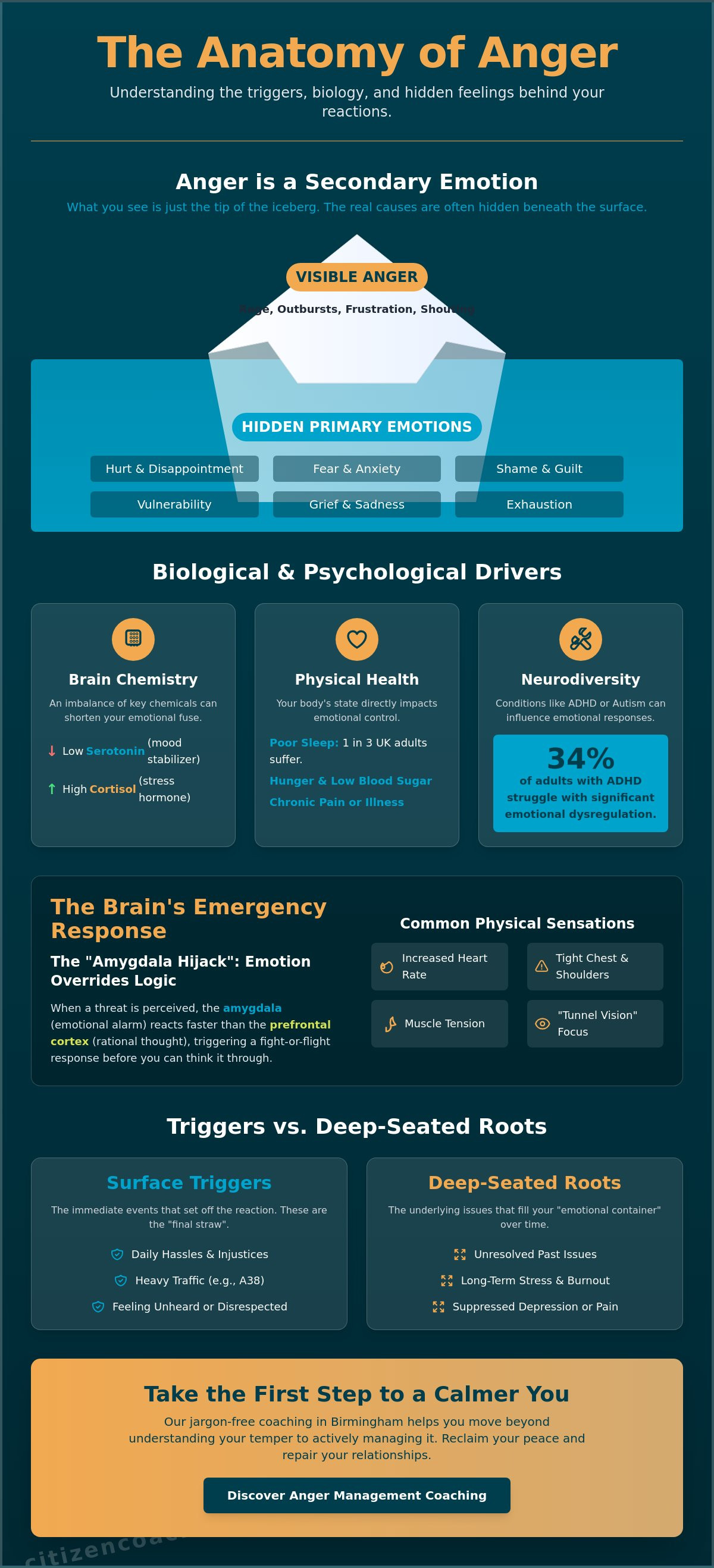
When you feel a flash of rage, your brain's emotional centre, the amygdala, takes over. This happens lightning fast, often before your rational brain can process the facts of the situation. Your body prepares for a physical struggle by releasing a flood of adrenaline and cortisol. You will likely notice specific physical sensations during this time:
- A significantly increased heart rate.
- Tightness in your chest, shoulders, or jaw.
- Muscle tension in your arms and legs.
- A sense of "tunnel vision" where you only focus on the immediate threat.
An amygdala hijack is a survival mechanism gone wrong where your brain reacts to a modern stressor as if it were a life-threatening predator.
Anger as a Secondary Emotion
Think of anger like an iceberg. The part you see above the water is the visible outburst, but the majority of the emotion is hidden beneath the surface. This hidden part often contains primary feelings like shame, grief, or total exhaustion. For many people, it feels much safer to be angry than to admit they feel vulnerable or hurt. Anger provides a temporary sense of power and control when everything else feels chaotic. Identifying the primary emotion is the real key to managing the secondary outburst and understanding what causes anger in your daily life. Once you name the primary feeling, the anger often begins to lose its grip.
The Biological and Psychological Drivers of Anger
Understanding what causes anger often starts with looking under the hood of your own biology. Your brain relies on a delicate balance of chemicals to keep you steady. Serotonin acts as a natural mood stabilizer, while cortisol prepares your body for a "fight or flight" response. When serotonin levels drop or cortisol stays high due to long-term pressure, your emotional fuse naturally gets shorter. This chemical imbalance makes it much harder to stay calm when things go wrong.
Physical health plays a massive role in how we handle our feelings. If you've ever snapped at someone after a bad night's sleep, you've seen this in action. Research from the Great British Bedtime Report shows that roughly 1 in 3 people in the UK suffer from poor sleep. This deprivation directly impairs the parts of the brain responsible for emotional control. Other physical factors include:
- Hunger and Blood Sugar: Low glucose levels make it harder for the brain to practice self-control.
- Chronic Pain: Constant physical discomfort drains your mental energy, leaving less room for patience.
- Neurodiversity: For many adults with ADHD or Autism, sensory overload or sudden changes in routine can trigger intense frustration. In fact, studies suggest about 34% of adults with ADHD struggle with significant emotional dysregulation.
In many cases, anger is actually a masking emotion. For both men and women, suppressed depression doesn't always look like sadness or lethargy. Instead, it often shows up as constant irritability or a "short temper." Identifying what causes anger in these instances requires looking past the outburst to see the pain or exhaustion underneath.
Neurology: The Rational Brain vs. The Emotional Brain
Think of your prefrontal cortex as the brain's braking system. It's the rational part that tells you to stop before you say something you'll regret. When you're under chronic stress, this system weakens. It's like trying to stop a car with worn-out brake pads. Some people are also biologically predisposed to higher emotional reactivity. Their amygdala, the brain's alarm bell, is more sensitive, meaning they feel threats more deeply and more quickly than others.
Underlying Mental Health Factors
Anxiety is a common culprit behind sudden outbursts. When you feel trapped, overwhelmed, or out of control, your body's survival instinct kicks in. This often manifests as "defensive" anger. Similarly, those living with PTSD or past trauma often stay in a state of hyper-vigilance. They're always on the lookout for a fight because their brain is trying to protect them from being hurt again. At Citizen Coaching, we help you explore these triggers in a safe, non-judgmental way, without the need for a formal medical diagnosis.
Common Triggers vs. Deep-Seated Root Causes
Have you ever lost your temper because someone left a dirty mug in the sink or took the last bit of milk? It feels like that one small event is the problem, but it's usually just the straw that broke the camel's back. The real issue is the heavy "load" you've been carrying long before that moment. When people ask what causes anger, they often point to the immediate person or event in front of them. In reality, we often overreact to minor incidents because they tap into unresolved issues from our past. Your emotional cup might already be 95% full; the dirty mug just provides the final drop that causes it to overflow.
A common hurdle we hear at our Birmingham centre is the belief that "I've just always been an angry person." It's easy to feel like your temper is part of your DNA, but science shows us something different. Through neuroplasticity, we know the brain is capable of changing and forming new habits at any age. While you might have spent years reacting with rage, those pathways aren't permanent. You can "unlearn" these responses and guide your mind toward calmer ways of coping.
Childhood and Early Life Influence
Our early years serve as a blueprint for how we handle big emotions. You might have learnt to express anger by watching a parent shout, or perhaps you learnt to suppress it because it wasn't safe to speak up. Many people who struggle with their temper today were forced to grow up too fast as children, taking on adult worries far too early. This often leaves behind "unmet needs." When you feel ignored or pushed aside as an adult, it presses a "hot button" that was formed decades ago. Understanding what causes anger in your life often starts with looking back at those early lessons about boundaries and respect.
Identifying Your Personal "Hot Buttons"
A trigger is a present-day event that re-opens an old emotional wound. While everyone is different, most "hot buttons" relate to a few core feelings. You might find your temper flares when you feel:
- Ignored: Feeling like your voice doesn't matter or you're being overlooked.
- Disrespected: Feeling like someone is "talking down" to you or treating you unfairly.
- Powerless: Feeling trapped in a situation where you have no control.
To spot these patterns, we recommend starting a "trigger diary" for one week. Record each time you feel a surge of frustration, noting what happened just before. You'll likely find that your anger isn't random. It's a signal that an old wound is being poked. Recognising these patterns is a vital step in our coaching process, helping you move from reacting to reflecting.
How Life in Birmingham and Modern Stress Influence Your Temper
Living in a major city like Birmingham brings excitement and opportunity, but it also introduces unique pressures. Whether you are navigating the morning rush at Grand Central or sitting in stationary traffic on the M6, your environment plays a massive role in your emotional state. When we look at what causes anger, we have to consider how the "always-on" nature of city life keeps our bodies in a state of high alert. This constant stimulation makes it much harder to stay calm when small things go wrong.
Urban Stress and the "Pressure Cooker" Effect
The physical environment of a city can act like a pressure cooker for your emotions. Constant noise from construction, sirens, and the sheer volume of crowds can lead to sensory overload. This keeps your nervous system on edge, making you more likely to react aggressively to minor inconveniences. Birmingham residents often feel this most during busy periods, such as the Christmas markets or large events at the Utilita Arena.
A 2023 report on urban mental health suggested that lack of access to quiet green spaces can significantly lower your emotional resilience. While we have beautiful spots like Cannon Hill Park, many people spend their entire day surrounded by concrete and steel. This environmental strain is often coupled with social isolation. Even in a city with a population of over 1.1 million people, it is possible to feel deeply alone. This lack of a support network makes it harder to process frustration, leading to a build-up of internal tension.
Work-Life Balance in the West Midlands
Workplace conflict and the drive to stay competitive in the West Midlands economy are significant factors in what causes anger for many. Job insecurity or the feeling of being undervalued can create a state of low-level rage that never quite goes away. This makes it incredibly difficult to "switch off" when you return home to your family. You might find that a stressful day in the office leads to an argument over something trivial at the dinner table.
The cost-of-living crisis has added another layer of strain. With food prices in the UK rising by over 10% in recent years, financial anxiety is a constant companion for many families. This worry creates a foundation of irritability that can explode at any moment. For local leaders, addressing these issues is vital. Citizen Coaching’s workplace wellbeing training provides managers with the tools to identify these stressors and support their teams before they reach a breaking point.
- The stress of long commutes on the Cross-City line or local bus routes.
- High-pressure targets in the city's professional and financial services sectors.
- The difficulty of finding affordable housing in desirable areas.
- The constant digital "ping" of work emails outside of standard hours.
If the pace of city life is making you feel more irritable than usual, you don't have to manage it alone. Taking the first step to understand your environment can change everything. Book a session with our Birmingham guides to start regaining control of your calm.
Taking the First Step: How Anger Management in Birmingham Can Help
Understanding what causes anger is a vital breakthrough. It gives you the "why" behind your reactions. However, insight alone is only 50% of the solution. The remaining 50% comes from coaching and practical application. You need a strategy to bridge the gap between knowing your triggers and actually changing your behaviour in the heat of the moment.
We provide jargon-free, professional coaching that cuts through the noise. You won't find cold, clinical assessments here. Instead, you'll find a supportive environment where your feelings are validated. Taking that first step feels vulnerable. It's normal to feel a bit nervous about asking for help, but it's the most effective way to regain control of your life.
What to Expect from Anger Coaching
Our approach shifts the focus from "Why am I angry?" to "How do I respond differently?". You'll learn practical de-escalation tools that you can use immediately in your daily life in Birmingham. Whether it's a tense moment at work or a disagreement at home, these techniques provide a "pause button" for your emotions. Once you identify what causes anger in your specific situation, our guides help you build a toolkit to manage it.
- Individual Deep Dives: One-to-one sessions allow for a private, intensive look at your personal history and specific triggers.
- Group Shared Experiences: Group sessions offer the chance to hear from others. Realising you're not alone reduces the shame often linked to anger.
- Expert Guidance: A non-judgmental guide helps you map out your root causes without the fear of being criticised.
Your Local Path to Calm
We offer the flexibility of Birmingham-based face-to-face sessions or online courses if you prefer to learn from home. This ensures that your journey to a calmer life fits around your existing schedule. You can choose the format that feels safest and most comfortable for you.
Citizen Coaching operates as a social enterprise. This means our focus is on making professional support accessible to everyone in our local community. We believe that high-quality anger management shouldn't be a luxury. It's a practical tool for personal growth that helps make Birmingham a more peaceful place for everyone. You don't have to manage this by yourself. Reach out and book your first anger management session in Birmingham today.
Move Toward a Calmer Future
Identifying what causes anger is a vital breakthrough for your mental well-being. It helps you see that your temper is often a protective response to deeper root causes or the unique stresses of living in a busy city like Birmingham. Since 2005, our team has helped thousands of local people move from frustration to focus. As a Birmingham Community Interest Company (CIC) with over two decades of expertise, we reinvest our resources directly back into our local community. You get jargon-free, professional coaching that fits into your actual life. Taking the first step feels daunting, but it's the most important move you'll make for your future. We are ready to be your guide. You deserve to feel in control and at peace again. Our friendly experts are here to support you every step of the way.
Take the first step and book your Birmingham anger management session
Frequently Asked Questions
Is anger a mental illness?
Anger isn't a mental illness; it's a natural human emotion that everyone feels at some point. While it isn't a diagnosable condition in the DSM-5, the NHS states that persistent, uncontrolled anger is often a symptom of underlying issues like depression, anxiety, or chronic stress. If your emotions feel overwhelming, it's helpful to look at what causes anger in your life and find a professional guide to help you navigate those feelings safely.
Can childhood trauma cause anger issues in adulthood?
Yes, childhood trauma is a very common root cause of adult anger problems. Research into Adverse Childhood Experiences (ACEs) shows that children who grow up in unstable or high stress environments often develop a hyper-sensitive "fight or flight" response. This survival mechanism stays with you into adulthood, meaning you might react with intense anger to situations that others find minor. Recognising this link is a brave first step toward healing.
Why do I get angry so quickly over small things?
You likely react quickly because of "trigger stacking," where small daily frustrations pile up until you reach a breaking point. It's rarely just about a lost set of keys or a late bus; it's usually about the 5 or 6 other stressors you've carried all day. When your internal stress bucket is full, even a tiny drop causes an overflow. We help you identify these patterns so you can drain that bucket before it spills over.
Is it possible to "cure" anger or just manage it?
You don't "cure" anger because it's a healthy part of being human, but you can certainly learn to manage your response to it. The goal of coaching isn't to stop you from ever feeling annoyed, but to give you the tools to stay in control when you do. Most clients find that with professional support, they can reduce the frequency of their outbursts and feel much calmer in their day to day lives.
How do I know if I need professional anger management in Birmingham?
You should consider seeking help if your anger is damaging your relationships, affecting your performance at work, or leading to legal trouble. If your partner or colleagues have mentioned they feel like they're "walking on eggshells" around you, it's a clear sign to take action. We offer a friendly, jargon-free environment right here in Birmingham to help you understand your triggers and regain your peace of mind.
Can stress at work lead to chronic anger problems?
Yes, chronic workplace stress is a major contributor to persistent irritability and rage. A 2023 study found that 79% of UK professionals experience work related stress, which often bleeds into their personal lives. When you're constantly under pressure to meet deadlines or handle difficult management, your nervous system stays on high alert. This makes it much harder to remain patient when you finally get home to your family at night.
What is the difference between anger and aggression?
Anger is an internal emotion, while aggression is an external behaviour intended to cause harm, whether that's physical or verbal. It's perfectly normal to feel the emotion of anger when you've been treated unfairly. However, slamming doors, shouting, or using intimidating language are aggressive actions that often lead to regret. Our coaching helps you acknowledge the feeling of anger without letting it turn into destructive behaviour that hurts the people you love.
How long does it take to see results from anger coaching?
Most people start to notice a real difference in their reactions after just 3 or 4 sessions. While everyone's situation is unique, a typical course of 6 to 10 sessions provides enough practical tools to handle most common triggers effectively. Taking the first step is often the hardest part of the journey. Once you start, you'll have a dedicated guide to help you make steady, lasting progress at a pace that feels right for you.


