
Private Therapy While on an NHS Waiting List: Your Options
If you’ve searched for “private therapy while on NHS waiting list,” you may be wondering whether you can arrange support without affecting your NHS referral. It’s understandable to be unsure how the two options fit together.
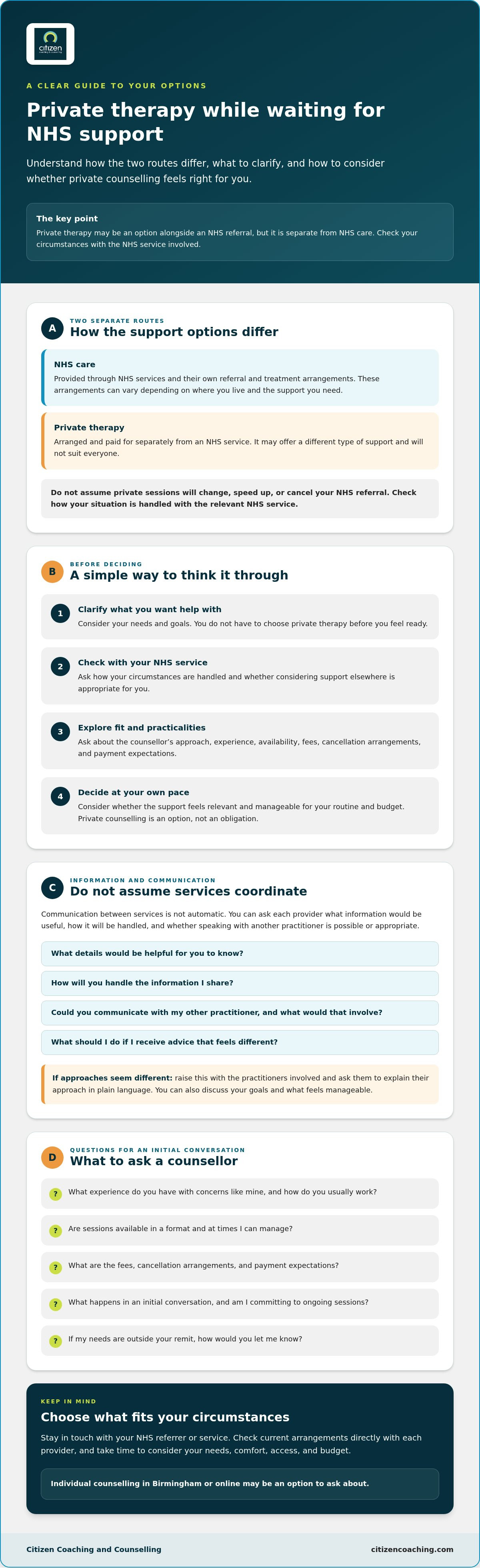
In general, you can consider private therapy alongside an NHS referral, but check your circumstances with the NHS service involved. Private sessions are separate from NHS care, and you don’t have to decide before you feel ready.
This guide explains how private therapy and NHS support differ, what to ask your NHS team, and how to assess a therapist’s approach, experience and fees. If you’re in Birmingham or prefer online support, individual counselling may be one option to explore. The aim is to help you choose a suitable next step that works for your needs and budget.
Key Takeaways
- Private therapy while on an NHS waiting list may be an option, but it is separate from NHS care and won’t suit everyone.
- Before starting, ask each service how it handles information and whether coordinating support is appropriate for you.
- Clarify what you want help with, whether a therapist’s approach feels right, and whether the fees and arrangements are manageable.
- If you’re in Birmingham or prefer online support, individual counselling with Counselling Anger Management Birmingham Citizen Coaching is one option to ask about.
Private therapy while on an NHS waiting list: what are your options?
Waiting for support can be difficult, especially when you’re unsure what happens next. NHS services and referral arrangements vary depending on where you live and the support you need. Private therapy means arranging and paying for support separately from an NHS service. If you’re considering private therapy while on NHS waiting list, it may be one option to explore, but it won’t be right for everyone.
Private support is arranged outside the NHS, while NHS care is provided through NHS services and follows their own referral and treatment arrangements. The routes may offer different types of support. For a broad overview of mental health care in the United Kingdom, see this general guide. For advice about your own NHS pathway, contact your referrer or service directly, or consult NHS mental health information.
What does it mean to see a private therapist while waiting?
You can arrange counselling separately while waiting for an NHS service to respond or begin care. Don’t assume private sessions will change, speed up or cancel your NHS referral. Before booking, ask the relevant NHS service how your situation is handled. Then check what the private counsellor offers, including their approach and fees. For a local overview, read Private Counselling Birmingham: A Jargon-Free Guide to Local Support.
Is private therapy a replacement for NHS support?
Not necessarily. Private counselling and NHS care have different arrangements and may not provide the same support. If you’re considering both, stay in touch with your NHS referrer or service and ask what is appropriate for your circumstances. You can also ask each provider how it handles information about other support and whether communication between services is possible or helpful. Check the current arrangements with the providers rather than relying on general assumptions.
Can private therapy and NHS care work alongside each other?
Considering private therapy while on an NHS waiting list can raise questions about what to share and who should be involved. Letting each practitioner know about other support may help them understand your situation. You can first ask what information would be useful and decide what you feel comfortable sharing. Communication between services is not automatic.
What should I tell my NHS service or private therapist?
You might mention that you’re receiving or considering support elsewhere, along with any concerns relevant to your care. Ask each provider what information is useful, how it will be handled, and whether communication with another practitioner is possible or appropriate. Don’t assume records are shared or that services will coordinate without discussing it with them.
Before sharing information or expecting coordination, ask:
- What details would be helpful for you to know?
- How will you handle the information I share?
- Could you communicate with my other practitioner, and what would that involve?
- What should I do if I receive advice that feels different?
What if the approaches or advice feel different?
If the support you receive seems to point in different directions, raise this with the practitioners involved and ask them to explain their approach in plain language. You can also discuss your goals and what kind of support feels manageable. These questions can help you decide what to clarify before continuing, without assuming one service can direct the other.
If you’re looking for individual counselling in Birmingham or online, ask Counselling Anger Management Birmingham Citizen Coaching about its approach and whether it may suit your needs. You can contact the team to discuss individual counselling.
How to decide whether private therapy is right for you while you wait
Private counselling is an option to consider, not a step you have to take. Start by clarifying what you’d like help with. Then ask whether a counsellor’s approach seems suitable, check the full fees and arrangements, and consider whether sessions fit your routine and budget.
What should I ask before booking a first session?
Use an initial conversation to understand what working together might involve. You could ask:
- What experience do you have with concerns like mine, and how do you usually work?
- Are sessions available in a format and at times I can manage?
- What are the fees, cancellation arrangements and payment expectations?
- What happens in an initial conversation, and am I committing to ongoing sessions?
- If my needs are outside your remit, how would you let me know?
It’s reasonable to ask questions before deciding. A counsellor should be able to explain their approach clearly, so you can consider whether it feels comfortable and relevant to your goals.
How do I weigh access, cost, and personal fit?
Think about what matters most right now. You may want support soon, but affordability, travel, online access and feeling at ease with the practitioner matter too. Consider whether the arrangements are sustainable over time, not just whether you can manage an initial appointment. If the ongoing cost or format doesn’t feel workable, ask about the options before agreeing to continue.
There’s no need to decide under pressure. Take time to compare options, check details and reflect on what feels right. Private therapy while on an NHS waiting list may suit some people, but it cannot guarantee a particular outcome and is not a requirement for receiving NHS care.
Finding a supportive next step in Birmingham or online
Private counselling isn’t the right choice for everyone, and you can continue exploring NHS support without arranging private sessions. If you’re considering private therapy while on NHS waiting list, focus on what kind of support you want, what feels affordable and practical, and whether the counsellor’s approach seems suitable.
What support does Citizen Coaching and Counselling offer?
Citizen Coaching and Counselling is a Birmingham-based social enterprise offering counselling for individuals, couples and young people. Support is available in Birmingham and online, but check current options before making plans. You can ask whether individual counselling may fit what you’re looking for, how sessions are arranged and what the fees are. For more context on local support, read Private Counselling Birmingham: A Jargon-Free Guide to Local Support.
How can I take a low-pressure next step?
An enquiry doesn’t commit you to starting. Briefly explain what support you’re seeking and ask about suitability, current availability, session format and fees. It’s also reasonable to ask what happens if your needs fall outside the service’s remit. Take time to consider the answers before choosing.
Citizen Coaching and Counselling provides counselling, not emergency crisis intervention. If you or someone else is in immediate danger, call 999 or go to A&E. For urgent mental health help in England, contact NHS 111 and ask for urgent mental health support. Check current NHS mental health guidance for advice that fits your situation.
Choose a next step that feels right for you
Private therapy while on NHS waiting list is a personal choice, not a requirement or a replacement for NHS care. Before deciding, consider what support you need, whether a counsellor’s approach seems suitable, and whether the fees and arrangements work for you. If you’re also using NHS support, keep in touch with the relevant service and ask what applies to your circumstances.
Citizen Coaching and Counselling is a Birmingham-based Community Interest Company that reinvests profits into community mental health. It offers counselling for individuals, couples and young people, with support in Birmingham and online. Check current availability, session format and fees before making plans. You can ask whether individual counselling may suit what you’re looking for without committing to begin.
Taking time to ask questions is a meaningful step. Choose the support that feels manageable for you, at your own pace.
Frequently Asked Questions
Can I have private therapy while waiting for NHS treatment?
Yes, you can explore privately arranged therapy while waiting for NHS treatment. Whether it’s suitable depends on your needs and the NHS pathway involved. Don’t assume private sessions will change, speed up or cancel a referral, or determine what NHS care follows. Ask your referrer or service, including the relevant Birmingham service if you’re local, what applies to you. Check current NHS guidance before relying on pathway advice.
Will private therapy affect my NHS waiting-list place?
Don’t assume that starting private therapy will automatically remove you from an NHS waiting list or leave your place unchanged. Arrangements may depend on the service and your circumstances. Contact your NHS referrer or service and ask directly what applies to your referral. Make a note of the advice you receive, and check current official guidance rather than relying on general information or someone else’s experience.
Should I tell my NHS therapist that I’m seeing someone privately?
It may help to tell the people supporting you about other care, particularly if you have questions about how your support fits together. Ask what details would be useful and how the information you share will be handled. Don’t assume providers share records or communicate automatically. If you’re unsure, ask each service about its current practices and decide what you feel comfortable sharing.
How do I choose a private therapist while I’m waiting?
Start by identifying what you’d like help with, then ask about the therapist’s experience, approach, availability, session format and fees. Consider whether you feel listened to and able to ask questions. Clarify what would happen if your needs fall outside the service’s remit. Comparing options can help you assess personal fit and affordability. You don’t have to book until you feel ready.
What if I need urgent mental health help while waiting for therapy?
If you’re in immediate danger or can’t keep yourself or someone else safe, call 999 or go to A&E. In England, you can call NHS 111 for urgent mental health support. A routine therapy waiting list may not be the right route for urgent help, and private counselling services should not be assumed to provide crisis care. Check current NHS guidance for the appropriate support in your area.

Article by
Martin Hogg
Counselling and Anger Management in Birmingham. Articles by Martin Hogg, counsellor MBACP (Reg.) and Founder and CEO of Citizen Coaching and Counselling, a social enterprise based in Birmingham, UK. Martin also helps counsellors struggling to set up and grow their Private Practice to gain clarity and confidence in their marketing and systems.
Disclaimer
The information provided on this blog is for general informational purposes only and is not intended to be a substitute for professional medical or mental health advice, diagnosis, or treatment. Reading this content does not create a therapist-client relationship.


