
Managing Anger During Menopause: Understanding Triggers and Finding Support
What if anger during menopause isn’t a character flaw, but a signal that something has changed? If you’re more irritable than usual or reacting more strongly than you intend, it can feel unsettling, especially when it affects people you care about. Managing anger during menopause starts with understanding what may be contributing, without assuming hormones explain everything.
Hormonal changes can affect mood, while disrupted sleep, hot flushes, stress and everyday pressures may add to the strain. You don’t have to work it all out alone, and feeling angry doesn’t mean you’re failing. Small steps, such as noticing your triggers and pausing before responding, can help you find a steadier way forward.
This article looks at why anger may feel different during menopause, suggests practical ways to respond and explains when to speak with a health professional or seek anger-management support. The aim is understanding, not judgement.
Key Takeaways
- Notice when anger tends to arise and what is happening around you. Recognising patterns can help you choose a response that fits the moment.
- Managing anger during menopause can start with a pause: make space if it’s safe, slow your breathing and decide what you want to say or do next.
- Anger-management support can help you explore your reactions and practise different responses without treating anger as a character flaw.
- In Birmingham, Counselling Anger Management Birmingham Citizen Coaching offers group and individual anger-management support. Speak with a health professional about medical questions related to menopause.
Managing anger during menopause starts with understanding what has changed
Noticing that you’re more irritable than usual can feel unsettling, especially if you don’t recognise your own reactions. A shorter fuse, a raised voice or difficulty settling after a disagreement doesn’t define your character. Anger is a feeling, not a verdict on who you are. Its patterns can be understood while still recognising how your reactions affect you and other people.
Menopause-related changes may be part of the picture, but they don’t explain every angry moment. Experiences vary, and pressures at home or work, relationship difficulties, poor sleep or other health concerns can also affect how you feel. Consider the wider context rather than blaming yourself or assuming there is only one cause.
How might anger feel different during perimenopause or menopause?
For some people, anger may arise more often, feel more intense or take longer to settle. You might snap at a familiar question, feel impatient during a routine delay or replay a tense conversation long after it has ended. Others may notice little change. For a general overview of menopause and mood changes, including irritability and mood swings, see the Wikipedia entry on menopause.
Why noticing a change is a useful first step
Curiosity can reveal patterns that are hard to see in the moment. After a difficult interaction, note what was happening beforehand, what you felt in your body and what you needed. Was it a rushed morning, a misunderstanding or a sense that you weren’t being heard? You don’t need a detailed diary. A few words on your phone may be enough.
This isn’t about monitoring yourself for mistakes or forcing anger away. It’s a way to understand what may be adding to the pressure and what response or support could help. If the pattern affects daily life, your notes may also help you explain your concerns when you seek health advice or support.
Is anger during menopause just about hormones?
Menopause-related changes may affect mood, but they’re only one possible part of the picture. NHS guidance lists mood changes among possible menopause symptoms, but that doesn’t establish what is behind one person’s anger. Sleep, stress and relationships can also shape how much patience or energy you have. A run of broken nights, pressure at work, caring responsibilities or repeated tension with someone close may leave you feeling stretched.
These factors won’t affect everyone in the same way. Noticing one alongside anger doesn’t prove it is the cause, and more than one influence may be involved. Looking at the wider context can help you describe what you’re experiencing without assuming hormones explain every reaction.
What else might contribute to feeling more reactive?
Look for patterns, not a diagnosis. Ask yourself whether your reactions seem to follow poor sleep, a heavy workload, caring demands or a recurring disagreement. A brief note about the situation and how you felt can help you spot connections over time. Treat what you notice as useful information, not evidence that you should blame yourself.
When is it worth speaking with a health professional?
If mood changes are persistent, distressing, getting worse or affecting everyday life, speak with your GP or a menopause clinician. They can discuss possible medical influences and appropriate care. A webpage can’t identify the cause of your symptoms, and anger may also be shaped by circumstances unrelated to menopause.
Medical advice and anger-management support have different roles. A health professional can help with menopause-related health concerns. Coaching or counselling can help you explore your reactions, practise responses and consider how they affect relationships. For support with anger management in Birmingham, get in touch with Citizen Coaching and Counselling.
Practical ways to respond when anger rises during menopause
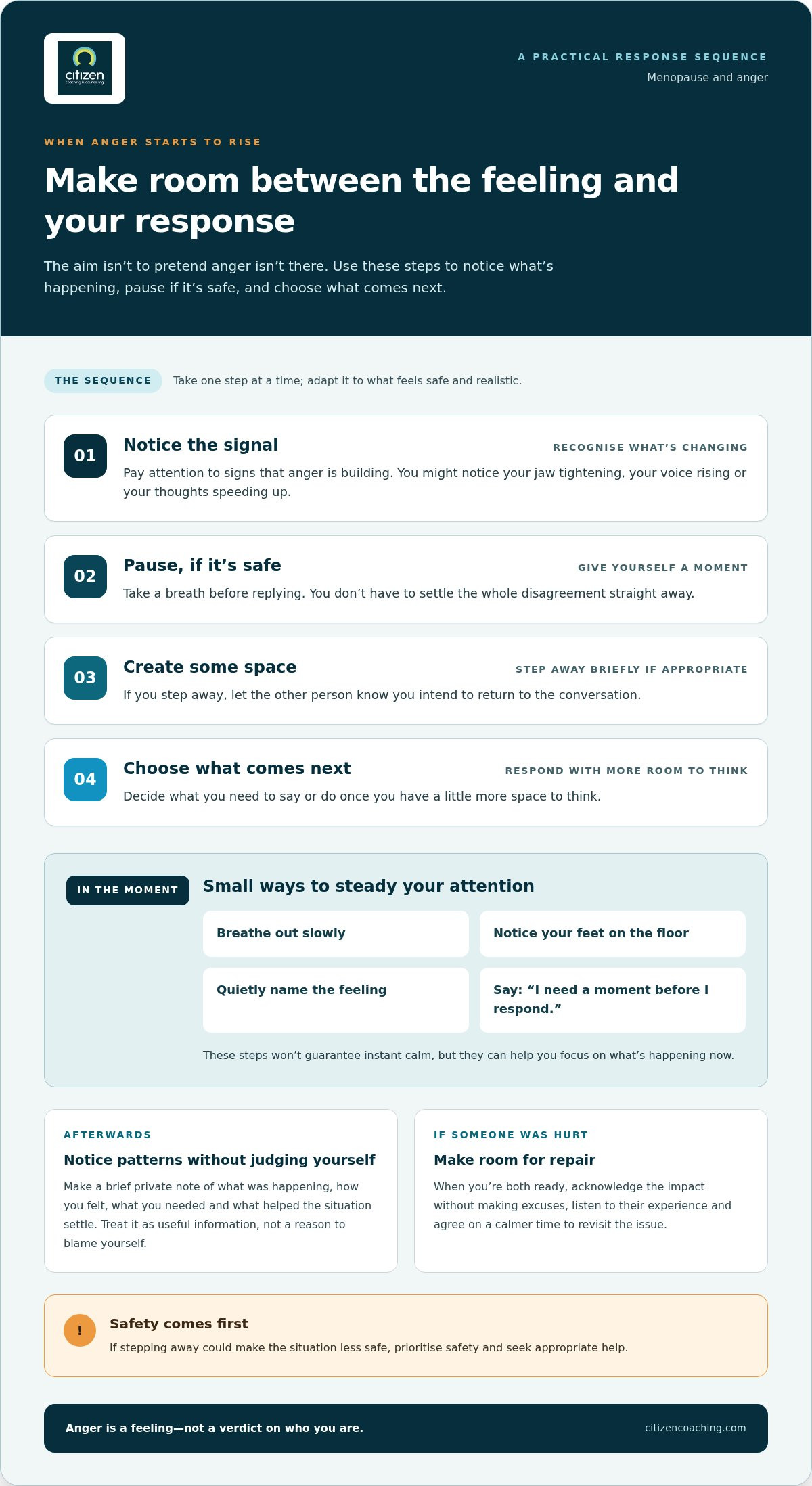
When you feel anger building, the aim isn’t to pretend it isn’t there. It’s to create some room between the feeling and your response. Managing anger during menopause can involve practising a simple sequence and adapting it to what feels safe and realistic for you.
- Notice the signal. You might feel your jaw tighten, your voice rise or your thoughts speed up.
- Pause if it’s safe. Take a breath before replying instead of trying to settle the whole disagreement straight away.
- Create space. Step away briefly if appropriate, and let the other person know you intend to return to the conversation.
- Choose your next response. Decide what you need to say or do once you have a little more space to think.
What can I do in the heat of the moment?
Try breathing out slowly, noticing your feet on the floor or quietly naming the feeling: “I’m angry, and I need a moment.” You could say, “I need a moment before I respond.” These steps won’t guarantee instant calm, but they can help you focus on what’s happening now. If stepping away could make the situation less safe, prioritise safety and seek appropriate help.
How can I spot patterns without judging myself?
Afterwards, make a brief private note of what was happening, how you felt, what you needed and what helped the situation settle. Over time, this may help you recognise recurring triggers or useful responses. Keep it curious, not critical. If anger patterns keep causing difficulty, this guide to finding anger-management support offers another place to start.
If an argument has hurt someone, repair matters too. When you’re both ready, acknowledge the impact without making excuses, listen to their experience and agree on a calmer time to revisit the issue. You can explain what you felt while still taking responsibility for how you acted. A pause is useful, but returning to the conversation shows that the other person matters.
Finding supportive help for menopause-related anger in Birmingham
Anger-management support can give you a practical space to understand your reactions, notice patterns and practise different ways to respond. It doesn’t diagnose menopause or replace medical advice. If you’re concerned about menopause symptoms or your health, speak with a GP or menopause clinician. Coaching and counselling focus on emotional responses and relationships, rather than medical care.
Citizen Coaching and Counselling is a Birmingham social enterprise offering group and individual anger-management support, as well as an online course. These options provide different ways to work on managing anger during menopause. You can explore your skills and patterns without treating anger as a flaw in your character.
What kind of anger-management support could fit?
Group support offers a shared setting to work on anger-management skills alongside other people. One-to-one support gives you space to focus on your own experiences and goals. Neither format is right for everyone, so consider which feels manageable and useful to you. If learning at a distance suits your circumstances, the online course is another option. Explore the anger-management courses to consider the different formats.
Taking a first step without pressure
Reaching out can begin with a conversation about what you’ve been experiencing, such as feeling more reactive or finding that conflict is affecting a relationship. You don’t need to have all the answers before asking for support. The aim is to explore practical help at a pace that feels comfortable, not to judge you or promise a particular outcome.
Coaching and counselling aren’t emergency crisis care. If you need urgent help or feel unsafe, contact the appropriate emergency service. For medical concerns, speak with a health professional. For support with anger responses, Citizen Coaching and Counselling can help you explore group, individual and online anger-management options.
Take your next step at a pace that feels right
You don’t have to wait until anger feels unmanageable before seeking support. A small next step, such as talking through a recurring difficulty or practising a different response, can make change feel more approachable. Managing anger during menopause is a personal process. You can begin without having every answer or knowing exactly what is contributing to your feelings.
Citizen Coaching and Counselling is a Birmingham-based Community Interest Company that reinvests profits into community mental health. Reaching out can simply be a way to discuss what you’re experiencing and consider whether anger-management support feels useful. Discuss medical questions about menopause with a health professional.
Be patient with yourself as you explore what helps. You deserve support that meets you with care, not judgement.
Frequently Asked Questions
Is anger a symptom of menopause?
Some people notice mood changes or irritability during perimenopause or menopause, but experiences differ, and anger alone can’t show what’s causing it. Stress, disrupted sleep, relationship difficulties and other health concerns may also play a part. The NICE menopause guideline covers assessment and support. If changes persist or worry you, discuss them with your GP or a menopause clinician.
Can menopause cause sudden anger?
A sudden angry reaction can have several contributing factors, so it’s best not to assume hormones are the only explanation. Think about what was happening just before it arose. Were you tired, under pressure or in a difficult conversation? Notice whether similar situations keep coming up. If the change feels severe, unfamiliar or distressing, speak with a health professional rather than trying to diagnose yourself.
How can I explain menopause-related anger to my partner?
Choose a calm moment and describe what you’ve been experiencing without blaming your partner. You might say, “I’ve been feeling more on edge, and I’m trying to understand what’s behind it.” Then make a specific request, such as pausing a heated conversation and agreeing when to return to it. You can also listen to how conflict affects your partner while approaching your own experience with care.
Should I speak to a GP or an anger-management coach?
Speak with a GP or menopause clinician about health changes, possible menopause symptoms and treatment questions. Anger-management support has a different focus. It can help you explore reactions, practise communication and work through recurring patterns. These kinds of support may sit alongside each other. Managing anger during menopause with a coach doesn’t replace medical advice, and a clinician can help with concerns about your health.
Can anger-management support help if I am also experiencing menopause symptoms?
Anger-management support can provide space to explore how you respond to anger, communicate with others and reflect on situations that trigger difficult reactions, without promising a particular result. A health professional can address medical questions about menopause symptoms. In Birmingham, Citizen Coaching and Counselling offers group and individual anger-management programmes, as well as an online course for people who want to learn at a distance.

Article by
Martin Hogg
Counselling and Anger Management in Birmingham. Articles by Martin Hogg, counsellor MBACP (Reg.) and Founder and CEO of Citizen Coaching and Counselling, a social enterprise based in Birmingham, UK. Martin also helps counsellors struggling to set up and grow their Private Practice to gain clarity and confidence in their marketing and systems.
Disclaimer
The information provided on this blog is for general informational purposes only and is not intended to be a substitute for professional medical or mental health advice, diagnosis, or treatment. Reading this content does not create a therapist-client relationship.


