
How to Apologize for an Angry Outburst: A Practical Guide
What if the most important part of an apology isn’t finding perfect words, but showing what you’ll do differently? If you’re wondering how to apologize for an angry outburst, you may feel ashamed, worry you’ll sound as though you’re making excuses, or fear the other person won’t be ready to forgive you. Those feelings are understandable, but you can still take a clear first step.
A sincere apology names what you did, recognises how it affected the other person and expresses remorse without asking them to make you feel better. It also leaves room for their response. Forgiveness may take time, and an apology alone can’t rebuild trust. Consistent, changed behaviour matters too.
This guide will help you choose what to say, respect the other person’s boundaries and follow through with practical steps to reduce the chance of another outburst. You’ll learn how to take responsibility without minimising the harm, even when you’re unsure how your apology will be received.
Key Takeaways
- Regret can be a starting point: focus on the specific behaviour you want to take responsibility for, rather than defending why it happened.
- Learn how to apologize for an angry outburst with a simple sequence: name what you did, recognise its impact, apologise and offer a practical repair.
- Let the other person choose whether and when to respond. If they need space, respect that and agree on a suitable time to talk again.
- If similar outbursts keep happening, note the situations and early warning signs so you can plan a different response and consider what support may help.
How to Apologize for an Angry Outburst: Start by Owning What Happened
Regret can be a useful starting point. It doesn’t undo the outburst, but it can help you take responsibility and choose what to do next. A sincere apology names the behaviour, recognises its impact and expresses remorse without pressuring the other person to forgive you. These are among the elements of an effective apology.
An accountable apology describes what you did, listens to how it affected someone and leaves them free to decide what happens next. You can explain what was going on without making it an excuse. For example, “I was exhausted” may give context, but it doesn’t justify shouting or using harsh words. Avoid shifting blame with “You made me angry.” Your reaction is yours to own.
What should you do before apologising?
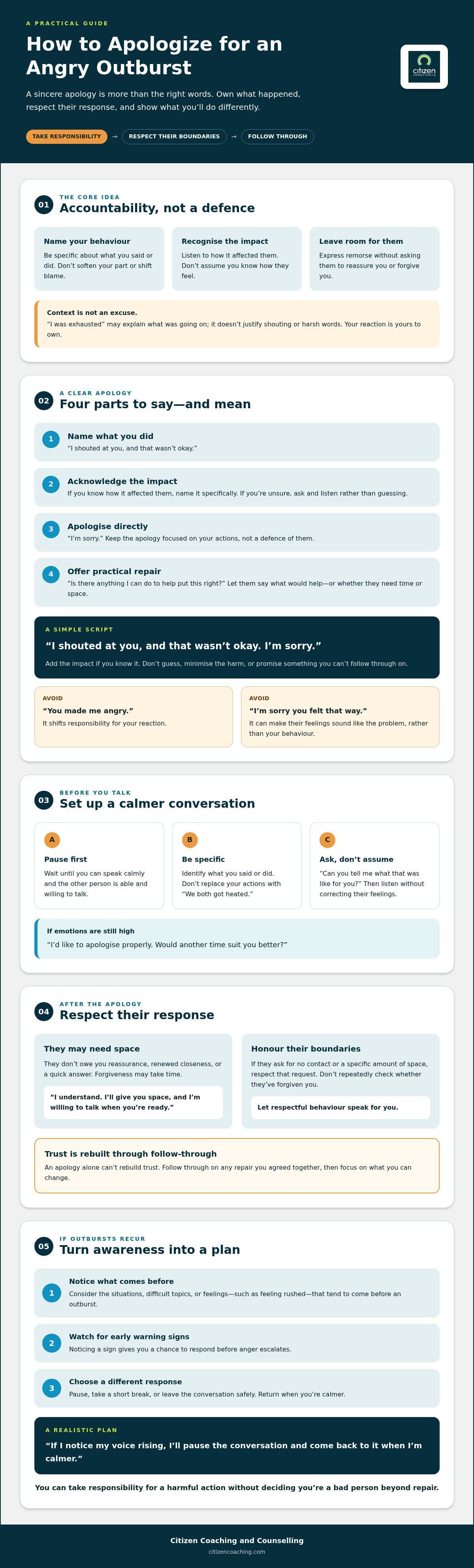
Pause until you can speak calmly and the other person is able and willing to talk. First, be specific with yourself about what you said or did. Don’t soften “I shouted over you” into “We both got heated” if that leaves out your part. If emotions are still high, don’t force a conversation. You could say, “I’d like to apologise properly. Would another time suit you better?”
Why does the impact matter more than your intention?
You may not have meant to frighten, hurt or embarrass someone, but good intentions don’t erase the effect of your words or actions. Don’t assume you know how they feel. Ask, “Can you tell me what that was like for you?” Then listen without correcting their feelings, explaining them away or turning the conversation back to your intentions. You can acknowledge their experience even if you remember the moment differently. That shows you’re taking the impact seriously, not just trying to end an uncomfortable conversation.
What to Say When You Apologize for an Angry Outburst
If you’re working out how to apologize for an angry outburst, keep your words clear and focused on your actions. A useful order is: name what you did, acknowledge the impact if you know it, apologise, then offer to make things right. Avoid adding a defence after saying sorry. Stress or frustration may explain the moment, but they shouldn’t shift responsibility to the other person.
A simple apology script you can adapt
Try wording that sounds natural to you: “I shouted at you, and that wasn’t okay. I’m sorry.” If you know how it affected them, name that specifically: “I can see that I interrupted you and made it harder to explain what you needed.” If you’re unsure, ask and listen rather than guessing. “I’m sorry you felt that way” can sound as though the problem was their feelings, not your behaviour. Keep it direct.
Accountability means owning a harmful action, not deciding you’re a bad person beyond repair. You can recognise what you did and still focus on making a different choice next time.
How can you offer to make things right?
Repair depends on what happened and what the other person wants. Ask, “Is there anything I can do to help put this right?” They may ask for a practical step, time to think or space. Don’t promise something you can’t follow through on, and don’t treat an offer as a way to secure immediate forgiveness.
If outbursts are recurring, pair an apology with a plan to work on your responses. The American Psychological Association shares anger management strategies, including communication approaches. For structured support, you can explore anger management courses. To ask about anger management support in Birmingham or online, contact Citizen Coaching and Counselling.
After the Apology: Respect Their Response and Rebuild Trust
An apology is an offer of accountability, not a request for immediate forgiveness. The other person doesn’t owe you reassurance, renewed closeness or a quick answer. Trust may take time to rebuild, and they’re allowed to decide what feels right for them.
What if they are not ready to forgive you?
Accept their response without arguing or asking when they’ll get over it. You might say, “I understand. I’ll give you space, and I’m willing to talk when you’re ready.” If they ask for no contact or a specific amount of space, respect that request. Repeatedly checking whether they’ve forgiven you can put pressure on them to manage your discomfort. For now, let your respectful behaviour speak for you.
How do you show that the apology is sincere?
Follow through on any repair you agreed together, then focus on what you can change. A realistic plan might be: “If I notice my voice rising, I’ll pause the conversation and come back to it when I’m calmer.” Think about what tends to happen before an outburst, such as a difficult topic or feeling rushed. Noticing an early warning sign gives you a chance to pause, take a short break or leave the conversation safely before anger escalates. If you need to step away, explain that you intend to return to the discussion rather than using the break to shut it down.
Consistent changes matter more than repeatedly asking whether everything is forgiven. If you and your partner both want help with communication, couples counselling may be one option to explore. To ask about counselling or anger management support in Birmingham, contact Citizen Coaching and Counselling.
When Angry Outbursts Keep Happening, Choose a Next Step
If an apology is followed by a similar outburst, treat that as a pattern to understand, not a reason to label or condemn yourself. Notice what was happening beforehand. You might jot down the situation, what you were feeling and the first signs that your anger was rising. Over time, this can help you spot moments when a different response may be possible.
How can you prepare for a difficult conversation next time?
When things are calm, agree that either person can ask for a pause if the conversation feels overwhelming. Decide together when you’ll return to it, at a time that suits both of you. Prepare a simple alternative to shouting, such as, “I’m getting worked up and need a break. Can we come back to this later?” A pause creates room to respond differently, but no single approach can guarantee there won’t be another outburst.
When might anger management support be useful?
If your anger is repeatedly hurting relationships, or you’re finding it hard to change the pattern alone, support may help you build practical skills. Apologies matter, but understanding your warning signs and practising other ways to respond can also be part of moving forward. In Birmingham, Citizen Coaching and Counselling offers group and individual anger management, as well as an online anger management course. Explore these options to find a format that may suit you.
Learning how to apologize for an angry outburst is one step. If you’re ready to look at what could help prevent the pattern from continuing, consider asking about support.
Contact Citizen Coaching and Counselling
Take the Next Step Towards Change
Knowing how to apologize for an angry outburst can help you take responsibility, but repair also depends on what you do afterwards. Acknowledge the impact, respect the other person’s response and follow through on changes you’ve agreed to make. Forgiveness may take time. Noticing what happens before anger rises can help you prepare a different response next time.
If outbursts keep happening or you’re finding it hard to change the pattern alone, seeking support can be a practical next step. Citizen Coaching and Counselling offers anger management support in Birmingham and online. As a Community Interest Company, it reinvests profits into community mental health. Exploring support doesn’t mean you’ve failed; it can be one way to build skills and move forward at a steady pace.
Start with one honest step. With time and consistent effort, you can work towards responding with greater care.
Frequently Asked Questions
How do you apologise after shouting at someone?
Name what you did plainly, acknowledge that it may have hurt or frightened them, and say you’re sorry without adding a defence. For example: “I shouted at you, and that wasn’t okay. I’m sorry.” Ask whether there’s a way to make things right, then listen. If you’re learning how to apologize for an angry outburst, remember that the person may need time before responding. Respecting that space is part of taking responsibility.
What should you not say when apologising for an angry outburst?
Avoid blaming the other person for making you shout or saying, “I’m sorry you felt hurt.” These phrases can shift attention away from your behaviour. Don’t demand forgiveness or insist they move on. If you want to explain what was happening for you, first own what you did. Make clear that stress or frustration may provide context, but doesn’t excuse the impact of your outburst.
Should you give someone space after an angry outburst?
Yes, if they ask for space, respect their request and don’t press them to talk, forgive you or offer reassurance. If you’re unsure what they need, ask calmly whether they’d prefer time alone or a conversation later. Giving space doesn’t remove your responsibility to apologise. If you agree to speak again, follow through at a time that feels appropriate to both of you.
Can you rebuild trust after an angry outburst?
Trust may be rebuilt, but one apology can’t guarantee how the other person will feel or what they’ll decide. Acknowledge the impact, listen without arguing and follow through on any repair you agree together. Your actions over time matter. Avoid treating forgiveness as something you’re owed because you apologised. Give the other person room to decide whether and when they feel ready to reconnect.
What if I keep having angry outbursts and apologising afterwards?
Repeated apologies can show regret, but they don’t replace working on the pattern. Notice which situations tend to escalate, what you feel beforehand and when you first need a pause. If changing your responses feels difficult alone, support may help you build practical skills. Citizen Coaching and Counselling offers group and individual anger management in Birmingham, as well as an online course. It doesn’t provide emergency crisis intervention.

Article by
Martin Hogg
Counselling and Anger Management in Birmingham. Articles by Martin Hogg, counsellor MBACP (Reg.) and Founder and CEO of Citizen Coaching and Counselling, a social enterprise based in Birmingham, UK. Martin also helps counsellors struggling to set up and grow their Private Practice to gain clarity and confidence in their marketing and systems.
Disclaimer
The information provided on this blog is for general informational purposes only and is not intended to be a substitute for professional medical or mental health advice, diagnosis, or treatment. Reading this content does not create a therapist-client relationship.


