
How Does Group Therapy for Anger Work? A Practical Guide
Sitting in a room with strangers might sound like the worst way to deal with a short fuse, but solitary self-reflection often keeps old defensive habits locked in place. If recurring outbursts are straining your relationships at home or work, asking how does group therapy for anger work is a sensible first step. You might dread chaotic confrontations, worry about being judged, or wonder if speaking to a group could ever match private counselling.
Feeling hesitant is completely understandable, as opening up about anger takes genuine courage. In reality, a facilitator-led session isn't an intense interrogation or a clinical lecture. It is a supportive, structured environment where learning alongside others helps you recognise your triggers much faster. Here, you will discover what actually happens inside the room, how structured group programmes operate, and the practical de-escalation tools that can help you rebuild calm communication.
Key Takeaways
- Learn how does group therapy for anger work through structured, facilitator-led skill building that breaks isolation without clinical pressure.
- Discover the predictable four-stage session format designed to keep discussions calm, safe, and focused on practical progress rather than confrontation.
- Understand how shared learning compares to individual sessions, dispelling the fear of forced confessions while safeguarding your personal boundaries.
- Find out what preliminary readiness checks involve so you can take your next step towards healthier communication with quiet confidence.
How Group Therapy for Anger Works: The Core Principles
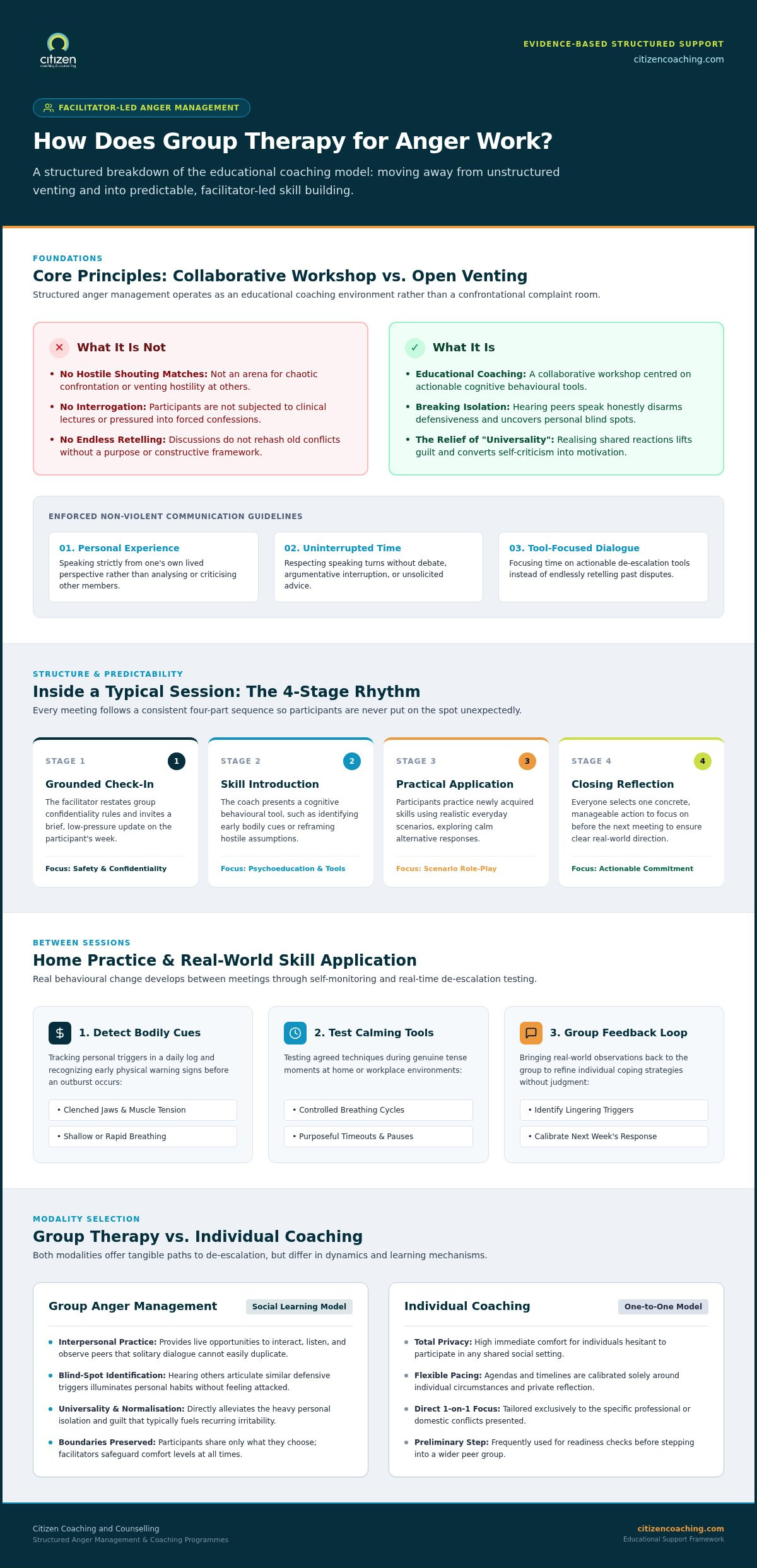
At its heart, structured group work is an educational coaching environment rather than an open-ended complaint session. To understand how does group therapy for anger work, it helps to see it as a collaborative workshop. Modern anger management relies on structured skill building, giving you practical techniques to spot physical tension, pause, and respond thoughtfully rather than react impulsively.
Isolation often feeds irritability. When temper flares cause friction at work or home, silence and guilt usually follow. Hearing peers speak honestly about their own flashpoints breaks that isolating loop. Seeing someone else describe a familiar reaction helps you recognise your personal blind spots without feeling attacked. Shared experience disarms defensiveness faster than private analysis ever could.
Facilitated Safety vs. Unstructured Venting
A common fear is that rooms turn into hostile shouting matches. In reality, qualified facilitators enforce clear conversational boundaries right from the start. You work within established non-violent communication guidelines, including:
- Speaking strictly from personal experience rather than criticising others
- Respecting uninterrupted speaking time without debate or unsolicited advice
- Focusing on actionable de-escalation tools instead of endlessly retelling old conflicts
These boundaries keep the environment emotionally safe, ensuring the space remains supportive rather than overwhelming.
The Relief of Universality: Realising You Are Not Alone
Therapists call this sense of connection "universality." When you learn how does group therapy for anger work in practice, you quickly see that your internal struggles are not unique. Listening to another person describe the exact rush of adrenaline you feel during an argument instantly normalises the underlying vulnerability. This shared recognition lifts heavy personal guilt, transforming self-criticism into practical motivation for everyday change.
Inside a Typical Session: A Step-by-Step Breakdown
Walking into a new room feels daunting when you do not know what to expect. Wondering how does group therapy for anger work on a practical level usually comes down to wanting predictability. Sessions follow a steady four-stage rhythm designed to keep everyone grounded and focused on personal development.
The Four Stages of an Anger Management Meeting
Each meeting unfolds through clear, supportive steps so no one is put on the spot unexpectedly:
- Stage 1: Grounded Check-In: The facilitator restates group confidentiality rules and invites a brief, low-pressure update on your week.
- Stage 2: Skill Introduction: The coach presents a specific cognitive behavioural tool, such as identifying early bodily cues or reframing hostile assumptions. Joining an Anger Management Support Group often centres on these structured learning modules.
- Stage 3: Practical Application: Participants practice the skill using realistic scenarios, exploring alternative ways to react to everyday stressors.
- Stage 4: Closing Reflection: Everyone selects one concrete action to focus on before the next meeting, ensuring you leave with a clear plan.
Home Practice and Real-World Application
Real change happens between meetings. Between sessions, you track personal triggers in a simple daily log, noting early physical warning signs like clenched jaws or shallow breathing. You then test out chosen calming techniques, such as controlled breathing or purposeful timeouts, during genuine tense moments at home or work.
Bringing these real-world observations back to the group helps refine your approach without judgment. If you feel ready to explore a local, facilitator-led workshop, you can always reach out to discuss our Birmingham programmes and ask any questions before taking your first step.
Group Therapy vs. Individual Coaching: Overcoming Common Hesitations
Deciding between one-to-one sessions and a group setting often comes down to your immediate personal comfort. Individual coaching offers total privacy and a flexible pace. In contrast, the true strength of understanding how does group therapy for anger work lies in social learning. The American Psychological Association notes in its guidance on how group therapy works that learning alongside peers provides unique interpersonal practice that solitary dialogue cannot easily duplicate.
Dismantling the Fear of Public Judgement
Many people worry they will have to reveal their deepest secrets or face harsh criticism from other attendees. That simply does not happen. Participation is entirely voluntary, meaning you are free to listen until you feel comfortable contributing. Skilled facilitators actively protect the group atmosphere, ensuring dominant voices never take over and that conversations remain constructive, calm, and supportive.
Why Peer Accountability Accelerates Behaviour Change
Shared accountability changes how you approach daily progress. Committing to a simple goal in front of people facing similar challenges often sparks stronger follow-through than an isolated promise to a coach. You also receive real-time, non-defensive insights:
- Observing peers defuses your own resistance to behavioural feedback
- Watching others handle irritation objectively reveals alternative ways to respond
- Shared weekly milestones keep you motivated to practice regulation tools consistently
If you still feel hesitant about a group dynamic and prefer one-to-one exploration, looking into private counselling options can be an ideal way to begin your journey at your own pace.
Preparing for Your First Group: Finding the Right Support
Stepping into a collaborative workshop requires an honest look at your personal readiness. Group settings work best when you recognise that reactive habits are creating real friction and you feel willing to test out new communication tools. Knowing how does group therapy for anger work beforehand helps demystify the process, ensuring you feel prepared to focus on self-regulation alongside peers.
In-Person Gatherings vs. Online Learning Formats
Choosing between an in-person cohort and a digital format depends on your lifestyle and comfort preferences:
- In-Person Cohorts: Meeting in a dedicated coaching room grounds your focus, allowing you to absorb non-verbal body language and build immediate human rapport.
- Remote Programmes: Structured online sessions fit easily around busy work rosters or travel constraints, offering the same core curriculum from the comfort of home.
What to Expect During Your Initial Pre-Course Assessment
Reputable organisations never place newcomers into a room without a preliminary readiness chat. Before your first session, you will attend a one-to-one consultation designed to protect group safety and clarify your individual aims. During this brief conversation, a facilitator explores your primary triggers, listens to what you hope to achieve, and answers your personal questions.
This intake screening ensures the group dynamic remains balanced, respectful, and productive for everyone involved. If you feel ready to take that initial step, you can speak with the coaching team to explore local cohorts or discover how a tailored workshop can help you regain steady emotional control.
Taking Your Next Step Toward Calm Communication
Understanding how does group therapy for anger work shows that you don't have to manage sudden outbursts or lingering guilt in isolation. Structured sessions replace chaotic confrontation with calm, practical skill building. Learning alongside peers provides steady accountability, helps you spot emotional triggers early, and builds lasting self-regulation without requiring uncomfortable confessions.
Since 2005, our Community Interest Company has provided safe, jargon-free support to help people regain personal balance. Whether you choose our structured group workshops or private programmes, our qualified coaching team is here to help you achieve meaningful, lasting behavioural change.
Choosing to address your temper takes genuine courage. With the right tools and consistent guidance, you can build confidence and enjoy healthier, calmer relationships every single day.
Frequently Asked Questions
Do I have to speak and share personal details during my first session?
No, you won't ever be forced to share deeply personal stories or speak before you feel ready. Newcomers in our Birmingham sessions are welcome to simply listen and absorb the discussions. Qualified facilitators ensure the room feels comfortable, giving you complete control over how much you contribute. You can take your time getting used to the group rhythm before actively joining in exercises.
Will being in an anger management group feel aggressive or confrontational?
Not at all. Structured workshops are calm, supportive spaces rather than chaotic debate clubs. Facilitators maintain clear conversational boundaries that prevent aggression, hostile venting, or personal attacks. Seeing how does group therapy for anger work in practice shows that respect and mutual dignity guide every interaction. The entire focus remains on learning practical de-escalation techniques within a well-managed, reassuring setting.
How long does a typical group anger management programme last?
Most structured group programmes run over several consecutive weeks, typically meeting once a week for focused ninety-minute or two-hour sessions. This consistent timeframe gives you sufficient space to test tools between meetings and report back your progress. In Birmingham, structured programmes are designed to deliver sustainable behavioural shifts without dragging on indefinitely, helping you build practical emotional control quickly and effectively.
Is group therapy for anger as effective as one-to-one counselling?
Yes, group work is often just as effective as private sessions, and sometimes even more impactful. While individual counselling offers private personal reflection, learning how does group therapy for anger work reveals the unique advantage of peer accountability. Hearing others navigate identical challenges dismantles defensive barriers quickly, providing realistic social practice that mirrors everyday family and workplace situations.
Are what I share in an anger management group kept confidential?
Yes, confidentiality is a cornerstone of every reputable programme. All participants and coaches agree to strict privacy rules before joining, meaning personal stories stay firmly within the room. In our Birmingham group workshops, creating a secure environment is paramount. You can explore personal triggers and communication challenges with confidence, knowing your privacy and dignity are thoroughly safeguarded by established professional standards.

Article by
Martin Hogg
Counselling and Anger Management in Birmingham. Articles by Martin Hogg, counsellor MBACP (Reg.) and Founder and CEO of Citizen Coaching and Counselling, a social enterprise based in Birmingham, UK. Martin also helps counsellors struggling to set up and grow their Private Practice to gain clarity and confidence in their marketing and systems.
Disclaimer
The information provided on this blog is for general informational purposes only and is not intended to be a substitute for professional medical or mental health advice, diagnosis, or treatment. Reading this content does not create a therapist-client relationship.


